Foods High in Vitamin D (There Are Fewer Than You Think)
The Short Answer
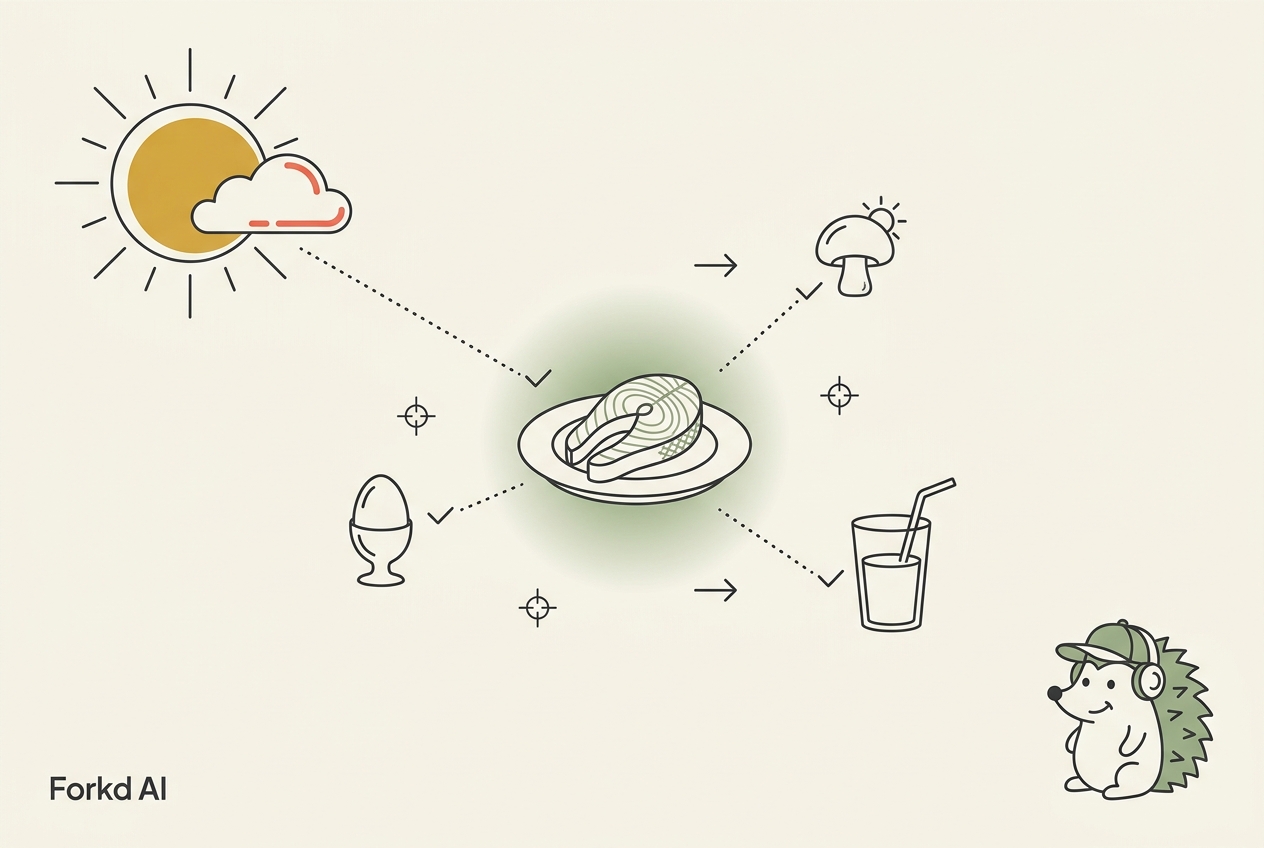
The best food sources of vitamin D are cod liver oil (1,360 IU per tablespoon), UV-exposed mushrooms (735 IU per cup), farmed rainbow trout (645 IU per 3 ounces), and sockeye salmon (570 IU). Adults need 600 IU a day, or 800 IU after 70. Most other foods have little, so fortified foods and sunlight fill the gap.
Why Is Vitamin D So Hard to Get From Food?
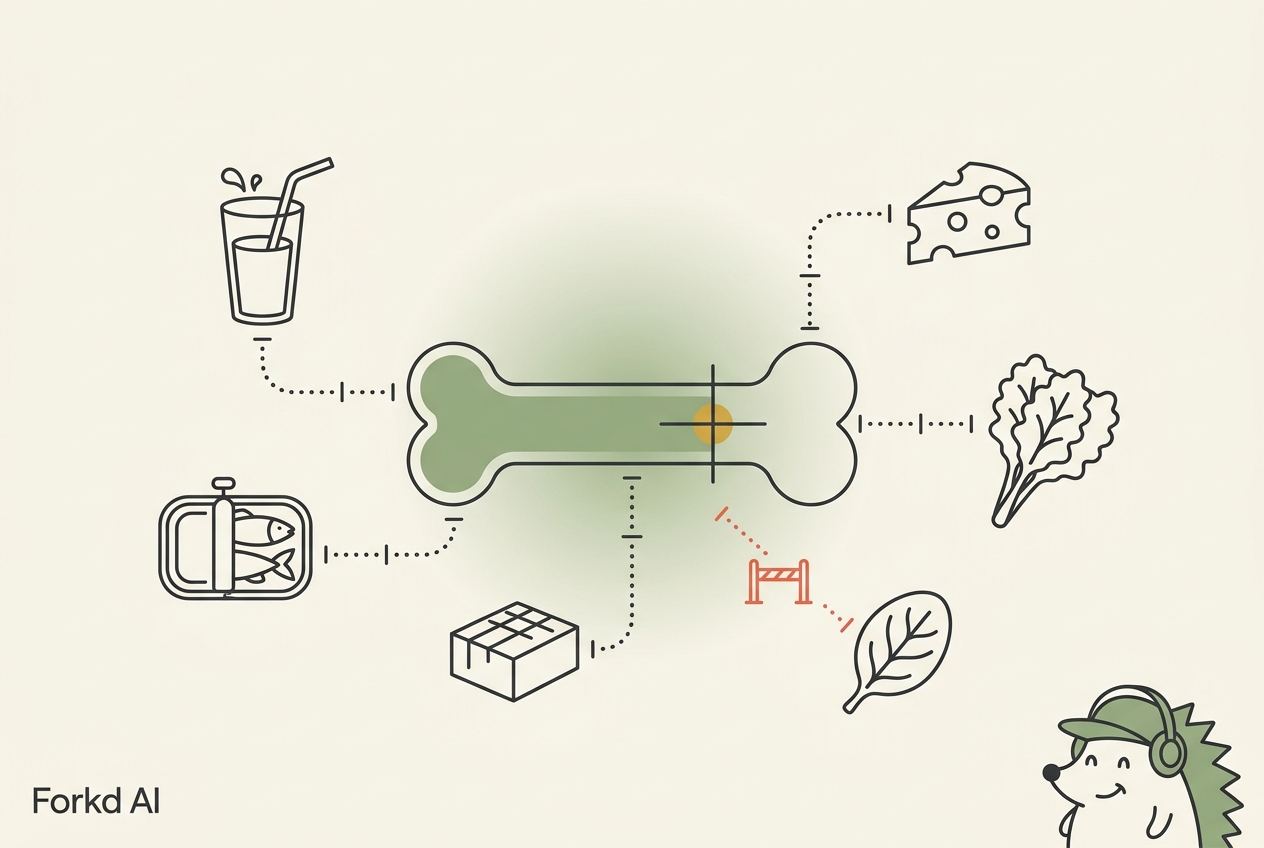
Vitamin D is the odd one out. Very few foods contain much of it naturally, because your body was built to make most of its own. Your skin produces vitamin D when UVB rays from the sun hit it.
That arrangement worked better when people spent their days outside. Office jobs, winters, sunscreen, and living far from the equator all cut into production. Darker skin also makes less vitamin D from the same sun exposure. So the usual advice to "just eat a balanced diet" doesn't really hold up for this one.
National survey data from 2011 to 2014 found 5 percent of Americans at risk of vitamin D deficiency and another 18.3 percent at risk of inadequacy. The risk of deficiency was far higher among non-Hispanic Black Americans, at 17.5 percent.
How Much Vitamin D Do You Need?
| Group | RDA | Upper limit |
|---|---|---|
| Ages 1 to 70 | 600 IU (15 mcg) | 4,000 IU (100 mcg) |
| Adults 71+ | 800 IU (20 mcg) | 4,000 IU (100 mcg) |
Labels increasingly list vitamin D in micrograms rather than IU. The conversion is easy: 1 mcg equals 40 IU.
Which Foods Are Highest in Vitamin D?
All values come from USDA FoodData Central, calculated for the portion shown.
Which fish have the most vitamin D?
| Food | Portion | Vitamin D | Calories |
|---|---|---|---|
| Cod liver oil | 1 tbsp (14 g) | 1,360 IU | 123 |
| Rainbow trout, farmed, cooked | 3 oz (85 g) | 645 IU | 143 |
| Sockeye salmon, cooked | 3 oz (85 g) | 570 IU | 133 |
| Pink salmon, canned | 3 oz (85 g) | 493 IU | 117 |
| Atlantic salmon, farmed, cooked | 3 oz (85 g) | 447 IU | 175 |
| Light tuna, canned in oil | 3 oz (85 g) | 229 IU | 168 |
| Atlantic herring, cooked | 3 oz (85 g) | 182 IU | 173 |
| Sardines, canned in oil | 1 can (92 g) | 178 IU | 191 |
Fatty fish is where vitamin D actually lives. One serving of trout or sockeye covers roughly a full day. Canned pink salmon is the budget pick, and it comes close.
Cod liver oil is in a league of its own at more than twice the RDA per tablespoon. It's also very rich in vitamin A, so more is not better here.
Which mushrooms have vitamin D?
| Food | Portion | Vitamin D | Calories |
|---|---|---|---|
| Maitake mushrooms, raw | 1 cup diced (70 g) | 784 IU | 22 |
| White mushrooms, UV-exposed, raw | 1 cup sliced (70 g) | 735 IU | 15 |
| Portabella, UV-exposed, grilled | 1 cup sliced (121 g) | 634 IU | 35 |
| White mushrooms, regular, raw | 1 cup sliced (70 g) | 5 IU | 15 |
This is the best trick in the whole article. Mushrooms make vitamin D when they're exposed to ultraviolet light, a lot like your skin does. Regular white mushrooms have 5 IU per cup. UV-exposed ones have 735 IU. Same mushroom, completely different food.
Look for "UV-treated" or "high in vitamin D" on the pack. Mushrooms make vitamin D2, while fish and your skin make D3. Both count toward the RDA.
Which eggs, dairy, and fortified foods have vitamin D?
| Food | Portion | Vitamin D | Calories |
|---|---|---|---|
| Milk, 1%, fortified | 1 cup (244 g) | 117 IU | 102 |
| Almond milk, unsweetened, fortified | 1 cup (262 g) | 107 IU | 39 |
| Soy milk, fortified | 1 cup (243 g) | 104 IU | 104 |
| Orange juice, fortified with vitamin D | 1 cup (249 g) | 100 IU | 117 |
| Egg, large, hard-boiled | 1 egg (50 g) | 44 IU | 78 |
| Beef liver, braised | 3 oz (85 g) | 42 IU | 162 |
| Cheddar cheese | 1 oz (28 g) | 11 IU | 115 |
Fortified milk gives you about a fifth of the day per glass. The catch is that fortification isn't universal. USDA's entry for plain low-fat yogurt has almost no vitamin D at all, and cheese barely registers. Plant milks vary by brand, so check the label.
Can You Get Enough Vitamin D From Food Alone?
You can, but only if fish or UV mushrooms are on the menu.
| Meal | What's on the plate | Vitamin D |
|---|---|---|
| Breakfast | 2 hard-boiled eggs and 1 cup 1% milk | 205 IU |
| Lunch | Salad with 3 oz canned pink salmon | 493 IU |
| Total | 698 IU |
That clears 600 IU. Now take the salmon out and add a glass of fortified orange juice instead. The day drops to 305 IU, barely half the target. Without fish or UV mushrooms, food struggles to get you there.
What About Sunlight?
Sun is the main source for most people, and it's free. How much vitamin D you make depends on the season, how far you live from the equator, the time of day, your skin tone, your age, and how much skin is covered. In winter at higher latitudes, the UVB is often too weak to make much at all. Glass also blocks UVB, so sitting by a sunny window doesn't count.
Sun exposure raises skin cancer risk too, so nobody should be chasing tans for vitamin D. That tension is exactly why food and, when needed, supplements matter.
Mayo Clinic's quick take on the winter problem:
Do Vitamin D Supplements Actually Help?
If you're deficient, correcting it matters, and a doctor can guide the dose. For healthy adults with normal levels, the biggest trial so far was humbling.
VITAL randomized 25,871 US adults, men 50 and older and women 55 and older, to 2,000 IU of vitamin D3 a day or a placebo. After a median of 5.3 years, vitamin D didn't lower the risk of invasive cancer or major cardiovascular events. A follow-up analysis looked at 1,991 fractures in the same trial. Vitamin D didn't reduce total, nonvertebral, or hip fractures either.
That was a letdown for a vitamin often sold as a fix for everything. There's an important caveat, though. Participants weren't chosen because they were deficient, so the results say more about topping up people who are already fine than about treating a real shortfall.
If you do supplement, stay under the 4,000 IU upper limit unless a doctor tells you otherwise. Vitamin D toxicity almost always comes from supplements, and it works by pushing blood calcium too high.
How Do You Know If You're Getting Enough Vitamin D?
Here, unlike with calcium, a blood test genuinely helps. The standard measure is serum 25-hydroxyvitamin D. Below 30 nmol/L (12 ng/mL) counts as at risk of deficiency, and 30 to 49 nmol/L (12 to 19.9 ng/mL) as at risk of inadequacy.
Tracking your intake tells you the other half of the story: whether your diet is doing any of the work. Forkd's micronutrient tracker reads vitamin D alongside calcium, iron, and the rest of its 15+ nutrients from a photo, a voice note, or a line of text, using per-ingredient USDA values. Search the App Store for "AI Calorie Tracker: Forkd".
Vitamin D and calcium work as a team, since you need vitamin D to absorb calcium well. Our guide to foods high in calcium covers the other half. And if you want to compare apps, see the best vitamin D trackers.
Frequently Asked Questions
Which food has the most vitamin D?
Cod liver oil, at 1,360 IU per tablespoon. Among regular foods, UV-exposed mushrooms (735 IU per cup), farmed rainbow trout (645 IU per 3 ounces), and sockeye salmon (570 IU per 3 ounces) come out on top.
Do eggs have vitamin D?
Yes, but not much. A large hard-boiled egg has about 44 IU, around 7 percent of the adult RDA. The vitamin D is in the yolk, so egg-white omelets skip it entirely.
Can you get vitamin D through a window?
No. Window glass blocks most UVB, the part of sunlight your skin needs to make vitamin D. You can feel warm by a sunny window and still make almost none.
Does yogurt have vitamin D?
Usually very little. USDA's entry for plain low-fat yogurt has almost no vitamin D. Some brands add it, so check the Nutrition Facts label.
How much vitamin D is too much?
The upper limit for adults is 4,000 IU (100 mcg) a day. Toxicity is rare and almost always caused by high-dose supplements rather than food or sunlight. It raises blood calcium, which can cause nausea, weakness, and kidney problems.
Key Takeaways
- Adults need 600 IU (15 mcg) of vitamin D a day, rising to 800 IU after age 70. The upper limit is 4,000 IU.
- The best food sources are cod liver oil, UV-exposed mushrooms, farmed trout, and salmon.
- Regular white mushrooms have 5 IU per cup, while UV-exposed ones have 735 IU.
- Without fish, UV mushrooms, or fortified foods, reaching 600 IU from food is hard.
- In the VITAL trial, 2,000 IU a day didn't reduce cancer, heart disease, or fractures in adults who weren't selected for deficiency.
References
- National Institutes of Health, Office of Dietary Supplements. Vitamin D: Fact Sheet for Health Professionals. RDAs and upper limits. ods.od.nih.gov
- Institute of Medicine (2011). Dietary Reference Intakes for Calcium and Vitamin D. National Academies Press. ncbi.nlm.nih.gov
- Herrick KA, Storandt RJ, Afful J, et al. (2019). Vitamin D status in the United States, 2011-2014. American Journal of Clinical Nutrition, 110(1), 150-157. doi.org
- Manson JE, Cook NR, Lee IM, et al. (2019). Vitamin D supplements and prevention of cancer and cardiovascular disease. New England Journal of Medicine, 380(1), 33-44. doi.org
- LeBoff MS, Chou SH, Ratliff KA, et al. (2022). Supplemental vitamin D and incident fractures in midlife and older adults. New England Journal of Medicine, 387(4), 299-309. doi.org
- USDA FoodData Central. Vitamin D and calorie values for cod liver oil (173577), farmed rainbow trout (173718), sockeye salmon (173692), canned pink salmon (175175), farmed Atlantic salmon (175168), light tuna canned in oil (173708), Atlantic herring (175117), canned sardines (175139), maitake mushrooms (169403), UV-exposed white mushrooms (169376), UV-exposed grilled portabella (169377), white mushrooms (169251), 1% milk (170872), unsweetened almond milk (174832), fortified soy milk (172456), vitamin D-fortified orange juice (169101), hard-boiled egg (173424), beef liver (168626), cheddar (170899), and plain low-fat yogurt (170886). fdc.nal.usda.gov
Written by
Vineet Karhail builds Forkd, the AI-powered calorie and nutrition tracking app, and writes its research-backed guides on calories, macros, and micronutrients.