Foods High in Magnesium (and Why Nearly Half of Americans Fall Short)
The Short Answer
The best food sources of magnesium are pumpkin seeds (156 mg per ounce), cooked spinach (157 mg per cup), Swiss chard (151 mg), black beans (120 mg), and quinoa (118 mg). Adults need 310 to 420 mg a day, and 48 percent of Americans fall short from food. Seeds, nuts, beans, and leafy greens close the gap.
Why Does Magnesium Get Overlooked?
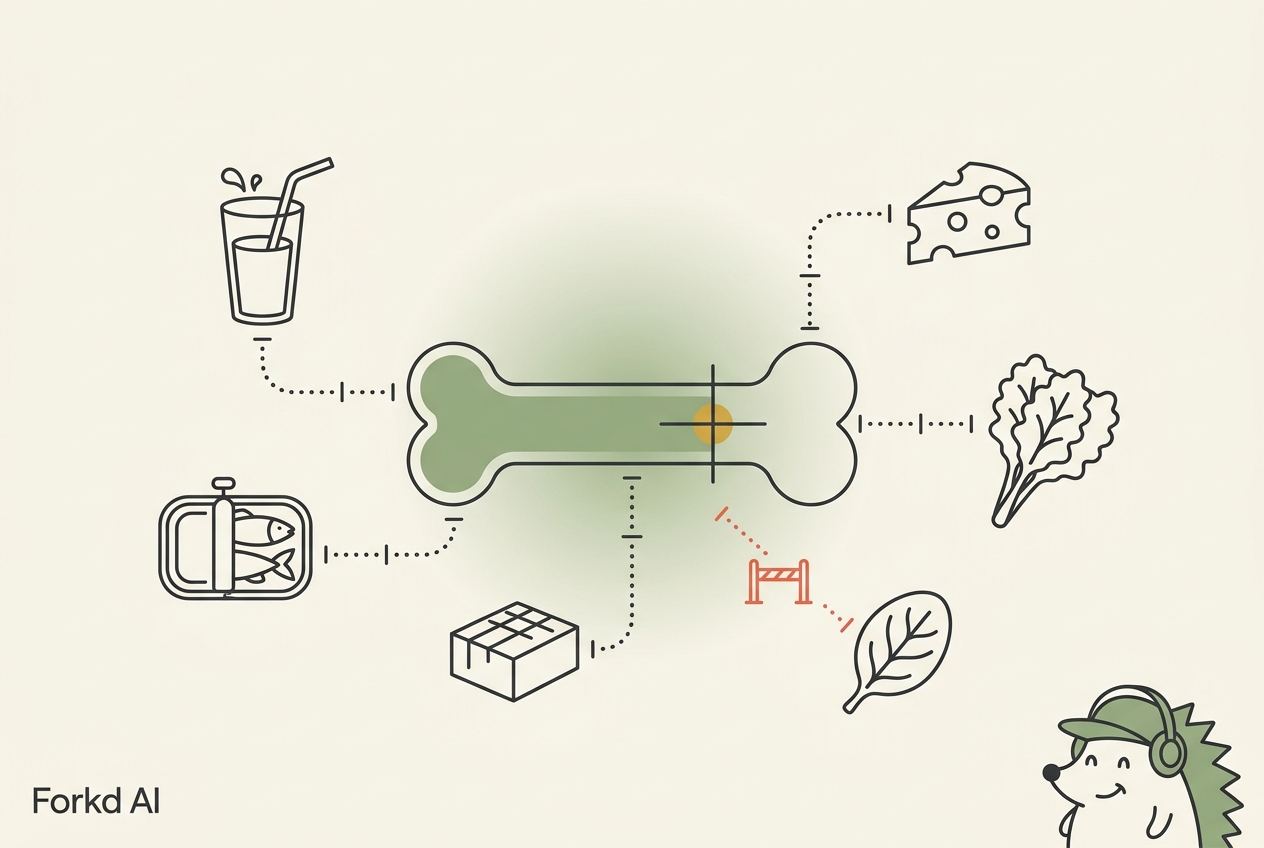
Magnesium is the mineral that does a lot and gets credit for very little. It helps your muscles contract and relax, keeps nerves firing properly, and plays a part in blood sugar control, blood pressure, and bone strength.
Almost nobody tracks it, though. And a lot of people come up short. An analysis of national survey data from 2013 to 2016 found that 48 percent of Americans get less magnesium from food and drinks than their estimated requirement. Men over 70 and teenagers were the most likely to fall short.
Mayo Clinic put it well:
Magnesium may not always get the spotlight but it plays a role in more than 300 bodily functions, including energy production, muscle and nerve function, heart health, bone strength and blood sugar control.
— Mayo Clinic (@MayoClinic) August 7, 2025
Learn how to get enough through food: https://t.co/f0xqobHGz2 pic.twitter.com/pj7bLq7Qnx
How Much Magnesium Do You Need?
| Group | RDA |
|---|---|
| Men 19 to 30 | 400 mg/day |
| Men 31+ | 420 mg/day |
| Women 19 to 30 | 310 mg/day |
| Women 31+ | 320 mg/day |
There's also an upper limit of 350 mg a day, but it only applies to supplements and medications. Magnesium from food doesn't count toward it, because healthy kidneys clear the extra.
Which Foods Are Highest in Magnesium?
All values come from USDA FoodData Central, calculated for the portion shown.
Which seeds and nuts have the most magnesium?
| Food | Portion | Magnesium | Calories |
|---|---|---|---|
| Pumpkin seed kernels, roasted | 1 oz (28 g) | 156 mg | 163 |
| Chia seeds | 1 oz (28 g) | 95 mg | 138 |
| Almonds | 1 oz (28 g) | 77 mg | 164 |
| Cashews, dry roasted | 1 oz (28 g) | 74 mg | 163 |
| Dark chocolate, 70 to 85% cacao | 1 oz (28 g) | 65 mg | 170 |
| Peanut butter, smooth | 2 tbsp (32 g) | 54 mg | 191 |
| Peanuts, dry roasted | 1 oz (28 g) | 50 mg | 166 |
| Sunflower seeds, dry roasted | 1 oz (28 g) | 37 mg | 165 |
| Flaxseed, ground | 1 tbsp (7 g) | 27 mg | 37 |
Pumpkin seeds are ridiculous. One small handful covers about half of what a woman needs in a day. If you only change one thing after reading this, keep a jar of them around.
Dark chocolate makes the list too, at 65 mg an ounce. It's a genuinely nice fact. It also comes with 170 calories, so it's a bonus rather than a plan.
Which vegetables have the most magnesium?
| Food | Portion | Magnesium | Calories |
|---|---|---|---|
| Spinach, boiled | 1 cup (180 g) | 157 mg | 41 |
| Swiss chard, boiled | 1 cup (175 g) | 151 mg | 35 |
| Potato, baked, with skin | 1 medium (173 g) | 48 mg | 161 |
| Avocado | 1/2 fruit (100 g) | 29 mg | 160 |
Cooked leafy greens pack a lot of magnesium for almost no calories. A cup of spinach or chard does as much as an ounce of pumpkin seeds at a quarter of the calories.
Which beans, grains, and soy foods have the most magnesium?
| Food | Portion | Magnesium | Calories |
|---|---|---|---|
| Black beans, boiled | 1 cup (172 g) | 120 mg | 227 |
| Quinoa, cooked | 1 cup (185 g) | 118 mg | 222 |
| Edamame | 1 cup (155 g) | 99 mg | 188 |
| Lima beans, boiled | 1 cup (188 g) | 81 mg | 216 |
| Brown rice, cooked | 1 cup (202 g) | 79 mg | 248 |
| Tofu, firm | 1/2 cup (126 g) | 73 mg | 181 |
| Oatmeal, cooked | 1 cup (234 g) | 63 mg | 166 |
| Whole-wheat bread | 1 slice (32 g) | 24 mg | 81 |
Beans and whole grains are steady, everyday sources. Black beans and quinoa both come close to 120 mg per cup. For the protein side of beans, see protein in black beans.
How do dairy, fish, and fruit compare?
| Food | Portion | Magnesium | Calories |
|---|---|---|---|
| Yogurt, plain, low-fat | 1 cup (245 g) | 42 mg | 154 |
| Banana | 1 medium (118 g) | 32 mg | 105 |
| Milk, 1% | 1 cup (244 g) | 27 mg | 102 |
| Salmon, Atlantic, farmed | 3 oz (85 g) | 26 mg | 175 |
| Halibut, cooked | 3 oz (85 g) | 24 mg | 94 |
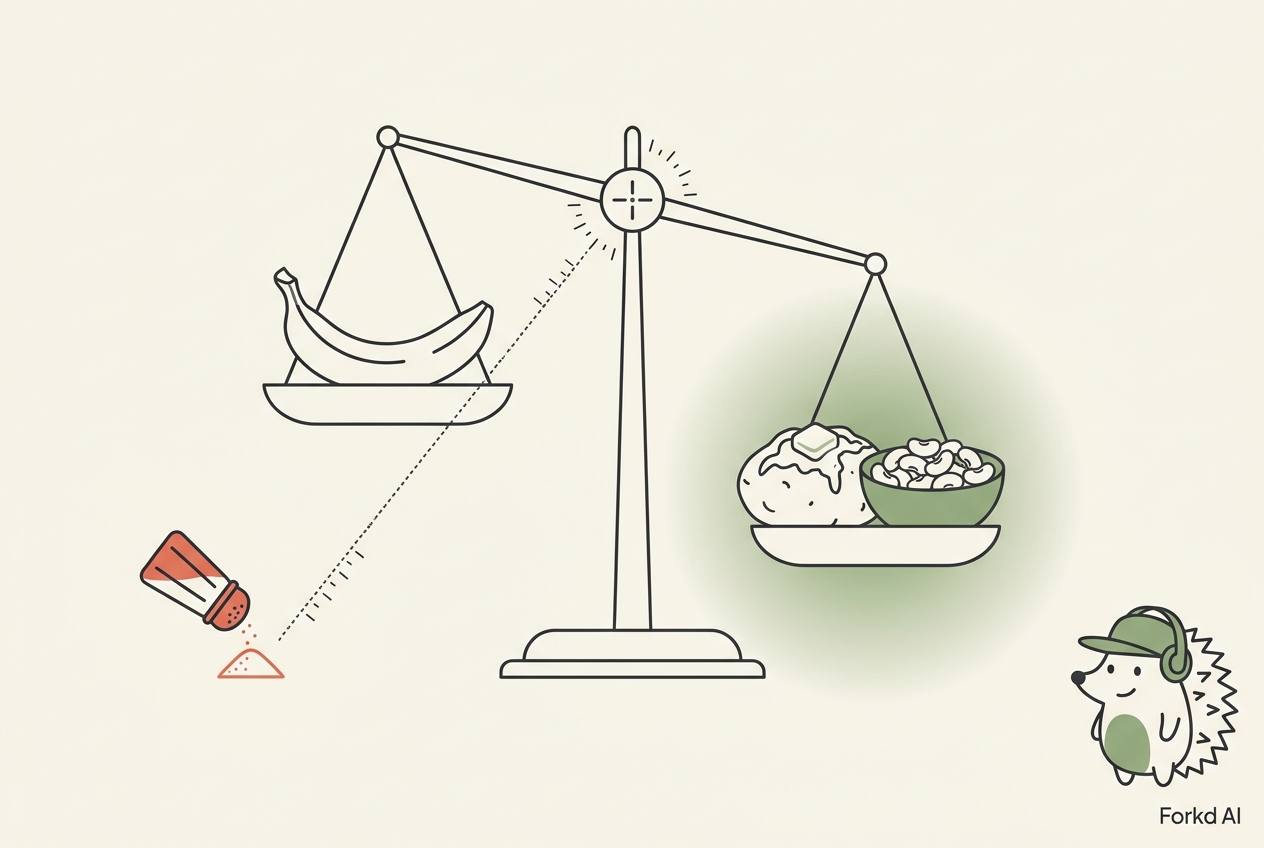
Here's the pattern. Plant foods carry most of the magnesium, and animal foods are modest contributors. Bananas get mentioned for magnesium a lot, but a medium one gives you 32 mg. That's fine. It's also less than 10 percent of most adults' target.
What Does a Magnesium-Rich Day Look Like?
| Meal | What's on the plate | Magnesium |
|---|---|---|
| Breakfast | 1 cup oatmeal with 1 tbsp ground flax and a banana | 122 mg |
| Lunch | Bowl with 1 cup quinoa and 1/2 cup black beans | 178 mg |
| Snack | 1 oz pumpkin seeds | 156 mg |
| Dinner | 3 oz salmon with 1 cup cooked spinach | 183 mg |
| Total | 639 mg |
That clears even the 420 mg target for men comfortably. Notice how much the seeds and spinach carry. Many of these same foods show up in our guides to foods high in fiber and foods high in potassium, which makes them excellent value.
Does Magnesium Help Blood Pressure or Sleep?
These are the two big claims you'll see online. The evidence is real for one and thin for the other.
Blood pressure: a small, real effect. A 2016 meta-analysis in Hypertension pooled 34 double-blind, placebo-controlled trials with 2,028 participants. Magnesium supplements at a median dose of 368 mg a day for about three months lowered systolic blood pressure by 2.00 mm Hg and diastolic by 1.78 mm Hg. That's modest. It's also a meaningful nudge for a cheap mineral, and it sits well alongside potassium and less sodium.
Sleep: the internet is ahead of the evidence. A 2021 systematic review of magnesium for insomnia in older adults found only three randomized trials, with 151 people in total. People on magnesium fell asleep about 17 minutes faster than those on placebo. The improvement in total sleep time wasn't statistically significant. All the trials had moderate to high risk of bias, and the evidence was rated low to very low quality. Maybe it helps. Nobody should call it proven.
If you try supplements, the most common side effect is diarrhea, especially at higher doses. People with kidney disease should talk to a doctor first, since their kidneys may not clear the excess.
How Do You Know If You're Getting Enough Magnesium?
A standard blood test isn't a great guide. Less than 1 percent of your body's magnesium is in your blood serum, and your body holds that level steady, so a normal result doesn't prove your intake is good.
Tracking what you eat is more telling. Forkd's micronutrient tracker reads magnesium alongside potassium, iron, calcium, and the rest of its 15+ nutrients from a photo, a voice note, or a line of text, using per-ingredient USDA values. Search the App Store for "AI Calorie Tracker: Forkd".
For the bigger picture on which nutrients deserve attention, see what micronutrients should I track.
Frequently Asked Questions
Which food has the most magnesium?
Per ounce, roasted pumpkin seed kernels lead at 156 mg. Per typical serving, a cup of cooked spinach (157 mg) and a cup of cooked Swiss chard (151 mg) are right there too, followed by black beans (120 mg per cup) and quinoa (118 mg per cup).
Is dark chocolate a good source of magnesium?
It's a decent one. An ounce of 70 to 85 percent dark chocolate has 65 mg of magnesium, about 15 to 20 percent of an adult's daily needs. It also has 170 calories, so pumpkin seeds, beans, and leafy greens are more efficient choices.
Do bananas have a lot of magnesium?
Not really. A medium banana has 32 mg, which is less than 10 percent of the RDA for most adults. Bananas are a better source of potassium, and even there, potatoes and beans beat them.
Can you get too much magnesium?
Not from food, if your kidneys work normally, because they excrete the excess. The upper limit of 350 mg a day applies to supplements and medications only. Going over it often causes diarrhea and cramping, and people with kidney disease face a higher risk of toxicity.
Does magnesium help you sleep?
The evidence is weak. A 2021 review found only three small trials in older adults, where magnesium helped people fall asleep about 17 minutes faster, but the studies had a high risk of bias and low-quality evidence overall. It's not proven.
Key Takeaways
- Adults need 310 to 420 mg of magnesium a day, and 48 percent of Americans get less than their requirement from food.
- Top sources: pumpkin seeds (156 mg per ounce), spinach (157 mg per cooked cup), Swiss chard (151 mg), black beans (120 mg), and quinoa (118 mg).
- Plant foods carry most of the magnesium in a typical diet. Dairy, fish, and bananas are modest sources.
- Magnesium supplements lower blood pressure slightly, by about 2 mm Hg systolic in a meta-analysis of 34 trials.
- Evidence that magnesium improves sleep is limited and low quality.
References
- National Institutes of Health, Office of Dietary Supplements. Magnesium: Fact Sheet for Health Professionals. RDAs, upper limit, NHANES intake data, and blood levels. ods.od.nih.gov
- Zhang X, Li Y, Del Gobbo LC, et al. (2016). Effects of magnesium supplementation on blood pressure: a meta-analysis of randomized double-blind placebo-controlled trials. Hypertension, 68(2), 324-333. doi.org
- Mah J, Pitre T. (2021). Oral magnesium supplementation for insomnia in older adults: a systematic review and meta-analysis. BMC Complementary Medicine and Therapies, 21(1), 125. doi.org
- USDA FoodData Central. Magnesium and calorie values for roasted pumpkin seed kernels (170557), chia seeds (170554), almonds (170567), dry-roasted cashews (170571), dark chocolate (170273), smooth peanut butter (172470), dry-roasted peanuts (173806), sunflower seeds (170563), flaxseed (169414), spinach (168463), Swiss chard (170401), baked potato (170093), avocado (171705), black beans (173735), quinoa (168917), edamame (168411), lima beans (174253), brown rice (169704), firm tofu (172475), oatmeal (173905), whole-wheat bread (172688), low-fat yogurt (170886), banana (173944), 1% milk (170872), farmed Atlantic salmon (175168), and halibut (174201). fdc.nal.usda.gov
Written by
Vineet Karhail builds Forkd, the AI-powered calorie and nutrition tracking app, and writes its research-backed guides on calories, macros, and micronutrients.