Why Do You Overeat on Weekends? The Science Behind the Saturday Drift
The Short Answer
Research shows most adults consume meaningfully more calories on weekends than weekdays, driven by disrupted routines, social eating environments, and a psychological pattern called dietary disinhibition, where a perceived break from the rules triggers overeating. Understanding these three mechanisms makes it possible to close the weekend gap without restricting enjoyment.
Disclaimer
This article is for information only and does not replace medical advice. Needs vary with age, sex, and situation (pregnancy, conditions, medication): if in doubt or symptomatic, talk to a health professional.
Does Weekend Eating Actually Affect Your Weight?
Most people know they eat a bit differently on weekends. What they often underestimate is by how much, and what that means over time.
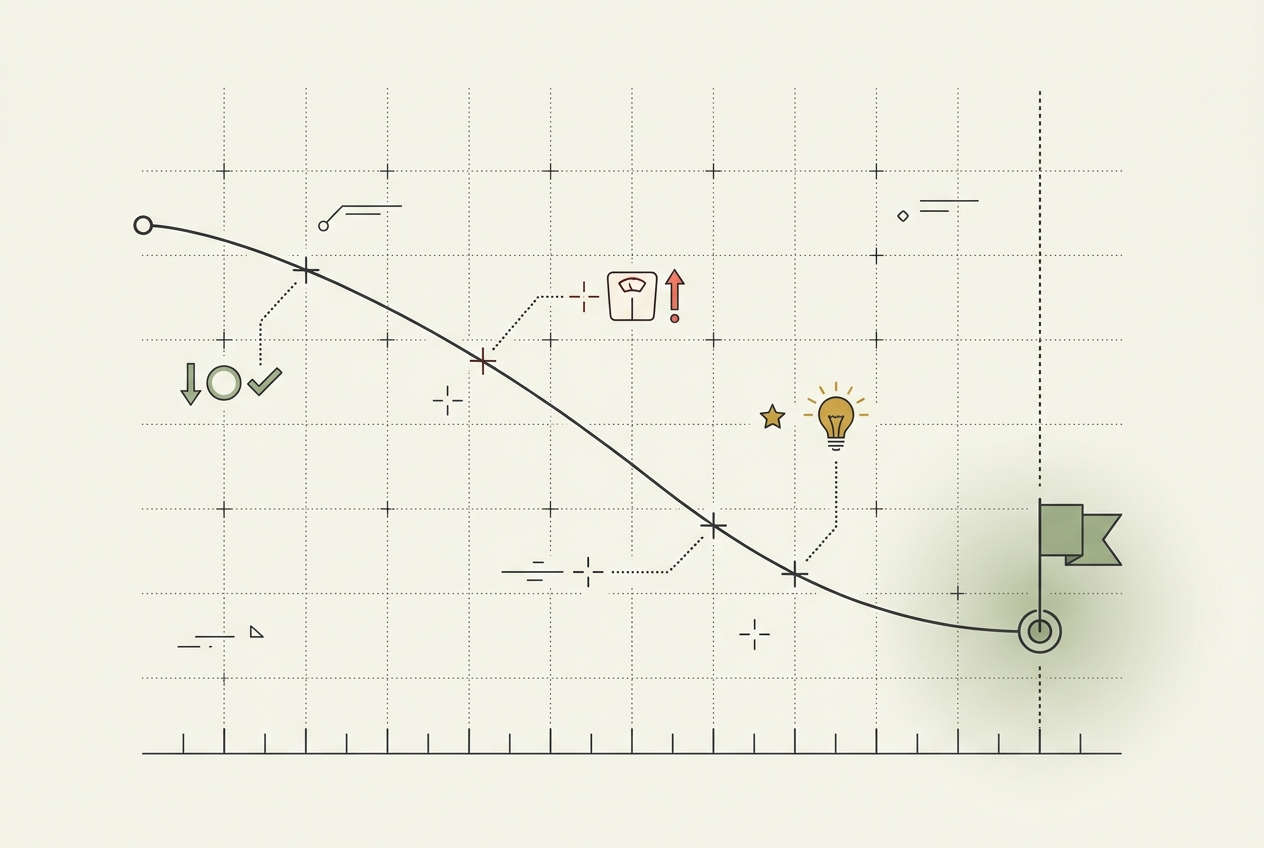
Racette et al. (2008), in a study published in Obesity, tracked the dietary patterns and weight fluctuations of 48 adults over a year. They found a consistent pattern: weight tended to increase during the weekend and decrease during the weekdays, with the net direction of change over time determined largely by whether weekend gains were fully reversed before the next weekend arrived. In people who gained weight across the year, the weekend eating pattern was a primary driver, not exceptional weekend meals, but the cumulative effect of eating differently for two out of every seven days.
Two out of seven days is 29% of your life. It is enough to determine the trajectory of your weight.
Why Does Breaking Your Routine Change How Much You Eat?
Most people don't track how much they eat on weekdays through conscious decision-making, they rely on habit. The same breakfast at the same time. The same lunch from the same place. The same rough dinner format. These habitual patterns act as natural portion regulators: you eat roughly the same amount because the cues (the bowl, the plate, the routine, the time) are the same.
On weekends, those cues disappear. You wake up later, eat at different times, eat in different places, and eat different foods. Without the anchoring effect of weekday routine, portion sizes drift upward, meals become less structured, and grazing replaces planned eating.
This is not a failure of willpower. It is a predictable consequence of removing the environmental scaffolding that regulates eating behaviour during the week. The weekday routine is doing more work than most people realise, its absence is felt in the data even when it isn't felt consciously.
Why Do You Eat More in Social Situations?
Weekends tend to involve more eating with other people, family, friends, restaurants, events. This is one of the most reliable drivers of increased calorie intake.
Social facilitation of eating is well-documented: people eat more when eating with others than when eating alone, and the effect scales with group size and familiarity. De Castro (1994), studying naturally occurring eating patterns, found that meals eaten with family and close friends involved significantly greater food intake than meals eaten with acquaintances or alone, an effect that persisted even after adjusting for meal duration and the number of courses served.
The mechanism is partly pacing (you match the speed and volume of people around you), partly social permission (eating a lot feels appropriate when everyone else is too), and partly distraction (you pay less attention to your own intake when you're engaged in conversation). None of these processes require any conscious decision to eat more, they happen automatically, which is why people are typically surprised when their weekend intake data shows the effect.
What Is Dietary Disinhibition and Why Does It Hit on Weekends?
Beyond routine disruption and social eating, there is a third mechanism: the psychological tendency to treat certain periods as exempt from ordinary eating rules.
Herman and Polivy's research on dietary restraint describes a pattern they termed "disinhibition", where a perceived violation of self-imposed eating rules leads not to moderation but to escalation. Once the mental "boundary" between allowed and forbidden is crossed, the motivation to restrict collapses: "I've already had dessert, I may as well have more." Weekend framing amplifies this effect. When Saturday and Sunday are mentally categorised as "off" days, the cognitive restraint that moderates weekday eating is suspended, sometimes explicitly, sometimes without any deliberate decision at all.
This is sometimes called the "what the hell" effect: the belief that the rules are already broken removes the reason to follow them. For people who maintain a fairly strict weekday eating pattern, the psychological contrast between "on" and "off" can be especially pronounced, the more rigid the weekday structure, the more likely the weekend release.
How Many Extra Calories Does the Weekend Gap Actually Add Up To?
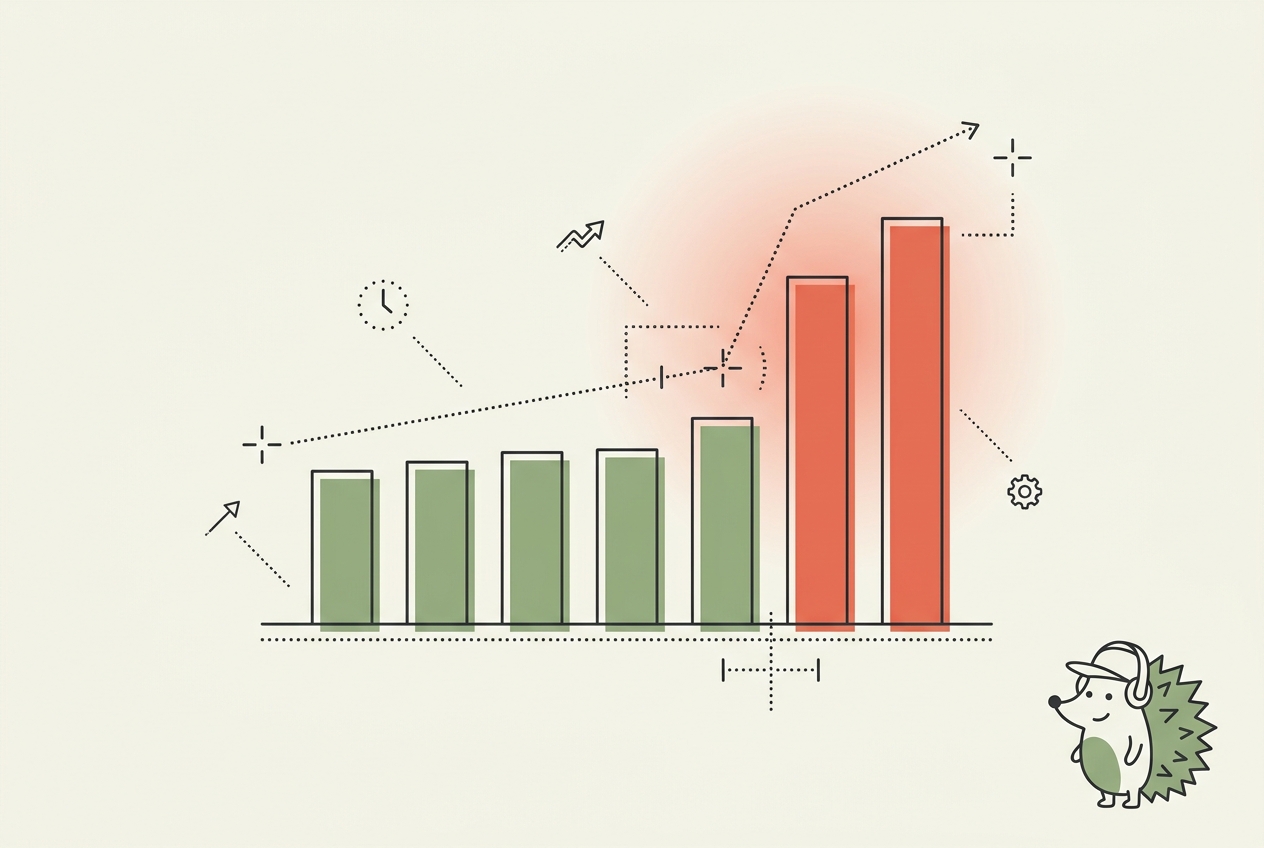
The precise figure varies, but the research consistently finds weekend intake running meaningfully higher than weekday intake. Across multiple studies examining daily dietary patterns, the weekend differential typically falls in the range of 400–500 additional calories per day.
Over a year, at a 400-calorie daily surplus across two days per week, that is roughly 41,600 extra calories, enough to account for approximately 5.5 kg of additional weight gain, assuming those surplus calories aren't offset elsewhere. In practice, the effect is smaller because the body does partly regulate over time, but the directional impact is real and sustained.
The implication is not that weekends must be approached like weekdays. It is that even partial awareness, knowing your weekend pattern is in play, can meaningfully reduce the gap.
How Do You Close the Weekend Gap Without Restricting Every Meal?
Full restriction on weekends is neither necessary nor sustainable. The goal is targeted awareness, not constant control.
Log on weekends. This is the single most effective tool. Data from self-monitoring studies consistently shows that tracking behaviour on days when people feel least like tracking is what determines long-term outcomes. An honest weekend log doesn't require perfection, it requires visibility. Knowing what you ate makes the gap visible and often closes it partially on its own.
Keep one morning anchor. A consistent weekend breakfast, same time, same rough composition, preserves one of the routine cues that regulate weekday intake. It prevents the full collapse of structure that allows grazing and unplanned eating to fill the day.
Eat before social events. Going to a dinner, party, or restaurant while hungry reliably produces higher intake. A small, protein-rich snack beforehand, 15–20g of protein, reduces hunger enough to reduce the social facilitation effect without eliminating enjoyment.
Don't categorise weekends as "off." The disinhibition effect requires a mental frame of "rules don't apply." Shifting the frame to "I eat differently on weekends, but I'm still paying attention" removes the psychological trigger for escalation without requiring restriction.
Frequently Asked Questions
Is It Normal to Weigh More on Monday Than Friday?
Yes, and it is not primarily fat. Weekend weight fluctuations are largely driven by water retention (from higher sodium and carbohydrate intake), heavier gastrointestinal contents, and glycogen replenishment. The number on the scale on Monday morning reflects the cumulative weekend inputs, not a gain of actual fat tissue. Weekly weigh-ins that capture a consistent day and time are more informative than daily fluctuations.
Does One Big Weekend Meal Actually Matter That Much?
A single large meal, by itself, has a modest impact. The weekend pattern that causes meaningful weight change is typically not one celebration dinner, it's the accumulation of slightly higher intake across multiple meals, multiple days: the bigger breakfast, the afternoon grazing, the larger restaurant portions, the extra drink. The individual meals feel moderate; the aggregate is where the difference lives.
Can I Save Calories During the Week to Spend on Weekends?
Weekly calorie budgeting, eating slightly below maintenance on weekdays to allow more on weekends, can work in principle and is sometimes used deliberately. The practical challenge is that deficit-driven eating during the week can amplify hunger going into the weekend, making moderation harder, not easier. Keeping the weekday deficit moderate (not aggressive) makes this strategy more sustainable.
Why Don't I Feel Like I'm Overeating on Weekends?
Because weekend overeating typically doesn't feel like overeating, it feels like normal eating in a social context. Portion sizes at restaurants are larger, meals are longer, pacing is driven by conversation rather than appetite, and the distraction effect reduces awareness of intake. Without logging, the brain's estimate of weekend consumption tends to be significantly lower than actual consumption, because eating in pleasurable contexts registers less consciously than eating alone at a desk.
Key Takeaways
- Research shows that weekend eating patterns are a significant driver of long-term weight trajectory, not because weekends are exceptional, but because they repeat every week
- Three mechanisms drive weekend overeating: routine disruption (removing the environmental cues that regulate weekday intake), social facilitation (eating more in groups), and dietary disinhibition (psychological "off" framing that suspends restraint)
- The weekend calorie differential is typically in the range of 400–500 calories per day, modest per meal, but significant in aggregate
- Logging on weekends is the most effective single intervention, visibility reduces the gap without requiring restriction
- Keeping one morning routine anchor and avoiding the "off day" mental frame meaningfully reduce the disinhibition effect
References
- Racette, S. B., et al. (2008). Influence of weekend lifestyle patterns on body weight. Obesity, 16(8), 1826–1829. Link
- De Castro, J. M. (1994). Family and friends produce greater social facilitation of food intake than other companions. Physiology & Behavior, 56(3), 445–455. Link
- Herman, C. P., & Polivy, J. (1984). A boundary model for the regulation of eating. In A. J. Stunkard & E. Stellar (Eds.), Eating and Its Disorders. Raven Press.
Written by
Vineet Karhail builds Forkd, the AI-powered calorie and nutrition tracking app, and writes its research-backed guides on calories, macros, and micronutrients.