Best AI Calorie Counter Apps in 2026: Snap a Photo, Skip the Database
The Short Answer
The best AI calorie counter apps in 2026 are Forkd (best all-round: photo logging plus fasting tracker and coaching), Cronometer (most nutritionally detailed with photo support), and Foodvisor (best for European and international cuisine). AI photo logging is faster than database searching but accuracy varies, plan on editing estimates for complex meals and hidden ingredients.
Disclaimer
This article is for information only and does not replace medical advice. Needs vary with age, sex, and situation (pregnancy, conditions, medication): if in doubt or symptomatic, talk to a health professional.
How Does AI Calorie Counting Actually Work?
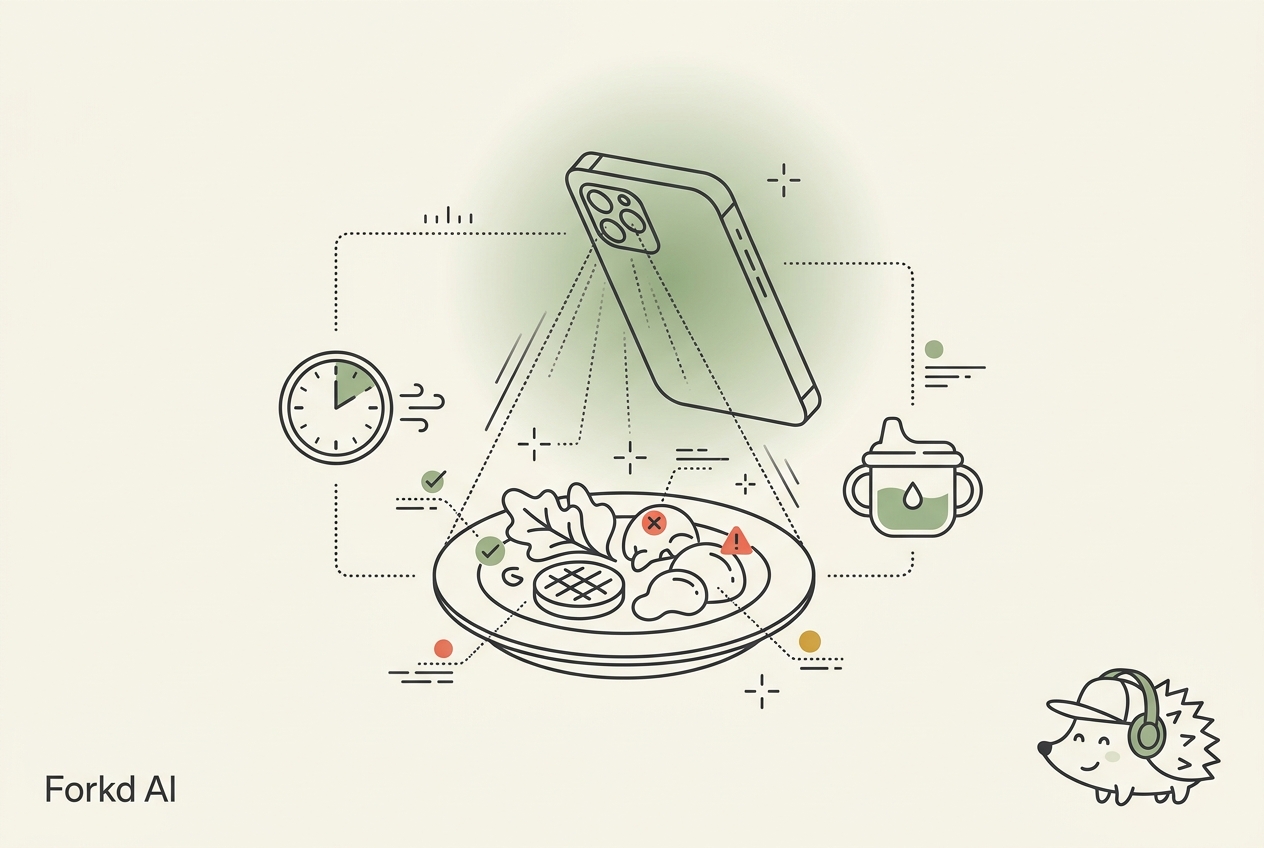
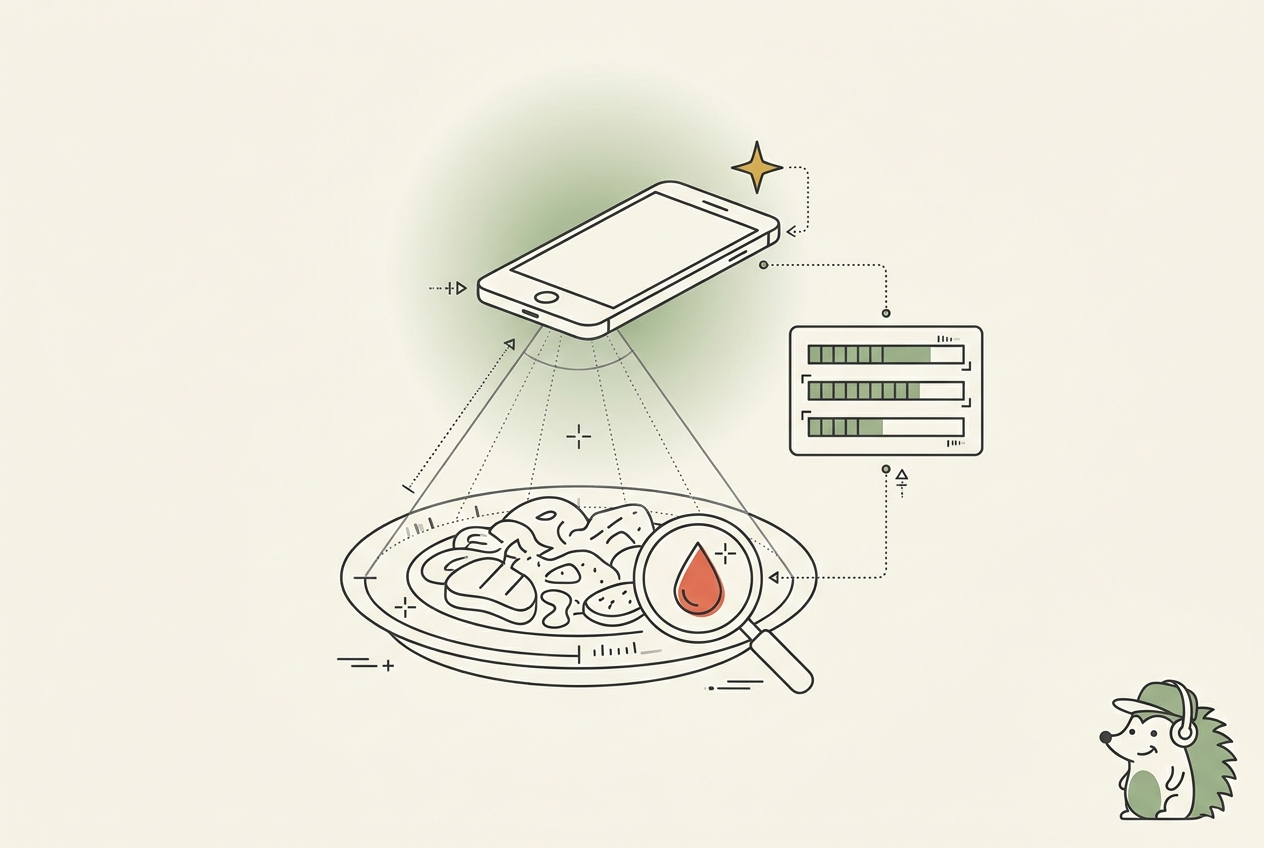
You photograph your plate. The app's image recognition identifies what's on it, estimates portion sizes, and returns a calorie and macro breakdown, usually in two to five seconds. You review the estimate, adjust anything that looks off, and you're done.
The appeal over database logging is speed. Searching a database for "pasta with tomato sauce, restaurant portion, no meat" involves guessing at the right entry, checking that the macros look reasonable, adjusting the quantity, and repeating for every component. Photo logging compresses that into one tap and a few seconds.
The limitation is accuracy. Image recognition handles clearly separated foods well, a piece of grilled chicken, a bowl of rice, a banana. It struggles with mixed dishes, sauces hidden beneath other ingredients, and anything where portion size is ambiguous from above. The best apps account for this by surfacing likely hidden extras (oil, butter, dressing) and making the estimate easy to edit.
Which AI Photo Calorie Apps Are Worth Using?
Forkd
Forkd's photo AI estimates calories, macros, and micronutrients in under 10 seconds. A standout feature: the app actively surfaces hidden calories that other apps tend to miss. Photograph a salad and it flags that dressings and toppings are typically present; photograph something pan-fried and it adds cooking oil to the estimate. You can accept or remove these additions with a tap.
Beyond the photo feature, Forkd includes a fasting timer, micronutrient tracking (iron, calcium, and other key nutrients), weekly coaching insights from Forkie, and a challenge system for building consistency. This makes it the most complete tool in the photo-logging category rather than just a calorie camera.
Cronometer
Cronometer added photo logging in 2025, and it's a useful addition to an already strong app. The primary strength remains the data: 84 verified nutrients per food entry, with lab-backed data from the USDA NCCDB. Photo logging gets you in the door fast; the depth behind the scenes is what makes the data trustworthy. Free tier has no daily cap and includes full micronutrient breakdowns. Gold tier costs $49.99/year.
Best for: anyone who wants photo logging speed plus detailed nutritional data beyond calories and macros.
Foodvisor
Foodvisor is a French-built photo logging app that handles European and international food better than US-centric apps. The algorithm was trained on a globally distributed dataset, so it identifies dishes like boeuf bourguignon, spaetzle, and paella more reliably than competitors. Accuracy on European cuisine runs around 85%, compared to roughly 70% for US fast food and chains.
Pricing: free tier is available but the AI photo feature requires Premium at $39.99/year, the most affordable paid option in the photo-logging category.
Best for: users who regularly eat European or non-American cuisine and find that other photo apps consistently misidentify their meals.
Cal AI (formerly standalone, now MFP-owned)
Cal AI was a popular photo-first calorie app before MyFitnessPal acquired it in March 2026. Since the acquisition, Cal AI went through a rough stretch: briefly removed from the App Store in April 2026 for deceptive paywall design, and a data breach affected 3.2 million users in between. The app is now integrated into the MyFitnessPal ecosystem. If you were a Cal AI user, the path forward is now tied to MyFitnessPal Premium ($79.99/year).
How Accurate Is AI Photo Logging Compared to Manual Entry?
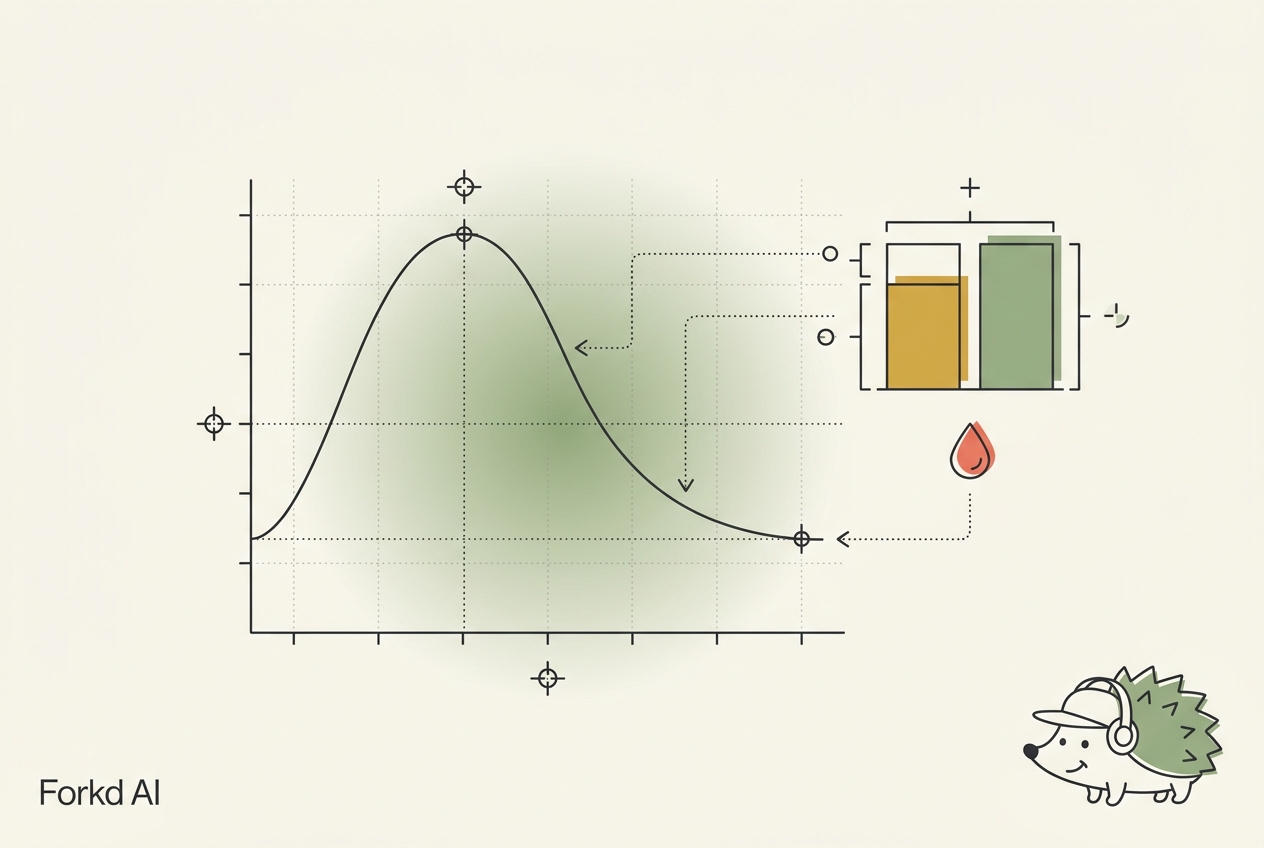
The 2026 DAI Validation Study (DAI-VAL-2026-01) tested AI photo apps on weighed reference meals. Foodvisor recorded ±16.2% mean absolute percentage error on reference meals. Performance across apps varied by food type:
- Single-ingredient foods (piece of fish, cup of rice): most accurate
- Multi-component meals (salad, stir-fry, pizza): moderate accuracy, depends on visibility of components
- Sauces, dressings, cooking fats: most commonly missed or underestimated
Manual database entry by an experienced user on a known food is typically more accurate than photo estimation. But the relevant comparison isn't "perfect log vs. AI estimate", it's "AI estimate vs. no log at all." For most people, photo logging produces consistent, directionally accurate data that changes behaviour and surfaces useful patterns.
What Do AI Calorie Apps Miss, and How Do You Fix It?
The category has two consistent blind spots:
Hidden fats. Cooking oil, butter used in preparation, salad dressing, and sauces beneath visible ingredients are underestimated by most photo apps. A meal that looks like 400 calories in the frame can easily be 600 once cooking fat and dressing are accounted for. Apps that actively flag hidden extras, rather than ignoring them, produce meaningfully more accurate totals.
Portion estimation. Without a reference object in the frame (a known-size plate, a hand, a measuring cup), the AI is guessing portion size from visual cues alone. A chicken breast on one plate looks very similar to a chicken breast twice the size. Placing your phone or a coin in the frame gives the AI a scale reference. Most apps let you manually adjust quantities after the estimate if you know the actual weight.
What Should You Look for in an AI Calorie App?
Three things determine whether an AI calorie app actually improves your tracking:
Edit ease. The estimate is a starting point. An app that makes editing fast, tap to adjust quantity, swipe to add a missed ingredient, produces better data than one where correcting the AI requires multiple steps.
Hidden ingredient prompts. Apps that ask "does this include dressing?" or "was this cooked in oil?" catch the biggest sources of AI underestimation. This feature separates the apps that are built for accuracy from the ones that are built to look impressive in demos.
What's tracked beyond calories. A photo logger that returns only calories and macros gives you less useful data than one that tracks protein per meal, micronutrient totals, and fasting patterns. The calorie number is the starting point, not the ceiling of what's useful.
Frequently Asked Questions
Can I Use an AI Calorie App Without Paying?
Yes, with limitations. Forkd's core photo logging feature is available on the free tier. Cronometer's free tier includes unlimited logging but its photo feature is more limited. Foodvisor requires a paid plan to access photo logging at all. Most apps offer a 3–7 day free trial if you want to test photo accuracy before committing.
How Do I Get More Accurate Results From Photo Logging?
Photograph meals from directly above with good lighting. Keep components separated where possible rather than mixing before photographing. Include a reference object (a phone, a hand) for portion scale. Photograph before adding sauces or dressings, then log those separately. Edit the AI estimate, don't accept it uncritically, especially for high-calorie items.
Are AI Calorie Apps Safe to Use for Weight Loss?
Yes, for most healthy adults. The main consideration is that AI estimates are approximations, not measurements. For most weight-loss goals, a 300–500 calorie daily deficit, the ±15–20% accuracy range is close enough to be useful. For clinical nutrition management or medically supervised weight loss, work with a registered dietitian rather than relying solely on an app.
What Happens to My Data If the App Gets Acquired or Shuts Down?
Cal AI's acquisition by MyFitnessPal in March 2026 is a recent example of this risk. When apps are acquired, pricing typically increases and features may change. Export your data regularly (most apps support CSV or PDF export), and be cautious about apps with opaque ownership or very low pricing that may depend on future monetisation changes.
Key Takeaways
- AI photo calorie apps eliminate database searching, you photograph a meal and get an estimate in seconds
- Forkd adds fasting, micronutrient tracking, and coaching to photo logging; Cronometer adds clinical-depth nutrient data; Foodvisor handles international cuisine best
- Cal AI is now owned by MyFitnessPal following a March 2026 acquisition, and had a rocky year including an App Store removal and data breach
- Photo logging accuracy runs ±15–20% for typical meals; hidden fats and portion estimation are the biggest gaps
- Edit ease and hidden-ingredient prompting separate genuinely useful AI calorie apps from ones that just look fast in demos
Written by
Vineet Karhail builds Forkd, the AI-powered calorie and nutrition tracking app, and writes its research-backed guides on calories, macros, and micronutrients.