Best Nutrition App for Type 2 Diabetes in 2026
The Short Answer
The best nutrition apps for type 2 diabetes management are Cronometer (tracks carbohydrates in detail, total, fibre, and net carbs, alongside all micronutrients relevant to metabolic health, free) and Forkd (fastest daily logging with carbohydrate tracking and weekly coaching for pattern awareness). Managing diabetes nutrition should be done in partnership with your GP, diabetes care team, or registered dietitian. These apps generate the data for those conversations, they do not replace the conversations.
Disclaimer
This article is for information only and does not replace medical advice. Needs vary with age, sex, and situation (pregnancy, conditions, medication): if in doubt or symptomatic, talk to a health professional.
Why Nutrition Tracking Matters in Type 2 Diabetes
Type 2 diabetes involves reduced insulin sensitivity and impaired ability to regulate blood glucose. Food, particularly carbohydrate intake, is the primary dietary lever for blood glucose management.
Nutrition tracking in type 2 diabetes serves several purposes:
Carbohydrate visibility. Knowing which foods and meals contribute carbohydrates, and approximately how much, is the foundational information for blood glucose management. Without tracking, carbohydrate intake is often significantly underestimated. Hidden carbohydrates in sauces, drinks, bread, and condiments add up in ways that are difficult to assess without data.
Meal pattern identification. Blood glucose is affected not just by total daily carbohydrate but by the distribution across meals, the timing of eating, and the glycaemic impact of individual foods. Tracking creates a food diary that can be compared against blood glucose readings (from a glucose monitor) to identify which meals drive the largest glucose responses.
Progress over time. HbA1c (the standard 3-month blood glucose average) reflects the cumulative dietary pattern over time. Tracking provides the dietary record that explains HbA1c results to your care team and that shows what changes have been made.
Micronutrient adequacy. Type 2 diabetes is associated with several micronutrient depletion patterns. Magnesium deficiency is more common in people with diabetes and is associated with insulin resistance. Vitamin D deficiency is prevalent and correlated with metabolic outcomes. Zinc and chromium play roles in insulin function. Standard calorie-only apps miss all of this.
What to Look for in a Diabetes Nutrition App
Carbohydrate detail. The most useful carbohydrate data includes total carbohydrates, dietary fibre (which slows glucose absorption and is subtracted from total carbs to estimate net carbs or glycaemic impact), and ideally glycaemic index or glycaemic load information. Apps that only show total carbohydrates without fibre are less informative.
Accuracy of database. Carbohydrate data accuracy matters more for diabetes management than for general health. Incorrect carbohydrate values can lead to inaccurate blood glucose predictions. Apps with verified databases (Cronometer uses USDA NCCDB data) are more reliable than crowdsourced databases.
Meal logging speed. People managing diabetes often need to track every meal consistently over months and years. Logging friction determines long-term adherence. An app that requires 3–5 minutes per entry is harder to maintain indefinitely than one that takes under 30 seconds.
Connection to a care team. Some specialised diabetes apps connect to continuous glucose monitors (CGMs), share data with care teams, and provide more sophisticated glucose-diet correlation analysis. General nutrition tracking apps do not do this, but they generate dietary records that can be shared with a care team.
The Best Nutrition Apps for Type 2 Diabetes
Cronometer, Best for Carb Tracking Depth and Micronutrient Monitoring
Cronometer provides the most detailed carbohydrate tracking available in a free app. For each food item, it shows:
- Total carbohydrates
- Dietary fibre
- Net carbs (calculated)
- Sugar content
- Sugar alcohol content (for people using sugar substitutes)
For people managing type 2 diabetes who need to monitor carbohydrate intake across different meal patterns, this level of detail matters. Low-carb approaches, Mediterranean-style carbohydrate modification, and standard carbohydrate exchange counting all require knowing more than just calories.
Cronometer also tracks all micronutrients relevant to metabolic health: magnesium, zinc, chromium, vitamin D, and B vitamins. For people with type 2 diabetes working with a dietitian on comprehensive nutritional management, Cronometer's data export provides the complete picture.
Free tier covers all of this with unlimited logging and free barcode scanning. You can customise carbohydrate targets to match the approach recommended by your care team, whether that is a specific carbohydrate ceiling per day, a per-meal maximum, or a target range.
Setting Cronometer up for diabetes:
- Adjust the carbohydrate target in Settings to your recommended daily intake
- Enable fibre tracking so net carbs are visible
- Set magnesium and vitamin D targets to values your care team recommends
- Use the diary view to see carbohydrate distribution across meals (not just daily totals)
Forkd, Best for Daily Speed and Pattern Coaching
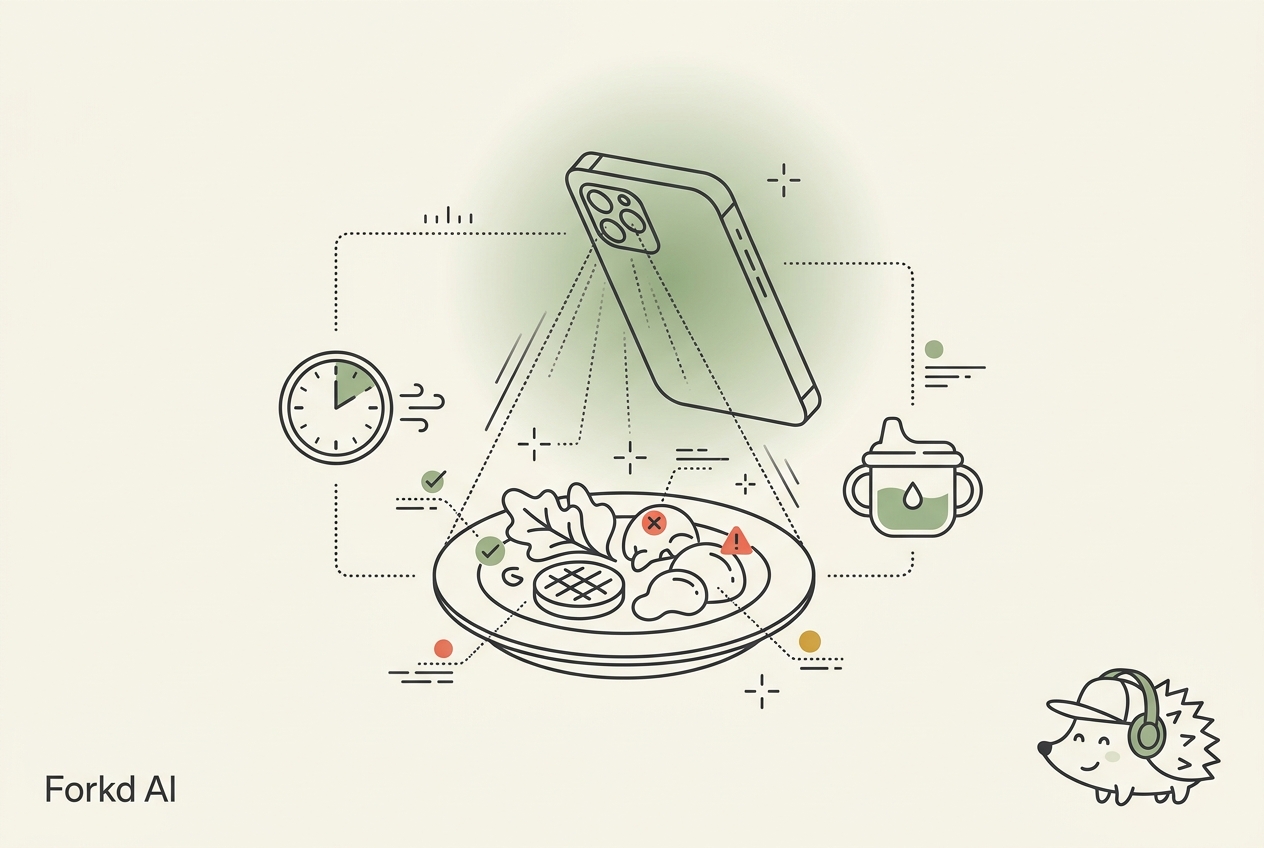
Forkd's AI photo logging makes meal entry fast enough to sustain over months, which matters for a chronic condition that requires long-term dietary management. Photo logging in under 10 seconds, or a quick voice note or text, covers restaurant meals, home cooking, and mixed dishes without the friction of database searching.
The weekly Forkie coaching is relevant for diabetes management: pattern-level insight, "your carbohydrate intake is highest at dinner on weeknights," gives you the information needed to make targeted changes rather than attempting to improve everything at once.
Forkd tracks carbohydrates, protein, and fat alongside key micronutrients (iron, calcium, vitamin D). It does not provide the detailed carbohydrate breakdown (fibre, sugar, net carbs) that Cronometer does, a limitation for people specifically using net carbohydrate counting as part of their diabetes management.
What About Specialised Diabetes Apps?
Apps designed specifically for diabetes management, like One Drop, mySugr, or Glucose Buddy, connect to glucose monitors, allow logging of blood glucose readings alongside food, and can show dietary patterns correlated with blood glucose data. These offer functionality that general nutrition apps (including Cronometer and Forkd) do not provide.
The trade-off: these specialised apps typically require subscriptions, may have less nutritional depth in their food tracking, and do not serve users whose primary goal is nutritional monitoring rather than glucose log correlation.
For comprehensive diabetes management: a specialised diabetes app connected to your glucose monitor handles the glucose-diet correlation piece; Cronometer handles the nutritional depth and data generation for care team discussions. Using both for their respective strengths is a reasonable approach.
Frequently Asked Questions
How Many Carbohydrates Should People With Type 2 Diabetes Eat Per Day?
This depends on your specific diabetes management approach, treatment plan, and glucose control targets. It is a question for your GP or diabetes dietitian rather than a general article. Common ranges used in clinical practice include low-carbohydrate diets (typically under 130g/day), moderate carbohydrate diets (130–225g/day), and carbohydrate exchange approaches that distribute intake across meals. Your care team's specific recommendation takes precedence over general guidance.
Can a Nutrition Tracking App Replace a Diabetes Management Plan?
No. Nutrition tracking apps are data tools. They show you what you are eating and may surface patterns. They do not manage medication, adjust insulin doses, interpret glucose readings, or replace the care team relationship. They generate dietary data that supports those conversations and decisions.
Is Counting Net Carbs Better Than Total Carbs for Diabetes?
The evidence is mixed. For people following low-carbohydrate dietary approaches, net carbs (total carbs minus dietary fibre and sugar alcohols) may give a more useful estimate of glycaemic impact than total carbohydrates. For standard carbohydrate counting in conventional diabetes management, most dietitians use total carbohydrates. Follow the approach your diabetes dietitian recommends.
Can I Share Food Tracking Data From These Apps With My Doctor?
Cronometer allows data export as CSV, which you can share with your care team. Forkd's data is viewable in the app. Neither app directly integrates with diabetes management platforms or electronic health records, but screenshots and exported summaries can be brought to appointments to show your care team what your dietary pattern looks like.
Key Takeaways
- Carbohydrate tracking is the most important nutritional lever in type 2 diabetes management. Apps that show total carbs, fibre, and net carbs are more useful than calorie-only trackers
- Cronometer provides the most detailed carbohydrate breakdown (total, fibre, net carbs, sugar) in a free app, plus magnesium, zinc, and vitamin D tracking relevant to metabolic health
- Forkd is fastest for daily logging speed and provides weekly pattern coaching, useful for a chronic condition requiring long-term tracking
- Specialised diabetes apps that connect to glucose monitors offer glucose-diet correlation analysis that general nutrition apps do not provide. Consider using a specialised diabetes app alongside Cronometer for comprehensive management
- All dietary approaches in diabetes should be guided by your care team. These apps generate data for those conversations, not a replacement for them
Written by
Vineet Karhail builds Forkd, the AI-powered calorie and nutrition tracking app, and writes its research-backed guides on calories, macros, and micronutrients.