Best Food Tracker for Vegans in 2026
The Short Answer
The best food tracker for vegans is Cronometer. It tracks B12, iron, zinc, calcium, omega-3 fatty acids, iodine, and all the nutrients where vegan diets are most commonly deficient, at no cost. Forkd is the fastest daily logging option and tracks iron, calcium, and vitamin D. For vegans who want to be sure their plant-based diet is nutritionally complete, an app that goes deeper than calories and macros is more useful than one that does not.
Disclaimer
This article is for information only and does not replace medical advice. Needs vary with age, sex, and situation (pregnancy, conditions, medication): if in doubt or symptomatic, talk to a health professional.
Why Vegan Diets Need More From a Food Tracker
A well-planned vegan diet can meet all nutritional requirements. The well-planned part is where tracking helps. Several nutrients are either absent from or poorly absorbed from plant foods, and deficiency develops gradually, making it easy to miss without data.
Vitamin B12. B12 is found almost exclusively in animal products. Vegans who do not supplement reliably will become deficient. It is a matter of time, not risk. Tracking B12 from fortified foods and supplements confirms the daily gap is covered.
Iron. Plant foods contain non-haem iron, which has significantly lower bioavailability than haem iron from animal sources. The recommended daily intake for vegans is often placed at 1.8 times the standard recommendation to account for lower absorption, meaning female vegans may need to target 32mg/day dietary iron rather than 18mg.
Calcium. Without dairy, calcium comes from fortified plant milks, tofu, leafy greens, and almonds. Meeting 1,000mg daily from these sources requires intentional food choices. It does not happen automatically.
Zinc. Phytic acid in grains and legumes inhibits zinc absorption. Vegans may need 50% more zinc than omnivores to achieve equivalent absorbed amounts. Standard daily targets (8–11mg) may underestimate true need on a plant-based diet.
Omega-3 fatty acids. Long-chain omega-3s (EPA and DHA) come from fatty fish. Vegans rely on the conversion of ALA from flaxseed, chia, and walnuts to EPA and DHA, a conversion that is typically only 5–10% efficient. An app that tracks omega-3 fatty acid composition (as Cronometer does) shows whether ALA intake is adequate and makes the EPA/DHA gap visible.
Iodine. Dairy and seafood are major iodine sources. Vegans without iodised salt or seaweed in their diet commonly fall short of the 150mcg daily target.
Vitamin D. Mushrooms and fortified foods are the main dietary sources. Tracking makes the dietary contribution visible alongside what supplementation provides.
The Best Food Trackers for Vegans
Cronometer, Best for Complete Plant-Based Nutritional Monitoring
Cronometer is the clear choice for vegans who want to verify their plant-based diet is nutritionally complete. It tracks every major nutrient where vegan diets are commonly deficient:
- Vitamin B12 (total from fortified foods; supplements can be added manually)
- Iron, with total amounts from all logged foods
- Calcium from plant sources (fortified milks, tofu, leafy greens)
- Zinc
- Omega-3 fatty acids by type: ALA, EPA, DHA, showing the plant-based omega-3 profile
- Iodine
- Vitamin D from dietary sources
The verified database means that when you log tofu, fortified oat milk, or nutritional yeast, the nutritional values come from verified sources rather than crowdsourced entries that may have incorrect or missing micronutrient data.
The free tier includes all of this with unlimited logging and free barcode scanning. For a vegan who wants to run a detailed nutritional audit on their eating pattern, tracking every food for a week and checking against targets, Cronometer is the only free app that does this comprehensively.
Gap: Cronometer's interface has a learning curve. It rewards users who invest time in setup and target customisation but feels more complex than modern apps for casual users.
Forkd, Best for Daily Speed and Iron/Calcium/Vitamin D Tracking
Forkd tracks iron, calcium, and vitamin D, three of the most commonly deficient nutrients in vegan diets, as part of its core free micronutrient tracking. Weekly Forkie insights notice when any of these are consistently low and surface the gap in plain English.
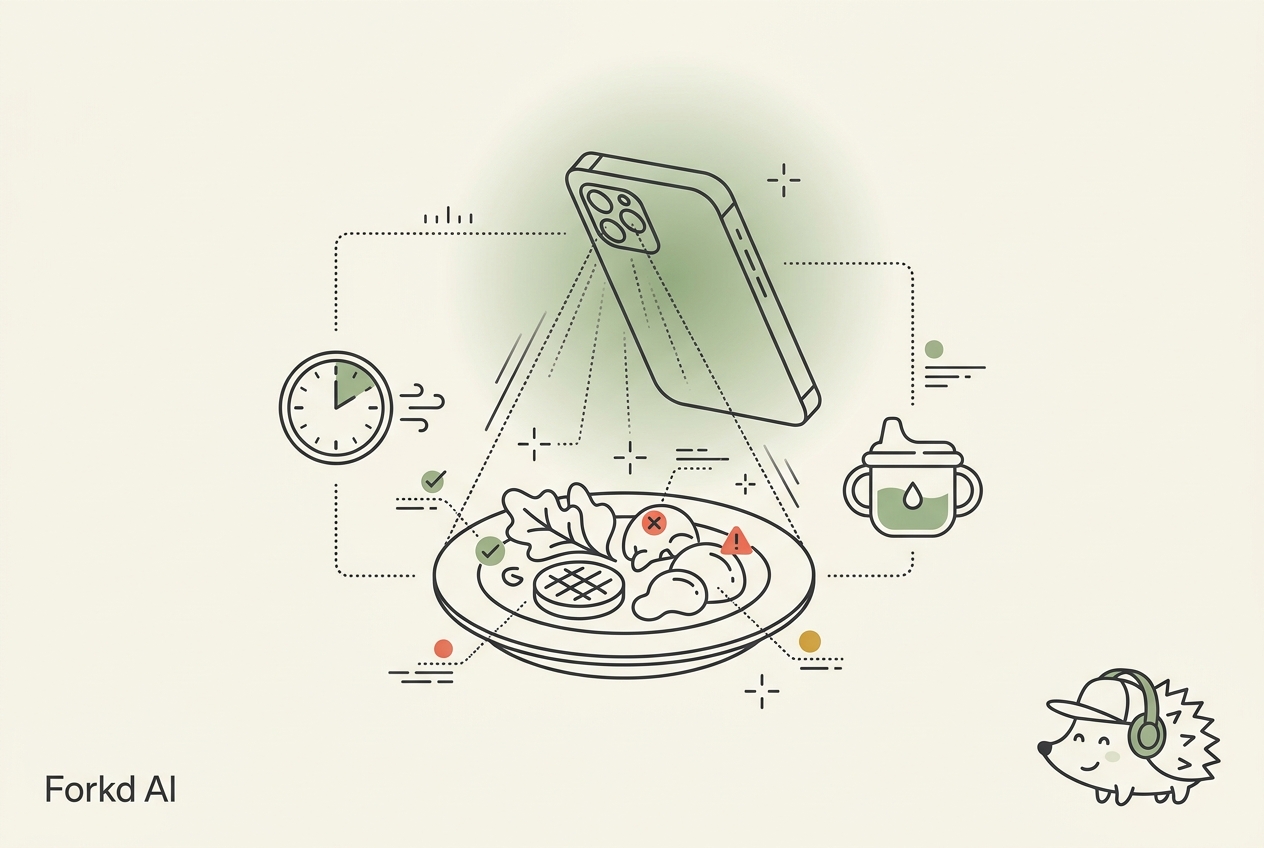
For vegans whose primary goal is making daily food logging fast enough to maintain, photo logging in under 10 seconds per meal (or a quick voice note or text) is more sustainable than manual database entry over months. The coaching layer turns the data into something actionable rather than just showing numbers.
Gap: Forkd does not track B12, zinc, omega-3 fatty acid types, or iodine, nutrients that matter specifically on a plant-based diet. For full vegan nutritional monitoring, Cronometer provides the depth that Forkd does not.
How to Use These Apps on a Vegan Diet
Set B12 supplementation as a daily reminder context. Since dietary B12 is near-impossible to obtain on a whole-food plant-based diet, most vegans supplement. In Cronometer, you can add your supplement as a daily entry to see total B12 (dietary plus supplemental) against target.
Adjust iron targets. The standard 18mg/day target for women assumes mixed-diet bioavailability. On a fully plant-based diet, targeting 30–32mg dietary iron (or checking with a GP about appropriate targets) accounts for lower non-haem absorption.
Log fortified foods by brand. The nutritional content of fortified plant milks varies significantly between brands. Some provide 30% of the daily calcium value per serving, others 10%. Always log by specific brand (via barcode scan) rather than generic "oat milk" entries, which may not reflect your product's actual fortification level.
Track vitamin C alongside iron. In Cronometer, you can see vitamin C and iron together in the daily summary. Eating vitamin C-rich foods alongside iron-rich plant foods (lentils plus bell pepper, spinach plus lemon juice) is a standard strategy for improving non-haem iron absorption. Tracking both confirms the combination is happening.
Frequently Asked Questions
What Nutrients Are Vegans Most at Risk of Being Deficient In?
The nutrients most commonly deficient in poorly-planned vegan diets, in rough order of concern: vitamin B12 (the only unavoidable supplement for vegans), iron, calcium, zinc, omega-3 fatty acids (EPA and DHA specifically), iodine, and vitamin D. All of these can be obtained through fortified foods, supplements, or careful food planning, but they require intentional choices, which tracking makes easier to monitor.
Can a Vegan Diet Meet All Nutritional Requirements?
A well-planned vegan diet can meet all nutritional requirements except vitamin B12, which requires supplementation for all vegans. The Academy of Nutrition and Dietetics states that appropriately planned vegan diets are healthful and nutritionally adequate. The key word is planned, and tracking is one tool for doing that planning systematically.
How Much B12 Does a Vegan Need Per Day?
The RDA for vitamin B12 is 2.4mcg per day for adults. However, since B12 absorption is dose-dependent (higher single doses have proportionally lower absorption), many vegan nutrition specialists recommend either a higher-dose supplement taken less frequently or a lower-dose supplement taken daily with fortified foods. Discuss specifics with a healthcare provider or registered dietitian who specialises in plant-based diets.
Do Vegans Need More Protein Than Omnivores?
Not necessarily more protein, but more attention to protein source and variety. Plant proteins are generally lower in digestibility and in some essential amino acids compared to animal proteins. Eating a variety of legumes, whole grains, soy, and nuts across the day ensures complete essential amino acid coverage without needing to engineer specific combinations at every meal. Cronometer's amino acid tracking shows whether your protein sources collectively cover all essential amino acids.
Key Takeaways
- Vegan diets have specific nutritional gaps, B12, iron, zinc, omega-3 fatty acids, iodine, and calcium, that general calorie-only apps miss entirely
- Cronometer is the best food tracker for vegans: it tracks all key vegan-specific nutrients in its free tier, with verified data that shows omega-3 type breakdown, haem/non-haem iron, and calcium from plant sources
- Forkd tracks iron, calcium, and vitamin D with weekly coaching, fast daily logging and accessible gap notifications, but without B12, zinc, or omega-3 depth
- Always supplement vitamin B12 on a vegan diet. Tracking other nutrients is valuable, but B12 cannot reliably be obtained from plant foods alone
- Logging fortified foods by specific brand (via barcode) gives more accurate data than generic entries, especially for calcium and vitamin D from plant milks
Written by
Vineet Karhail builds Forkd, the AI-powered calorie and nutrition tracking app, and writes its research-backed guides on calories, macros, and micronutrients.