Best Calorie Counter for Seniors in 2026
The Short Answer
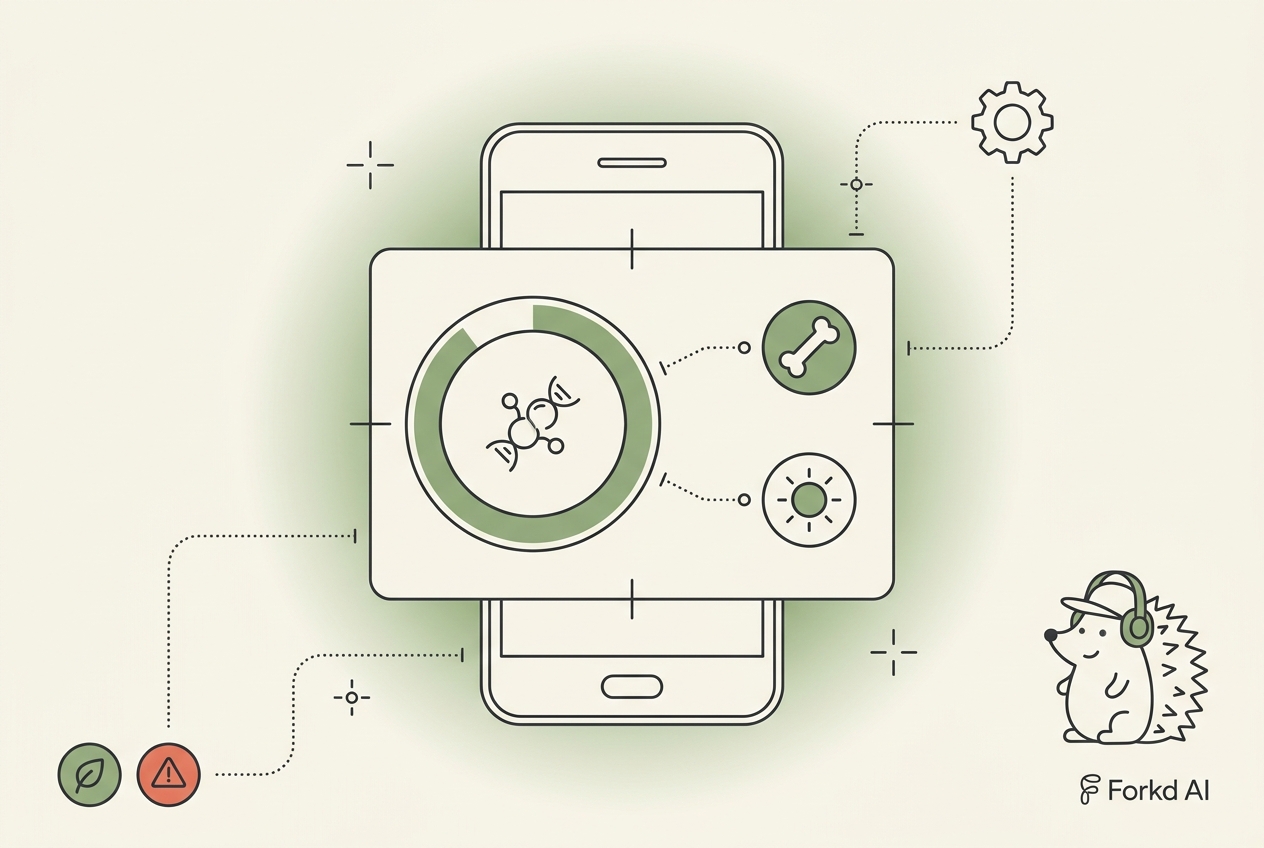
The best calorie counters for seniors are Forkd (photo logging in under 10 seconds, minimal tech friction, with vitamin D and calcium tracking for bone health) and Cronometer (most complete nutrition data for monitoring protein, vitamin D, calcium, and B12). Seniors often have higher protein requirements per kilogram than younger adults despite lower total calorie needs, so an app that tracks both is more useful than one focused only on calories.
Disclaimer
This article is for information only and does not replace medical advice. Needs vary with age, sex, and situation (pregnancy, conditions, medication): if in doubt or symptomatic, talk to a health professional.
What Seniors Need From a Calorie Tracking App
Nutrition in older adults has specific characteristics that differ from general-population tracking needs:
Higher protein requirements, lower calorie needs. Research, including work by Bauer et al. published in the Journal of the American Medical Directors Association, supports that older adults require more protein per kilogram of bodyweight than younger adults, typically 1.0–1.2g/kg/day or higher, to counteract age-related muscle loss (sarcopenia). At the same time, total calorie requirements decrease with age due to reduced physical activity and lower metabolic rate. Tracking helps confirm protein adequacy without calorie excess.
Vitamin D and calcium for bone health. The risk of osteoporosis and fracture increases significantly with age. Adults 65 and older need 800 IU vitamin D (versus 600 IU for younger adults) and 1,200mg calcium (versus 1,000mg). Dietary intake of both is commonly below target in older adults, particularly vitamin D (which is difficult to obtain from food alone). An app that tracks these makes the gap visible.
Vitamin B12. Absorption of B12 from food decreases with age as gastric acid production declines. Many older adults have B12 deficiency despite adequate dietary intake. Tracking total B12 alongside supplementation helps monitor the combined picture.
Hydration. Older adults are more prone to dehydration because the thirst sensation diminishes with age. While most nutrition apps do not specifically track hydration, apps with water tracking features (Forkd includes a water reminder feature) add a relevant layer.
Ease of use. For seniors who are not heavy smartphone users, an app that requires extensive navigation, manual database searching, or significant text input creates a barrier that prevents consistent use. The easier the daily logging process, the more likely it is to be maintained.
What Makes an App Easy to Use for Older Adults?
Minimal steps to log. The fewer taps between opening the app and completing a meal entry, the better. Photo logging requires: open app, tap camera, photograph meal, confirm. That is it. You can also log by voice.
Large text and clear contrast. Older adults are more likely to have age-related vision changes. Apps with small text or low-contrast interfaces are harder to use. Both Forkd and Cronometer use readable text, though Cronometer's dense data layout can be challenging on small phone screens.
Forgiveness for imprecision. Seniors may be less comfortable with precise portion measurement. An app that accepts "a bowl of oatmeal" or "a piece of chicken" and works with estimates is more usable than one that requires exact gram measurements.
Meaningful feedback. An app that shows "you are low on protein today" in plain English is more immediately useful to a senior than one that shows a bar chart of amino acid profiles without explanation.
The Best Calorie Counters for Seniors
Forkd, Easiest Daily Logging With Key Nutrient Tracking
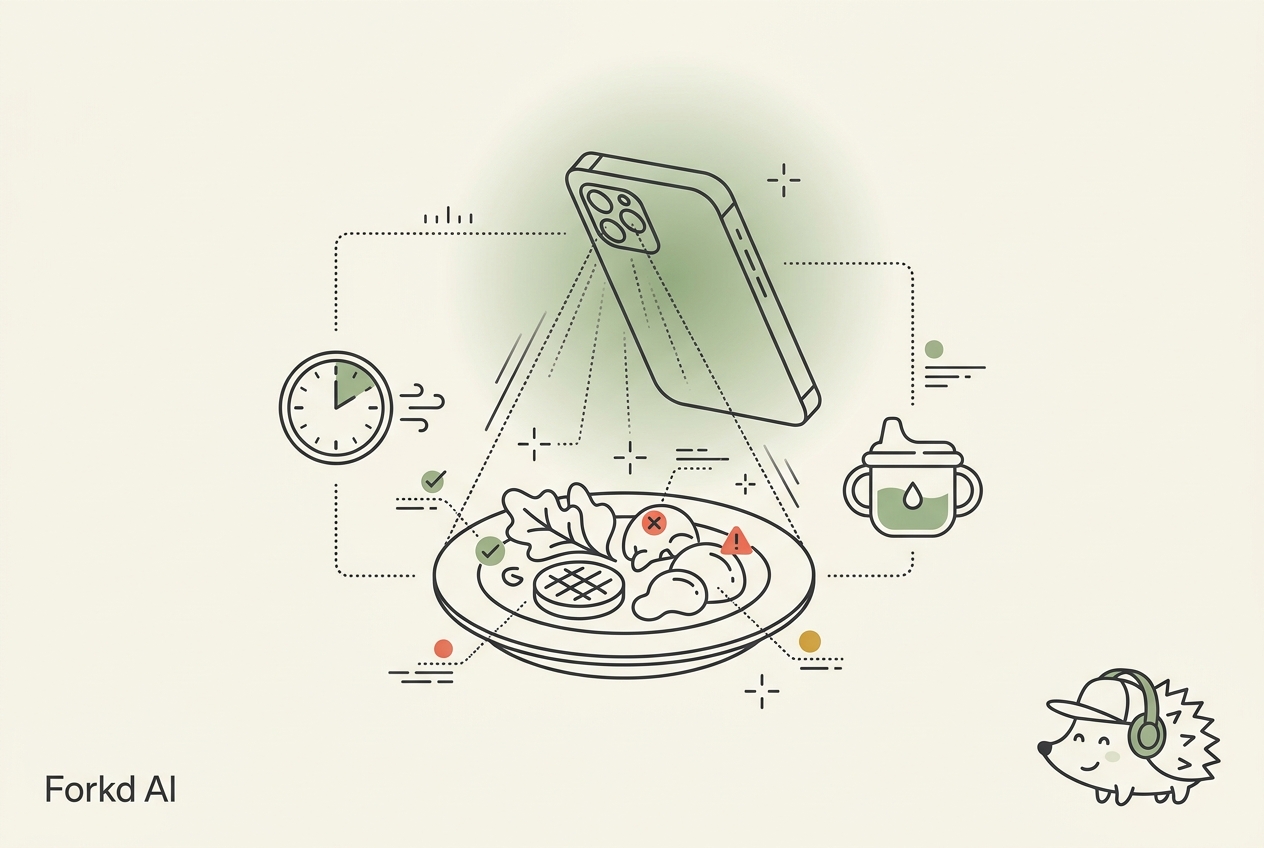
Forkd's AI photo logging is the most senior-accessible meal entry method available. No database searching, no typing food names, no precise portion entry. Photograph the plate, the app identifies what is there. The whole process takes under 10 seconds, and a voice note works too.
For seniors whose primary nutritional concerns are protein, vitamin D, and calcium, Forkd tracks all three. The weekly Forkie coaching surfaces gaps in plain English: if vitamin D has been low for several days, Forkie notes it without requiring the user to check a dashboard and interpret numbers themselves.
The fasting timer is useful for seniors who find their appetite has naturally compressed into a shorter eating window, as appetite typically decreases with age, and who want to track their eating pattern. The 17-hour safety warning is particularly relevant, since extended fasting in older adults carries additional considerations.
Gap: Cronometer provides more micronutrient depth and B12 tracking. For seniors with specific nutritional monitoring needs around bone health and B12, a combination or Cronometer alone may be more appropriate.
Cronometer, Best for Complete Senior Nutrition Monitoring
Cronometer tracks vitamin D, calcium, vitamin B12, magnesium, protein, and all the nutrients most relevant to older adult health from a verified database. You can customise targets to reflect senior-specific values (800 IU vitamin D, 1,200mg calcium, higher protein targets).
For seniors working with a GP, geriatrician, or registered dietitian on nutritional health, Cronometer's data export provides the complete nutritional picture that those conversations require.
The trade-off: Cronometer's interface is denser and more information-heavy than Forkd's. For seniors who are comfortable with smartphones, this is fine. For those who find technology difficult, the information density can be overwhelming.
Nutritional Priorities for Seniors: What to Track and Why
Protein: Aim for 1.0–1.2g/kg/day as a starting point. For a 70kg person, that is 70–84g protein daily. Protein adequacy counteracts sarcopenia, the muscle loss that contributes to weakness, falls, and functional decline in older adults.
Vitamin D: 800 IU/day for adults over 70 per most guidelines. Very few foods provide adequate vitamin D. Fatty fish, fortified dairy, and egg yolks contribute some, but most older adults need supplementation to reach this target. Tracking dietary vitamin D shows the contribution from food; supplements make up the remainder.
Calcium: 1,200mg/day for women over 50 and men over 70. Dairy (milk, yoghurt, cheese), fortified plant milks, tofu, canned fish with bones, and leafy greens are the main dietary sources. Spread calcium intake across meals rather than consuming it all at once, as absorption is limited at single high doses.
B12: Particularly important for seniors. If you are taking B12 supplements (often recommended for older adults), log them in Cronometer alongside dietary sources to see total intake.
Fibre: Adults over 50 are recommended 21–30g fibre daily. Fibre supports gut health, blood glucose regulation, and cardiovascular health, all increasingly relevant with age.
Frequently Asked Questions
Do Seniors Need to Count Calories?
Not necessarily, but protein tracking is often more useful than calorie tracking for older adults. The risk of inadequate protein intake (sarcopenia, strength decline, slower recovery from illness) is more clinically significant for most seniors than calorie excess. If a GP or dietitian has recommended calorie tracking for a specific reason (weight management, diabetes, heart health), then calorie tracking is appropriate alongside protein monitoring.
Is Photo Logging Accurate Enough for Senior Health Goals?
Photo logging has accuracy margins of ±15–25% for typical meals, which is sufficient for the patterns-based tracking that benefits most older adults. For seniors with specific medical nutrition needs where precise intake matters (for example, kidney disease requiring precise protein limits), more controlled measurement methods should be used under medical supervision.
What's the Easiest Calorie Tracking App for Someone Not Very Tech-Savvy?
Forkd's photo logging has the fewest steps of any tracking method: open app, photograph meal, confirm. For seniors who use a smartphone regularly, this is accessible without technical fluency. For seniors who struggle with smartphones generally, ask a family member or caregiver to help set up the app and demonstrate the photo logging workflow once. It typically becomes habitual quickly.
Should Seniors Take Supplements in Addition to Tracking Food?
Many older adults benefit from supplementation for nutrients where dietary adequacy is difficult to achieve, particularly vitamin D, B12, and calcium. Tracking dietary intake identifies where gaps exist; supplements fill them. Apps like Cronometer allow supplement logging so you can see total intake (dietary plus supplemental) against targets.
Key Takeaways
- Seniors need nutrition tracking that addresses protein adequacy, vitamin D, calcium, and B12, the nutrients most critical to healthy ageing and most commonly under-consumed
- Forkd is the most senior-accessible tracker: photo logging in under 10 seconds requires minimal tech fluency, and weekly Forkie coaching interprets nutrition gaps without requiring users to read dashboards
- Cronometer provides the most complete senior nutrition monitoring: vitamin D, calcium, B12, magnesium, and protein from verified data, customisable to senior-specific targets
- Protein requirements in older adults (1.0–1.2g/kg/day) are higher per kilogram than general population recommendations. An app that tracks this matters more than one that only counts calories
- For seniors with specific medical nutrition needs, these apps generate data for care team conversations. They do not replace personalised medical nutrition guidance
Written by
Vineet Karhail builds Forkd, the AI-powered calorie and nutrition tracking app, and writes its research-backed guides on calories, macros, and micronutrients.