Best Calorie Tracker for Pregnant Women in 2026

The Short Answer
The best calorie trackers for pregnant women are Cronometer (tracks folate, iron, calcium, choline, and all key pregnancy nutrients at no cost) and Forkd (fastest daily logging with iron, calcium, and vitamin D tracking, plus fasting safety features for women who practiced IF before pregnancy). Always use any nutrition app alongside your OB or midwife's guidance. App data supplements prenatal care, it does not replace it.
Disclaimer
This article is for information only and does not replace medical advice. Needs vary with age, sex, and situation (pregnancy, conditions, medication): if in doubt or symptomatic, talk to a health professional.
What Are the Nutritional Priorities During Pregnancy?
Pregnancy increases nutritional requirements across almost every category, but some nutrients are particularly critical and commonly under-consumed.
Folate and folic acid. The recommended intake increases from 400mcg to 600mcg daily during pregnancy. Adequate folate in the first trimester (ideally before conception) reduces the risk of neural tube defects. Most prenatal vitamins cover this, but tracking dietary folate alongside supplementation gives a complete picture.
Iron. Requirements increase from 18mg/day to 27mg/day during pregnancy as blood volume expands. Iron deficiency is the most common nutritional deficiency in pregnancy worldwide. Tracking iron intake, not just from supplements but from dietary sources, helps identify whether dietary gaps exist even with supplementation.
Calcium. The recommendation stays at 1,000mg/day but the stakes increase: inadequate dietary calcium during pregnancy may draw from maternal bone stores. Tracking dietary calcium alongside supplement intake shows the combined picture.
Choline. Requirements increase to 450mg/day during pregnancy and 550mg/day when breastfeeding. Most prenatal vitamins contain little or no choline. Dietary sources (eggs, meat, fish, some legumes) are the primary route, and most pregnant women do not meet the target through diet alone.
Protein. Protein requirements increase by approximately 25g/day in the second and third trimesters above pre-pregnancy baselines.
What to limit. Tracking also helps with what to avoid or limit: caffeine (generally recommended under 200mg/day during pregnancy), high-mercury fish, and alcohol (no established safe level during pregnancy).
Which Apps Track Pregnancy-Relevant Nutrients?
Cronometer, Best for Complete Pregnancy Nutrient Tracking
Cronometer is the strongest option for pregnancy nutrition tracking specifically because it tracks all of the key pregnancy-relevant nutrients in its free tier: folate, iron, calcium, choline, protein, and vitamins D, B12, and B6. You can see daily totals alongside your targets and get a clear picture of where dietary gaps exist.
The setup: Cronometer lets you adjust nutrient targets manually. During pregnancy, updating your targets to reflect pregnancy-specific recommendations (27mg iron, 600mcg folate, 450mg choline, and so on) gives you accurate progress against the right benchmarks rather than standard adult values.
For women working with a registered dietitian during pregnancy, Cronometer's data export gives the dietitian complete nutritional intake data, not just calories, which is what most apps provide.
Gap: Cronometer's interface is functional rather than polished, and it requires manual target customisation to reflect pregnancy-specific values. This is worth doing but requires initial setup.
Forkd, Best for Daily Logging Speed With Key Pregnancy Nutrients
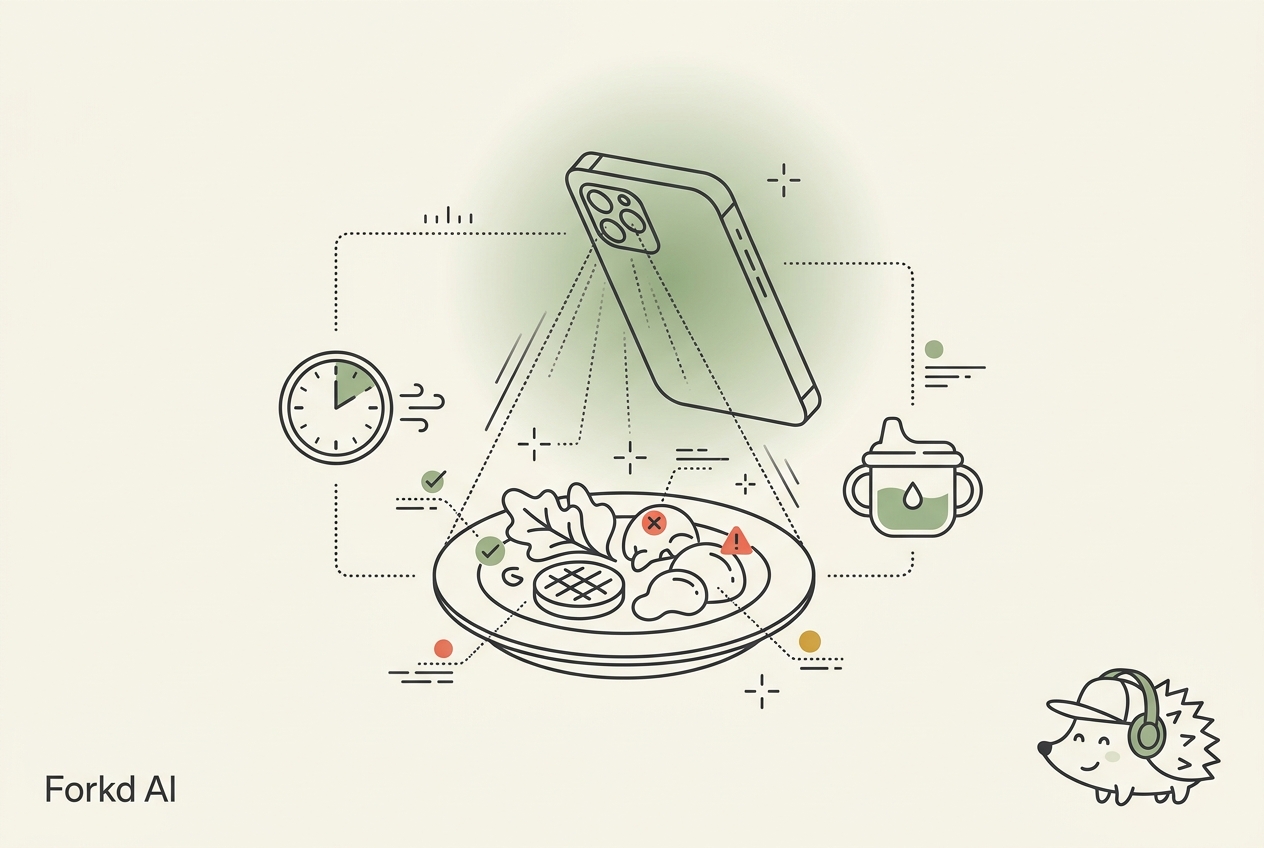
Forkd tracks iron, calcium, vitamin D, and key B vitamins, covering the most commonly deficient pregnancy nutrients outside of folate and choline. For pregnant women who want fast daily logging without spending significant time per meal entry, Forkd's AI photo logging (under 10 seconds per meal) reduces the overhead of tracking alongside everything else pregnancy involves. You can also log by voice or text.
Fasting note. Forkd's fasting timer includes a safety warning at 17 hours, appropriate for women who practiced intermittent fasting before pregnancy and want to understand where professional caution about extended fasting during pregnancy applies. (Consult your OB about fasting practices during pregnancy. This is an area where individual guidance matters significantly.)
Gap: Forkd does not track folate or choline specifically, the two nutrients with the most pregnancy-specific concern. For complete pregnancy nutritional monitoring, Cronometer covers those gaps.
Should You Use a Calorie Tracking App During Pregnancy?
Tracking during pregnancy is a tool for awareness, not a target to hit precisely. The goals shift.
During the first trimester, calorie requirements do not change significantly. Most recommendations suggest no additional calories in the first trimester for women at a healthy pre-pregnancy weight. In the second trimester, approximately 340 additional calories per day is the general guidance; in the third trimester, approximately 450 additional calories per day.
Tracking is most useful during pregnancy for:
- Monitoring protein adequacy
- Checking whether dietary iron and calcium support supplementation
- Identifying folate sources in the diet
- Understanding choline intake from food sources (eggs, meat, some fish)
- Tracking caffeine intake if you are a regular coffee or tea drinker
Women with specific pregnancy complications, gestational diabetes, hyperemesis gravidarum, iron deficiency anaemia, multiple pregnancies, have more specific tracking needs that should be guided by their healthcare provider.
What Apps to Avoid or Use Carefully During Pregnancy?
Apps with aggressive calorie restriction goals, those designed for rapid weight loss, are not appropriate during pregnancy. Apps that do not allow you to remove or ignore calorie deficit targets can create the wrong framing for pregnancy nutrition, where weight gain is expected and appropriate.
Cronometer and Forkd both allow you to set your own goals and targets rather than defaulting to a weight loss mode.
Frequently Asked Questions
How Many Extra Calories Do You Need During Pregnancy?
General recommendations from the Academy of Nutrition and Dietetics: approximately no additional calories in the first trimester for women at a healthy pre-pregnancy weight, around 340 extra calories per day in the second trimester, and around 450 extra calories per day in the third trimester. These are averages. Actual needs vary by pre-pregnancy weight, activity level, and whether you are carrying multiples.
Does a Calorie Tracker Replace Prenatal Vitamins During Pregnancy?
No. Prenatal vitamins cover nutrients at levels difficult to reach through diet alone, particularly folic acid, which should ideally be supplemented before conception and through the first trimester. Calorie tracking supplements prenatal vitamins by making dietary gaps visible and by tracking nutrients that prenatal vitamins do not fully cover (like choline from food sources).
Is Intermittent Fasting Safe During Pregnancy?
Most OB guidelines recommend against prolonged fasting during pregnancy. Some research associates extended fasting with elevated ketones, which during pregnancy warrants caution. If you practiced intermittent fasting before pregnancy, discuss continuing or modifying the practice with your OB. The guidance varies by individual health status, trimester, and fasting duration.
Which Nutrients Should Pregnant Women Focus on Tracking?
The most important to track beyond calories: iron (27mg/day target), folate (600mcg/day), calcium (1,000mg/day), choline (450mg/day), protein (adding roughly 25g/day in trimesters two and three), vitamin D (600 IU/day), and omega-3 fatty acids from dietary sources. Cronometer tracks all of these; Forkd covers iron, calcium, and vitamin D.
Key Takeaways
- Cronometer is the best calorie tracker for pregnancy. It tracks folate, choline, iron, and calcium (the most pregnancy-critical nutrients) in the free tier
- Forkd is a faster daily logging option that covers iron, calcium, and vitamin D but does not track folate or choline specifically
- Tracking during pregnancy is most useful for protein adequacy, iron and calcium monitoring, choline intake from food, and caffeine tracking
- Both apps let you adjust nutrient targets to pregnancy-specific values. This setup step makes the data meaningful
- All tracking apps during pregnancy should be used alongside prenatal care, not as a substitute for OB or midwife guidance
Written by
Vineet Karhail builds Forkd, the AI-powered calorie and nutrition tracking app, and writes its research-backed guides on calories, macros, and micronutrients.