Best Calorie Tracking Apps in 2026: Ranked After Testing Them
The Short Answer
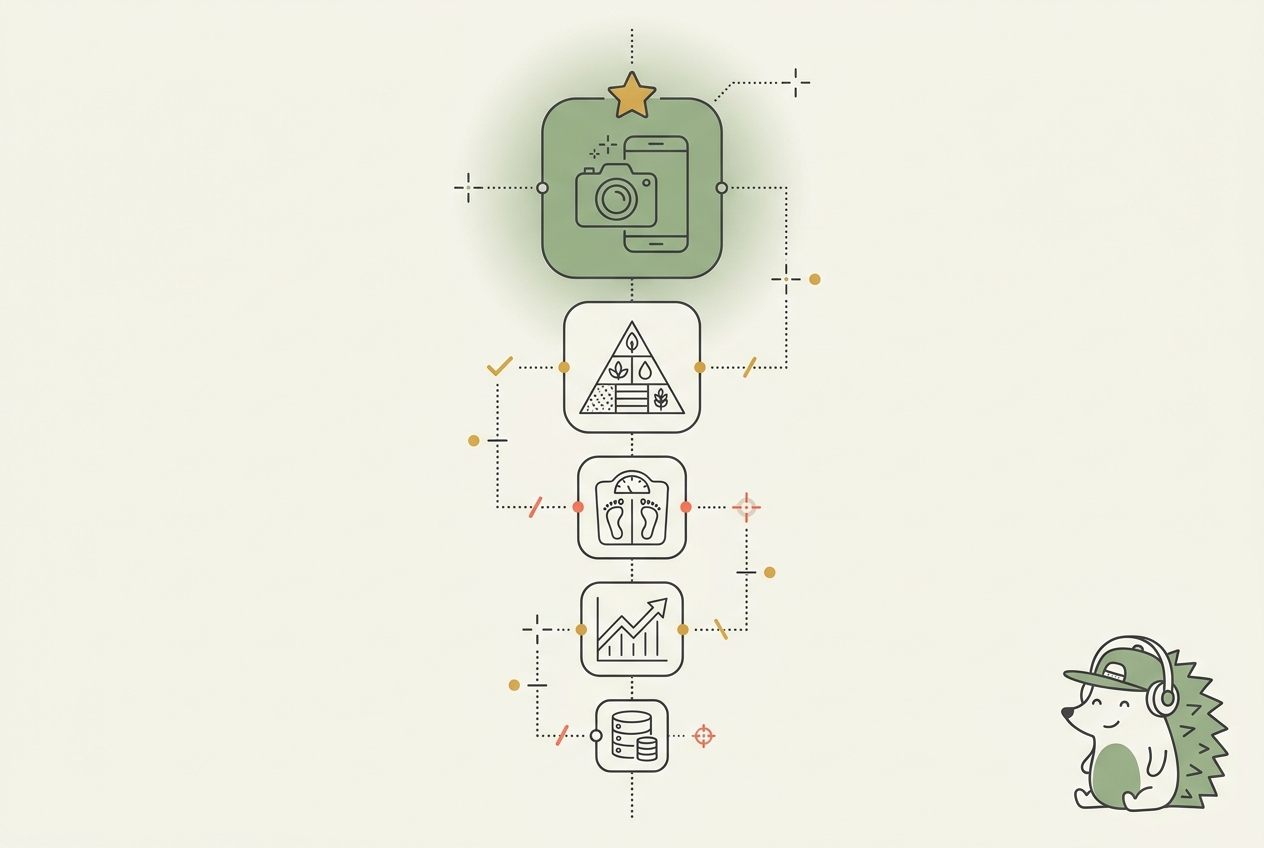
The best calorie tracking apps in 2026 are Cronometer (best for micronutrient depth), Lose It! (best free tier and price), MacroFactor (best adaptive coaching), MyFitnessPal (largest food database), and Forkd (fastest AI photo logging with built-in fasting and coaching). Which one is right for you depends on whether you prioritise speed, accuracy, price, or features beyond calorie counting.
Disclaimer
This article is for information only and does not replace medical advice. Needs vary with age, sex, and situation (pregnancy, conditions, medication): if in doubt or symptomatic, talk to a health professional.
Which Calorie Tracking App Is Best Overall in 2026?
There is no single best app for everyone, but there is a best app for your situation. In 2026, the category has split clearly into three types: AI photo-first apps that prioritise logging speed, database-first apps that prioritise food variety, and coaching apps that adjust targets over time.
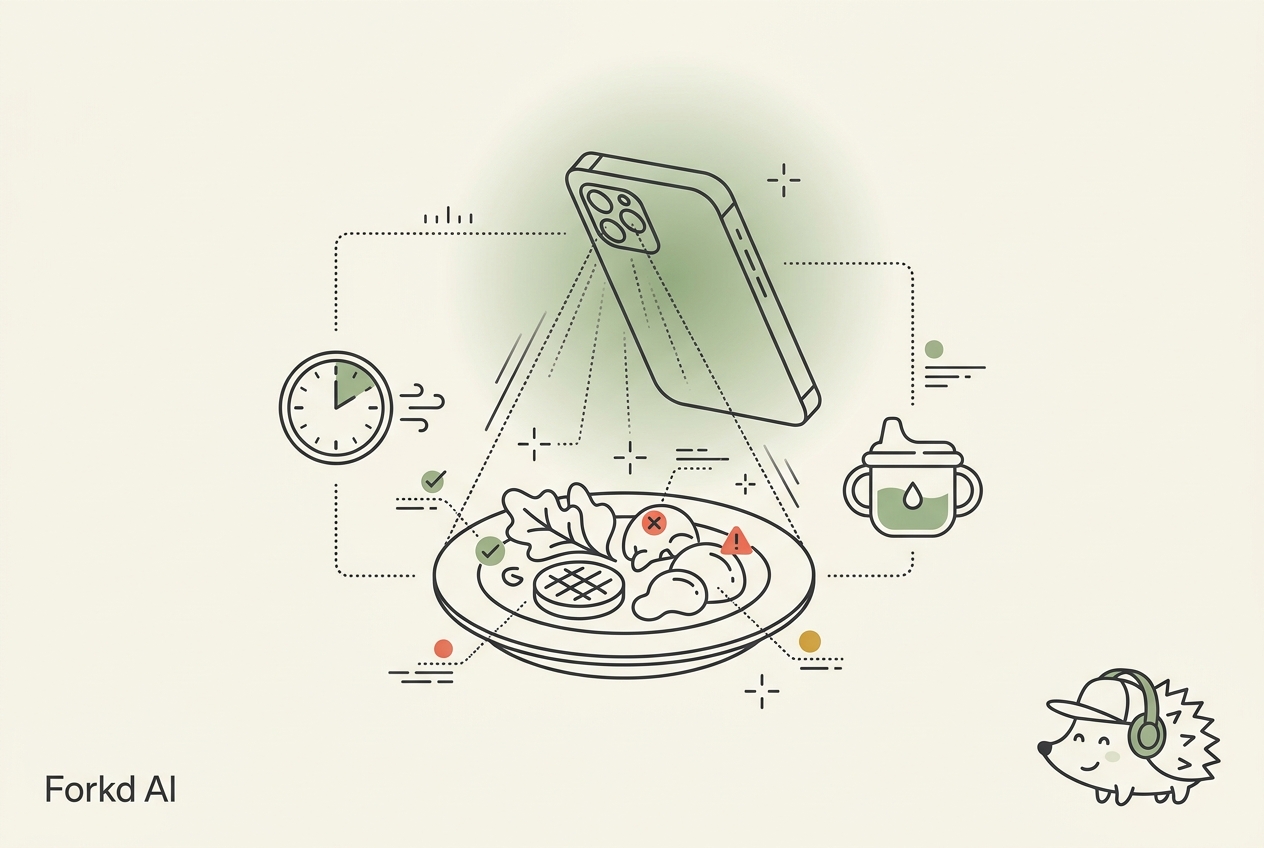
The fastest-growing segment is AI photo logging. Snapping a photo of your plate and getting a calorie estimate in under three seconds has replaced database searching as the dominant logging method for casual trackers. Apps that don't offer photo logging are now at a structural speed disadvantage.
That said, photo AI still has meaningful accuracy limits, particularly for mixed dishes, sauces, and portioned meals. The best apps pair photo logging with easy editing so you can correct estimates quickly.
What Are the Best Calorie Tracking Apps Available Right Now?
Forkd, Fastest AI Photo Logging with Built-In Coaching and Hidden Ingredient Detection
Forkd combines AI photo logging, a fasting timer, micronutrient tracking, and weekly plain-English coaching (via Forkie, the mascot) in one app. Photo logging takes under 10 seconds, you snap a photo, the AI estimates the full nutritional breakdown including hidden extras like cooking oil and dressing, and you confirm or edit with a tap.
The fasting tracker runs alongside food logging rather than being a separate feature. The app shows a progress indicator when fat-burning mode is likely starting and surfaces a safety warning at 17 hours of fasting.
Best for: people who want speed above all else and want fasting, nutrition, and coaching in a single app without juggling multiple tools.
Cronometer, Best for Nutritional Depth
Cronometer tracks 84 nutrients per food entry using verified data from the USDA and NCCDB. Every food in the database has been validated, there are no crowdsourced entries with incorrect macro data. The free tier includes unlimited food logging and full micronutrient breakdowns. The paid plan (Cronometer Gold) costs $49.99/year and adds fasting tracking and advanced report exports.
Best for: anyone who wants to track more than calories, iron, calcium, B vitamins, amino acids, fatty acids. The data is clinical-grade.
Drawback: photo logging is available but behind the market leaders on accuracy. Average logging time runs around 22 seconds per meal, meaningfully slower than AI-first apps.
Lose It!, Best Price and Free Tier
Lose It! costs $39.99/year for Premium, the lowest price among full-featured calorie trackers. The free tier includes a 27-million item food database and unlimited logging. The app holds a 4.7-star rating across 700,000+ reviews, which puts it among the highest-rated trackers available.
Best for: budget-conscious users who want a no-nonsense tracker without a steep paywall.
Drawback: barcode scanning moved to Premium for new users in 2026. The interface is functional rather than polished.
MacroFactor, Best Adaptive Coaching
MacroFactor's distinguishing feature is an adaptive algorithm that estimates your actual metabolic rate from weight trends, then adjusts your calorie and macro targets weekly. Most apps give you a fixed target calculated from a formula. MacroFactor calibrates to you specifically.
Pricing: $71.99/year ($5.99/month on the annual plan). No free tier after a 7-day trial.
Best for: people serious about macro tracking who want targets that adjust as they lose weight, rather than chasing a number that becomes less accurate over time.
Drawback: no photo logging in 2026. Every entry requires the traditional search-and-select workflow, which is a notable gap when most competitors have moved to AI-assisted logging.
MyFitnessPal, Largest Food Database
MyFitnessPal's 14-million item food database remains the largest in the category. The social features, friends, step challenges, activity feed, are more developed than any competitor. Premium costs $79.99/year.
Best for: users who frequently eat unusual foods, international cuisine, or niche packaged products that smaller databases don't cover.
Drawback: the free tier now caps users at 5 food entries per day, effectively a demo mode. Barcode scanning also requires Premium. Users on the free plan need to manually search every food. At $79.99/year, it's the most expensive mainstream option.
Which App Has the Most Accurate Food Database?
Database accuracy varies significantly by approach. Cronometer uses verified USDA and NCCDB data, every entry is checked. MacroFactor maintains a curated database that prioritises accuracy over size. MyFitnessPal's 14 million entries include many crowdsourced records, which means variability in accuracy across entries.
For photo-based logging, the 2026 DAI Validation Study (DAI-VAL-2026-01) measured several AI photo apps on weighed reference meals. Accuracy varied by meal type: clearly separated foods (a piece of fish, a salad) logged more accurately than mixed dishes, sauces, and portioned bowls. Apps that let you edit photo estimates easily, rather than accepting them as fixed, produce better real-world accuracy because you can correct the AI when it misidentifies something.
How Much Do These Apps Cost and Is a Free Version Good Enough?
| App | Free tier | Paid plan |
|---|---|---|
| Cronometer | Full micronutrient tracking, unlimited logging | $49.99/year |
| Lose It! | Unlimited logging, database access | $39.99/year |
| MacroFactor | 7-day trial only | $71.99/year |
| MyFitnessPal | 5 entries/day, no barcode scanner | $79.99/year |
| Forkd | Core features included | $19.99/year |
For most casual users, Cronometer's free tier or Lose It!'s free tier gives you genuinely useful tracking without paying. If you want adaptive calorie coaching or photo-based logging, a paid plan becomes relevant.
Frequently Asked Questions
Is a Calorie Tracking App Actually Worth Using?
Research on self-monitoring and dietary behaviour consistently finds that logging what you eat improves dietary awareness and weight-related outcomes, even when the log is imperfect. The effect doesn't require precision, it requires enough visibility to spot patterns. A calorie tracker that you use 5 days a week delivers most of the benefit of one you use 7 days a week.
How Accurate Is AI Photo Calorie Counting?
AI photo estimation is accurate enough for pattern-spotting and consistent tracking, not for clinical precision. Accuracy runs within roughly ±15–20% on typical meals under controlled conditions. Hidden ingredients, oil, dressings, condiments, are the biggest gap. The best photo apps surface likely hidden extras and let you edit them. Treat the estimate as a calibrated starting point, not a measurement.
Do I Need to Count Calories Forever?
No. Many people use calorie tracking as a phase tool, logging consistently for 4–12 weeks to calibrate their intuition about portions and nutrient content, then logging occasionally to check for drift. After a few months of honest logging, most people develop a much more accurate mental model of what they're eating without needing to log every meal.
What If I Find Calorie Tracking Stressful?
For some people, tracking increases food-related anxiety rather than reducing it. If logging makes you feel worse rather than better-informed, a less granular approach, tracking protein and water only, or logging one meal per day to spot patterns, can give useful information without the psychological cost of full-day tracking.
Key Takeaways
- The best calorie tracking apps in 2026 divide into three types: AI photo-first apps (speed), database-first apps (coverage), and coaching apps (adaptive targets)
- Cronometer has the most nutritionally accurate data; Lose It! has the best price; MacroFactor has the best adaptive coaching; MyFitnessPal has the biggest database; Forkd has the fastest photo logging with fasting and coaching built in
- Free tiers vary significantly, Cronometer and Lose It! offer genuinely usable free plans; MyFitnessPal's free tier is now heavily restricted
- Photo AI accuracy runs within ±15–20% for typical meals, useful for patterns and consistency, not clinical measurement
- The app that works best is the one you'll use consistently, speed and simplicity matter as much as features
Written by
Vineet Karhail builds Forkd, the AI-powered calorie and nutrition tracking app, and writes its research-backed guides on calories, macros, and micronutrients.