Best Fiber Tracking Apps in 2026: The Nutrient Most Calorie Counters Ignore
The Short Answer
The best apps for tracking fiber intake in 2026 are Cronometer (tracks soluble and insoluble fiber separately with verified data, free tier), Forkd (tracks fiber as part of AI photo logging with weekly insights when you're consistently low), and MyFitnessPal (largest food database for packaged products where label fiber data is reliable). For fiber tracking specifically, Cronometer's free tier is hard to beat.
Disclaimer
This article is for information only and does not replace medical advice. Needs vary with age, sex, and situation (pregnancy, conditions, medication): if in doubt or symptomatic, talk to a health professional.
Why Is Fiber One of the Most Under-Tracked Nutrients?
The average adult in the United States consumes roughly 16g of dietary fiber per day, about half the recommended 25–38g. This isn't a minor shortfall. Fiber intake at recommended levels is associated with lower cardiovascular disease risk, better blood glucose control, improved gut microbiome diversity, and significantly higher satiety per calorie. The gap between what most people eat and what the evidence recommends is one of the largest in nutrition.
Calorie-focused apps often show fiber only as a subcategory buried in carbohydrate details. Most people never see their fiber number unless they specifically go looking for it. Apps that surface fiber intake prominently, rather than hiding it under "more details", produce better outcomes simply because the data is visible.
Which Apps Track Fiber Best?
Cronometer, Most Accurate Fiber Data
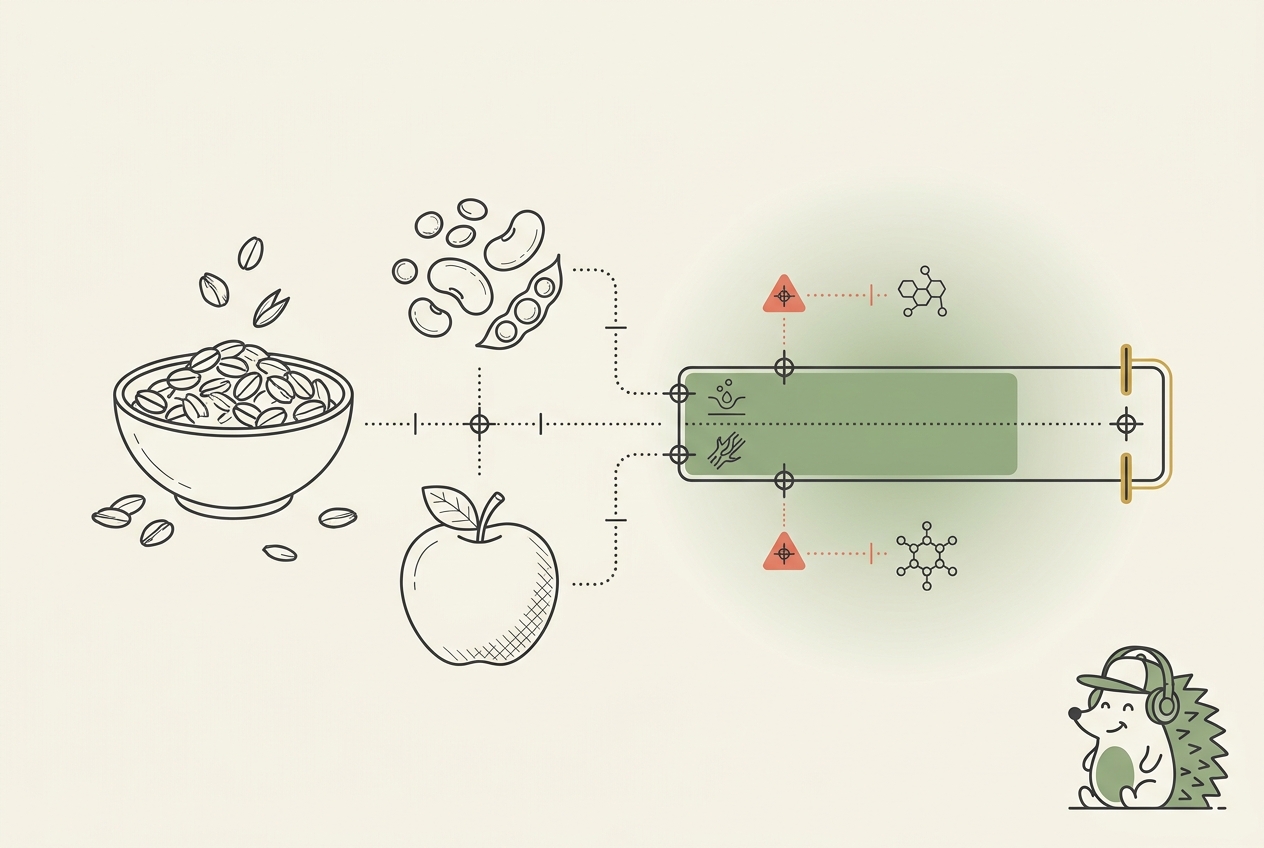
Cronometer separates total fiber into soluble and insoluble fractions, both pulled from verified USDA NCCDB data. This distinction matters because soluble fiber (oats, beans, citrus) slows digestion and moderates blood glucose, while insoluble fiber (wheat bran, vegetables, nuts) adds bulk and supports bowel regularity. The different types have different effects, knowing which you're getting gives more useful information than a total alone.
The free tier includes full fiber tracking with no daily cap. Fiber appears prominently in the daily nutrient summary alongside vitamins and minerals rather than being buried under carbohydrates. The visual progress bars make it easy to spot a fiber-light day at a glance.
Forkd, Fiber Tracking Within AI Photo Logging
Forkd includes fiber as part of its standard nutritional tracking. Every meal photographed and logged gives you a fiber count alongside calories, protein, and other macros. The integration with weekly coaching (Forkie) means that if you're consistently below your fiber target for several days, you'll see a practical nudge rather than a silent number, "your fiber has been low this week; adding a portion of lentils or an apple to your day would close most of the gap."
This coaching layer is what distinguishes passive tracking (seeing a number) from actionable tracking (knowing what to do about it).
MyFitnessPal, Best for Packaged Food Fiber Data
For tracking fiber from packaged and branded products, cereals, breads, protein bars, snack foods, MyFitnessPal's database gives you the actual label information rather than a database estimate. Because fiber content is clearly stated on nutrition labels and users enter it when logging packaged foods, the fiber data for branded products is typically reliable.
For whole foods (vegetables, fruits, grains), the accuracy is more variable because of crowdsourced entry issues. Premium ($79.99/year) is needed for full micronutrient reporting, which includes fiber targets.
What's the Right Daily Fiber Target?
Current dietary guidelines vary slightly by organisation:
| Organisation | Recommended fiber intake |
|---|---|
| WHO | 25–30g/day for adults |
| US Dietary Guidelines | 28g/day (based on 2,000 kcal diet) |
| American Heart Association | 25–30g/day from food sources |
| Academy of Nutrition and Dietetics | Women: 25g/day; Men: 38g/day |
The gender difference in some guidelines reflects average calorie intake differences. The practical target for most adults: aim for at least 25g/day as a floor, with 30–38g/day as the evidence-supported range for full health benefits.
Getting to 25g/day without tracking is achievable with a diet rich in vegetables, legumes, whole grains, fruits, and nuts. Getting there consistently, while managing calories, requires knowing your current intake.
Which Foods Give You the Most Fiber Per Serving?
| Food | Fiber per serving |
|---|---|
| Cooked lentils (100g) | 7.9g |
| Chickpeas, cooked (100g) | 7.6g |
| Split peas, cooked (100g) | 8.3g |
| Chia seeds (28g) | 10g |
| Avocado (half, ~70g) | 4.6g |
| Oats, dry (40g) | 4g |
| Almonds (28g) | 3.5g |
| Broccoli, cooked (100g) | 2.6g |
| Apple with skin (medium) | 4.4g |
| Whole wheat bread (1 slice) | 1.9g |
Two portions of legumes per day plus one portion of fruit and a serving of oats gets most people to 25g without requiring a radical diet overhaul.
How Does Low Fiber Intake Affect Weight Management?
Fiber contributes to satiety through multiple mechanisms: it adds physical volume to meals (occupying stomach space), slows the rate of gastric emptying (keeping you full longer), and ferments in the colon to produce short-chain fatty acids that signal satiety to the brain. Calorie for calorie, high-fiber foods are more filling than low-fiber equivalents.
A diet chronically low in fiber tends to produce faster hunger return after meals, which drives higher overall calorie intake. The opposite is also true: increasing fiber intake is one of the most practical tools for reducing hunger without reducing calories, because fiber adds bulk without adding much energy.
This is why fiber tracking is particularly useful during weight loss, it surfaces the nutrient that most directly determines how hungry you feel and whether your calorie target is sustainable.
Frequently Asked Questions
Is There Such a Thing as Too Much Fiber?
Yes, though it requires deliberately high intake. Fiber above 70g/day in people not adapted to high-fiber diets can cause bloating, gas, abdominal pain, and diarrhoea. Increasing fiber intake gradually (adding 5g per week rather than jumping to 38g overnight) reduces these symptoms. Drinking adequate water is also important, soluble fiber forms a gel in the gut that needs water to work as intended.
Does Cooking Reduce the Fiber Content of Vegetables?
Cooking changes the type and digestibility of fiber but not the total amount significantly. Some fiber structures soften with cooking, making them easier to digest; others become slightly more available. The practical answer: both raw and cooked vegetables contribute meaningfully to fiber intake. Variety matters more than cooking method.
Do Fiber Supplements Count Toward My Daily Target?
Yes, though whole food sources are preferable when practical. Psyllium husk, methylcellulose, and inulin supplements provide fiber that counts toward your daily total. The advantage of whole food fiber is that it comes packaged with other nutrients (vitamins, minerals, phytochemicals) that supplements don't provide.
Can High Fiber Intake Interfere With Nutrient Absorption?
In theory, very high fiber intake can slightly reduce the absorption of some minerals, including iron, zinc, and calcium. This effect is relevant at extreme fiber intakes (well above 50g/day) or in people with already marginal mineral intake. For most adults eating within recommended ranges, this is not a practical concern, the benefits of adequate fiber intake far outweigh any modest reduction in mineral absorption.
Key Takeaways
- Most adults eat about 16g of fiber daily, roughly half the 25–38g evidence-supported range, and most apps don't make this gap visible
- Cronometer separates soluble and insoluble fiber with verified data in its free tier; Forkd integrates fiber tracking into AI photo logging with coaching on gaps; MyFitnessPal is best for packaged product fiber data
- Fiber is the nutrient most directly linked to satiety and hunger management, tracking it is particularly valuable during calorie deficit
- Two daily portions of legumes plus one portion of fruit and a serving of oats gets most people close to the 25g/day floor without a significant dietary overhaul
- Increase fiber intake gradually (5g per week) and drink adequate water, rapid increases cause digestive discomfort in most people
Written by
Vineet Karhail builds Forkd, the AI-powered calorie and nutrition tracking app, and writes its research-backed guides on calories, macros, and micronutrients.