Best Food Tracking App for Teenagers in 2026
The Short Answer
The best food tracking apps for teenagers focus on nutrition education rather than calorie restriction. Cronometer (tracks nutrients without aggressive calorie deficit framing) and Forkd (fast logging with coaching, fasting features requiring parental guidance) are the most usable options. Important caveat: calorie-focused tracking apps carry real risk of triggering or worsening disordered eating in adolescents. The approach should be nutritional awareness, not calorie restriction goals. Parents and healthcare providers should be involved in any food tracking a teenager does.
Disclaimer
This article is for information only and does not replace medical advice. Needs vary with age, sex, and situation (pregnancy, conditions, medication): if in doubt or symptomatic, talk to a health professional.
Should Teenagers Use Food Tracking Apps?
This question needs careful handling before recommending specific apps.
Food tracking apps for adults are designed around calorie deficit goals. These goals, and the calorie counts, progress rings, and "under goal" notifications they produce, are not appropriate for most healthy teenagers.
Growth requirements. Adolescence is a period of significant physical growth. Adequate calorie intake supports bone development, brain development, and the physical changes of puberty. Teenage girls experience rapid growth, menstrual cycle establishment, and significant increases in bone density during adolescence. Calorie restriction during these years can have lasting effects on bone health and hormonal function.
Eating disorder risk. Eating disorders are most common in adolescent girls. Research consistently links calorie counting apps and restrictive dietary behaviours to increased eating disorder risk in this age group. A 2021 review in the European Eating Disorders Review found that calorie-focused app use was associated with disordered eating behaviours in adolescents, particularly those with existing body image concerns.
What tracking can be appropriate: Nutrition education, understanding what is in food, whether a diet provides key nutrients, whether protein and iron and calcium are adequately covered, is appropriate for teenagers. Calorie restriction goals are not, for most healthy adolescents.
If a teenager is working with a doctor or dietitian on nutrition for a specific health condition (a sport, a medical condition), that professional should guide whether and how any tracking is used.
When Food Tracking Might Be Appropriate for Teens
There are specific contexts where food awareness can be appropriate for teenagers, with proper support:
Athlete nutrition awareness. Teenage athletes, particularly in weight-class sports, endurance sports, or sports with significant energy demands, can benefit from understanding whether their nutrition supports their training. The focus should be on adequacy (protein, carbohydrates, iron, calcium) rather than restriction.
Managing specific health conditions. Teenagers with type 2 diabetes, celiac disease, or other conditions where dietary monitoring is medically indicated should track nutrition under medical supervision.
Curiosity-driven education. Some teenagers are genuinely curious about nutrition science and want to understand what they eat. A brief tracking period (a week or two) to understand dietary patterns can be educational when framed as learning rather than restriction.
What is not appropriate: calorie restriction goals, daily calorie targets designed for weight loss, apps that show "over goal" warnings and negative feedback, and unsupervised tracking for any teenager with body image concerns or history of disordered eating.
The Most Appropriate Apps if Tracking Is Used
Cronometer, Best for Nutrient Education Without Restriction Framing
Cronometer's emphasis on nutritional completeness rather than calorie restriction makes it the most appropriate general-purpose tracker for educational use with teenagers. The app shows whether a diet is providing adequate protein, iron, calcium, vitamin D, and other key nutrients, which is an educational framing rather than a restriction one.
For teenage girls specifically, iron and calcium tracking is genuinely useful: iron requirements of 15mg/day during adolescence and calcium needs of 1,300mg/day for bone development are high, and dietary adequacy is commonly below target.
Cronometer's free tier has no calorie deficit framing baked in. It shows nutritional totals against targets, and targets can be set to age-appropriate levels rather than restrictive ones.
For parents setting Cronometer up for a teenager: set nutrient targets to adolescent-appropriate values (not weight loss calorie targets), emphasise the nutrition education purpose, and review the logs together rather than leaving the teenager to interpret data alone.
Forkd, Fast Logging With Coaching
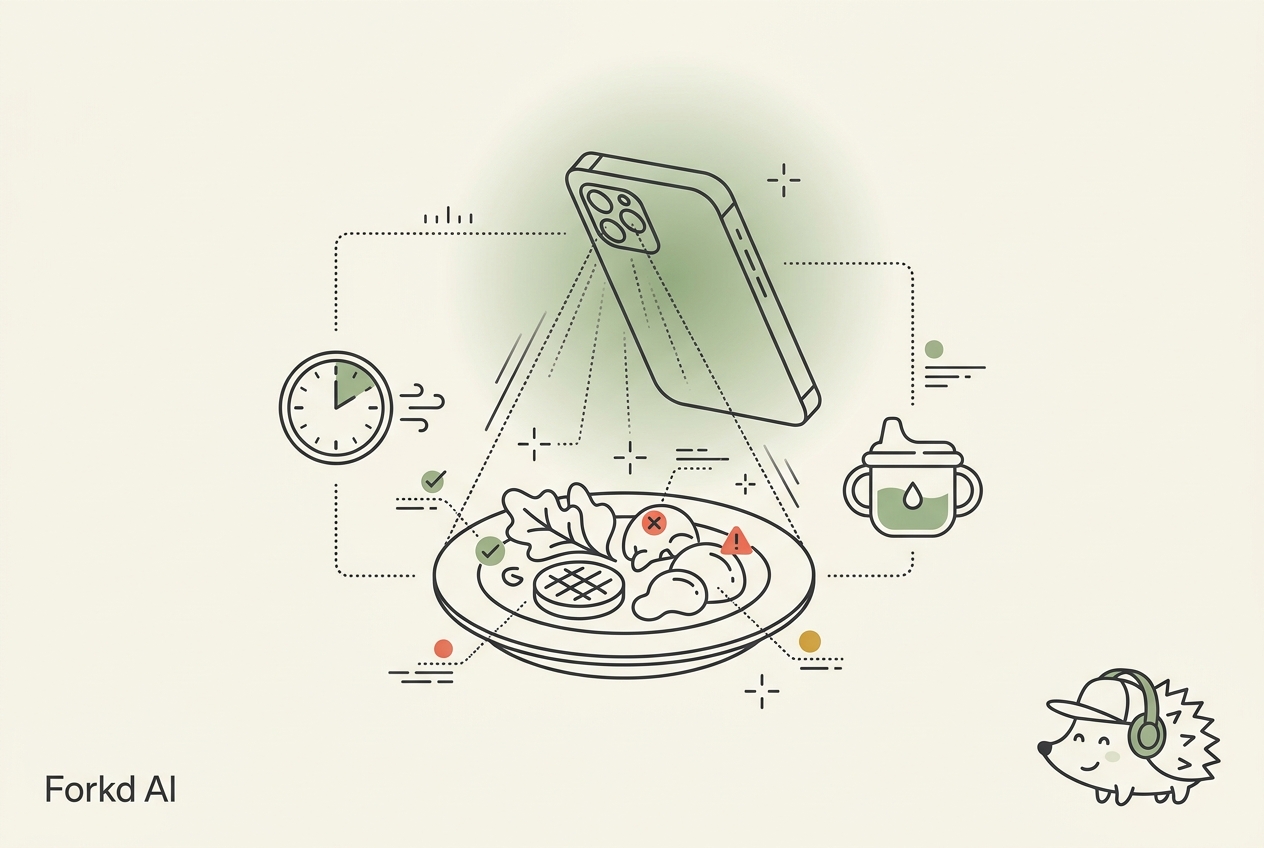
Forkd's AI photo logging requires minimal effort, useful if the purpose is brief nutritional education rather than long-term tracking. The weekly Forkie coaching summarises patterns without negative framing: "your calcium was low this week, more dairy, leafy greens, or fortified foods would help" is educational in tone.
Important note on fasting features: Forkd's fasting timer is not appropriate for teenagers without medical guidance. Adolescents should not practice intermittent fasting without specific medical reason and supervision. If a teenager is using Forkd, the fasting feature should be left unused.
What Should Teenagers Actually Track?
If a teenager is doing any food tracking, these are the nutrients most worth focusing on for adolescent health:
Calcium (1,300mg/day for ages 9–18). Approximately 90% of peak bone density is established during adolescence. Adequate calcium during this period has lifelong effects on bone health and fracture risk. Most teenagers do not meet this target without dairy or fortified alternatives.
Iron (15mg/day for adolescent girls, 11mg/day for boys). Iron requirements peak during adolescence, especially for girls after menstruation begins. Iron deficiency affects energy, concentration, and academic performance.
Protein. Adequate protein supports growth and muscle development. The general range for adolescents is 0.85–0.95g/kg/day, higher for active teenagers.
Vitamin D. 600 IU/day, challenging from diet alone for most teenagers. Often covered by supplementation.
Calorie counts are not on this list. For a healthy adolescent without a specific medical condition, the nutritional adequacy picture is more important than the calorie number.
Frequently Asked Questions
Is Calorie Counting Safe for Teenagers?
For most healthy teenagers, calorie-focused restriction apps are not recommended. The research linking calorie counting apps to disordered eating risk in adolescents is significant enough that nutritional education (what is in food, whether the diet is complete) is a more appropriate framing than calorie restriction goals. If there is a specific medical reason for calorie monitoring, this should be managed with a healthcare provider.
What Age Can Teenagers Start Using Food Tracking Apps?
There is no specific age cutoff. The appropriateness depends on the purpose, the teenager's relationship with food and body image, and parental involvement. For nutrition education purposes, late adolescence (16 and up) with parental awareness is a reasonable starting point. Earlier tracking should involve a healthcare provider or registered dietitian.
Which Apps Don't Focus on Calorie Restriction for Teenagers?
Cronometer emphasises nutritional completeness rather than calorie deficits. It can be set up to show whether a diet meets nutritional targets rather than showing calorie progress against a weight loss goal. This framing is more appropriate for adolescent use. Apps that default to aggressive calorie deficit goals (common in mainstream calorie counters) are less appropriate.
What Should Parents Know Before Their Teen Uses a Food Tracking App?
Monitor the purpose and framing. Is the teen using the app to understand nutrition, or to restrict eating? Check that calorie targets (if set) reflect growth needs rather than weight loss goals. Know the signs of disordered eating, restriction, hiding food behaviour, distress around eating, and treat any app use as an opportunity for conversation rather than unsupervised monitoring.
Key Takeaways
- Calorie-focused food tracking apps carry real eating disorder risk for adolescents. The approach should be nutritional awareness, not calorie restriction
- Cronometer is the most appropriate tracking tool for educational purposes: nutrient completeness framing, targets adjustable to adolescent values, no restriction-oriented default settings
- Forkd is fast enough for brief educational tracking; the fasting timer is not appropriate for teenagers without medical guidance
- The nutrients most worth tracking for teenage health are calcium (1,300mg/day), iron (15mg/day for girls), protein, and vitamin D, not calorie counts
- Any food tracking a teenager does should involve parental awareness and ideally input from a healthcare provider or registered dietitian
Written by
Vineet Karhail builds Forkd, the AI-powered calorie and nutrition tracking app, and writes its research-backed guides on calories, macros, and micronutrients.