Best Macro Tracking Apps in 2026: Protein, Carbs, and Fat, Tracked Properly
The Short Answer
The best macro tracking apps in 2026 are MacroFactor (adaptive targets that adjust to your metabolism), Cronometer (most accurate verified data across macros and micronutrients), Forkd (fastest logging via AI photo with fasting and coaching built in), and Lose It! (best free option for straightforward macro tracking). Your choice depends on how much coaching, accuracy, and logging speed matter to you.
Disclaimer
This article is for information only and does not replace medical advice. Needs vary with age, sex, and situation (pregnancy, conditions, medication): if in doubt or symptomatic, talk to a health professional.
Why Does Macro Tracking Matter Beyond Just Counting Calories?
Calorie totals tell you about energy balance. Macro ratios tell you what that energy is made of, and the composition matters.
Protein determines how much lean mass you preserve during weight loss and how full you feel between meals. Carbohydrate intake affects energy levels, training performance, and glycogen replenishment. Fat intake influences hormone production and the absorption of fat-soluble vitamins. Tracking all three, rather than just total calories, gives you a more complete picture of why your energy, hunger, and body composition are behaving the way they are.
Most calorie apps track macros, the difference is in how accurately they set targets, how quickly they let you log, and whether the targets adjust over time as your intake and weight change.
Which Macro Tracking Apps Are Worth Using in 2026?
MacroFactor, Best Adaptive Macro Coaching
MacroFactor's core feature is an algorithm that estimates your actual metabolic rate from your weight and calorie data over time, then adjusts your macro targets weekly. Most apps calculate targets from standard formulas (height, weight, age, activity level) and never revise them. MacroFactor recalibrates as you lose weight, because your calorie needs genuinely drop as your body mass decreases.
The food database is curated rather than crowdsourced, which means fewer inaccurate entries. The interface is clean, with no ads, no upsells, and all features included in one subscription tier.
Pricing: $71.99/year ($5.99/month). No free tier beyond a 7-day trial.
Drawback: no photo logging. Every entry goes through the search-and-select workflow. In a field where AI photo logging has become table stakes, this is a real gap for users who prioritise speed.
Cronometer, Most Accurate Nutrient Data
Cronometer tracks 84 nutrients per food entry using data from the USDA NCCDB and verified third-party sources. For macro tracking specifically, the data accuracy is among the best available. The free tier gives you unlimited logging and full micronutrient breakdowns with no daily cap. Gold tier ($49.99/year) adds fasting tracking and detailed export options.
The food database has over 1 million verified entries, smaller than MyFitnessPal's 14 million, but significantly more reliable because every entry is validated rather than crowdsourced.
Best for: users who want macro tracking alongside micronutrient data, particularly those with specific dietary restrictions or health goals beyond weight loss.
Forkd, Fastest Logging with Fasting and Coaching
Forkd tracks macros, protein, carbs, fat, alongside micronutrients (iron, calcium, key vitamins) in a single logging session that starts with a photo. The AI estimates macros from the image, surfaces hidden extras like cooking oil and dressing, and lets you adjust everything before confirming. Logging a full meal takes under 10 seconds.
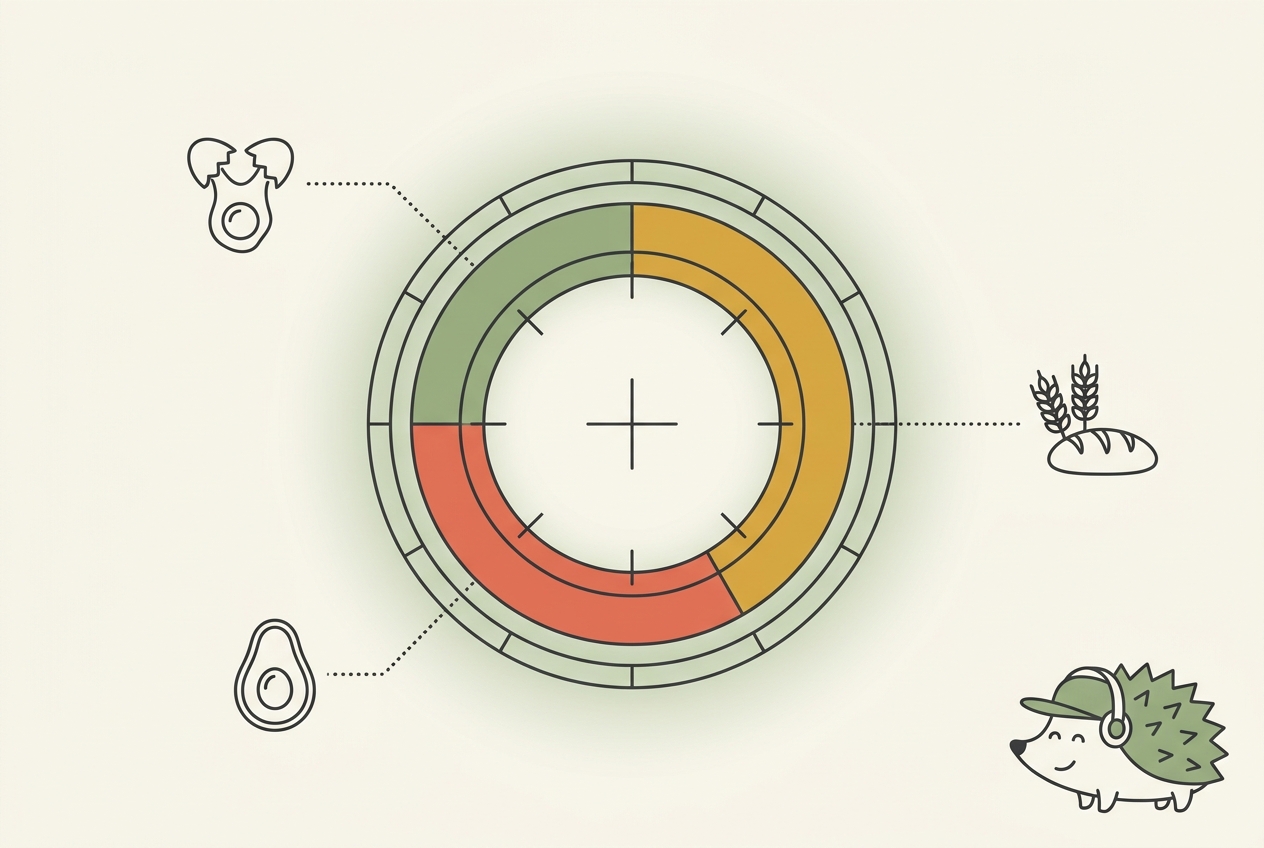
The macro dashboard shows daily progress as rings that fill as you log, with protein tracked separately because it's the most commonly under-eaten macro and the one with the clearest impact on satiety and muscle retention.
Weekly coaching insights from Forkie identify macro patterns, low-protein dinners, carb-heavy evenings, and suggest practical fixes without lecturing.
Lose It!, Best Free Option
Lose It!'s free tier includes a 27-million item food database and unlimited macro tracking. Premium ($39.99/year) adds meal planning, nutrient timing features, and exercise integration with Fitbit, Garmin, and Oura Ring. For someone who wants straightforward macro tracking without paying, this is the strongest free option.
Drawback: barcode scanning moved to Premium for new users in 2026. The free experience is functional but slower without scan-to-log.
How Do You Set Accurate Macro Targets?
The standard macro split starting point for most adults is:
- Protein: 1.6–2.2g per kilogram of body weight (higher end for people training regularly)
- Fat: 0.8–1.2g per kilogram of body weight
- Carbohydrates: the remainder of your calorie budget after protein and fat are accounted for
These ratios shift depending on goal. Higher protein targets (2.0–2.2g/kg) suit people in a calorie deficit who want to preserve muscle. Lower carb ratios suit people managing blood glucose. Higher fat ratios suit people following ketogenic or low-carb approaches.
The key thing most apps get wrong: they set targets using your starting body weight and don't update them as you lose weight. A 90kg person losing weight to 80kg has meaningfully lower maintenance calories and protein targets at 80kg than they did at 90kg. Apps that don't adjust for this will have you overshooting your targets as your body composition changes.
What Should You Track Beyond Protein, Carbs, and Fat?
Tracking the three primary macros tells you most of what you need to know about energy and body composition. Adding these two gives you a significantly more complete picture:
Fiber. Total carbohydrate intake doesn't tell you whether those carbohydrates came from vegetables and whole grains or from processed foods with minimal fiber. Fiber intake (target: 25–30g/day) is one of the strongest predictors of satiety, gut health, and long-term weight management. Most people chronically under-eat it.
Protein per meal (not just per day). Research on muscle protein synthesis suggests that protein needs to be distributed across meals, roughly 20–40g per sitting, rather than concentrated in one meal. Tracking a daily protein total without seeing the per-meal distribution misses the information that matters for body composition goals.
Frequently Asked Questions
How Many Grams of Protein Should I Aim for Per Day?
For most adults trying to lose weight while preserving muscle, 1.6–2.0g of protein per kilogram of body weight per day is the evidence-supported range. At 70kg, that's 112–140g of protein daily. Apps that default to 0.8g/kg (the RDA for preventing deficiency) set targets that are meaningful for preventing deficiency but low for anyone with body composition or weight loss goals.
Does It Matter What Time I Eat My Macros?
For most people, total daily macro intake matters more than exact timing. The one exception with clear research support: distributing protein across meals (rather than eating most of it at dinner) improves muscle protein synthesis. Carbohydrate timing matters more for people training regularly, consuming carbohydrates around workouts supports performance and recovery.
Is It Worth Tracking Macros If I'm Not Trying to Build Muscle?
Yes, for the protein data alone. Most people under-eat protein regardless of whether they're training, and consistently low protein intake leads to higher hunger, lower satiety per calorie, and (during weight loss) faster loss of lean muscle mass. Knowing your protein intake gives you actionable information even if building muscle isn't the goal.
Can I Track Macros Without Counting Every Calorie?
Yes. Some apps allow macro-only tracking without requiring you to log calories separately, since calories are a direct function of macro quantities, tracking all three macros gives you the calorie total automatically. If calorie numbers increase food-related anxiety, focusing on protein and fiber as the primary targets tends to produce similar outcomes with less cognitive overhead.
Key Takeaways
- MacroFactor sets targets that adapt to your actual metabolism over time rather than a formula that never changes, the most sophisticated coaching in the category
- Cronometer has the most nutritionally accurate data; Forkd has the fastest logging; Lose It! is the best free starting point
- Most apps set protein targets from the minimum RDA rather than the 1.6–2.0g/kg range that body composition and satiety research supports, check your default target
- Tracking fiber alongside macros adds the most practical value beyond the standard protein/carbs/fat breakdown
- Protein distribution across meals matters for muscle protein synthesis, a daily total log doesn't tell you if you hit 5g at breakfast and 100g at dinner
Written by
Vineet Karhail builds Forkd, the AI-powered calorie and nutrition tracking app, and writes its research-backed guides on calories, macros, and micronutrients.