Does Refrigerating Rice Actually Reduce the Calories You Absorb?
The Short Answer
Yes, cooling cooked rice, pasta, bread, or potatoes for at least 24 hours converts some of their starch into resistant starch, which the body absorbs as roughly 2.5 calories per gram instead of 4. It only works on cooked, cooled starch, not raw grains in the fridge, and reheating doesn't undo the effect. The reduction is real but modest, typically in the 10-15% range for the food overall.
Disclaimer
This article is for information only and does not replace medical advice. Needs vary with age, sex, and situation (pregnancy, conditions, medication): if in doubt or symptomatic, talk to a health professional.
Is the "Refrigerate Your Rice" Trick Actually Real?
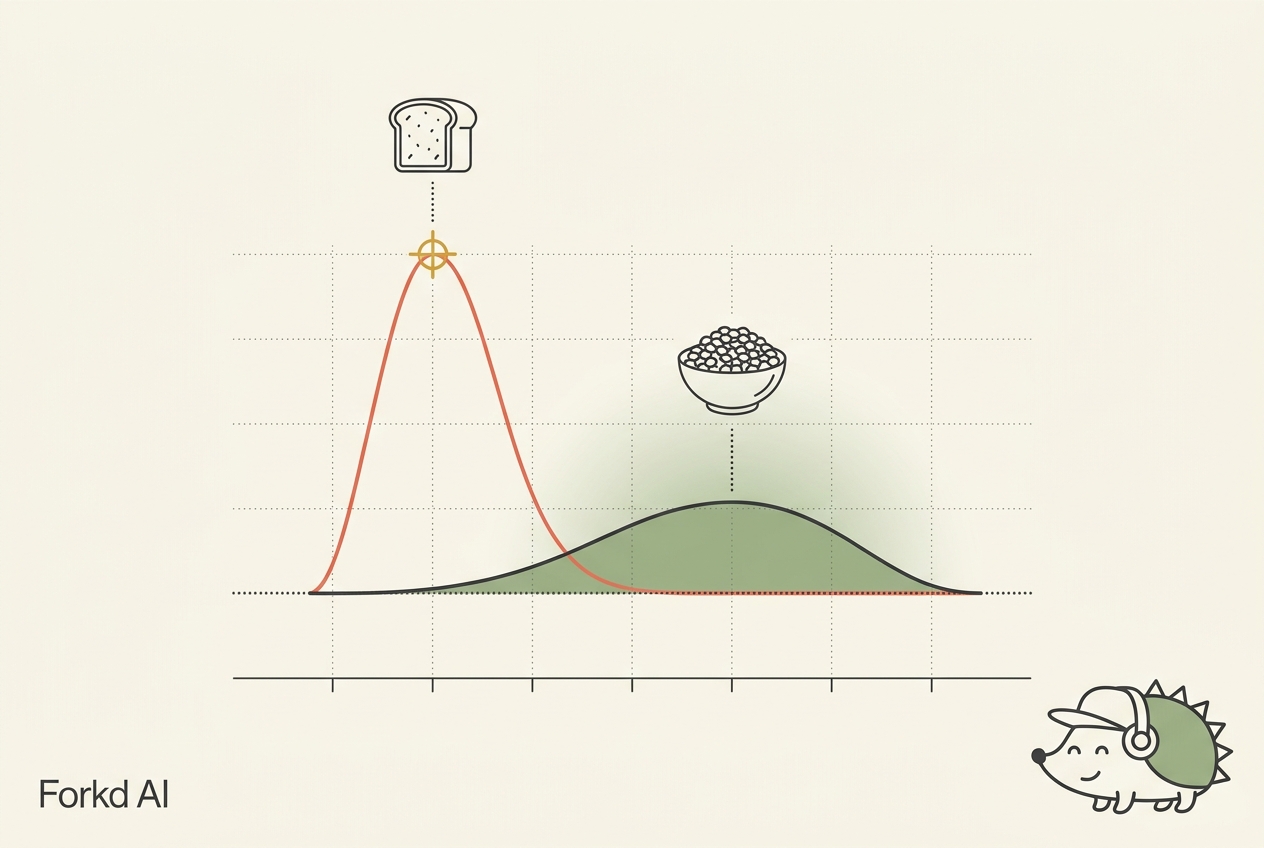
Yes, and it's rare for something this viral to hold up this well. The trick that's been going around, cook your rice, chill it, then eat it cold or reheated, is based on a real 2015 study out of the College of Chemical Sciences in Colombo, Sri Lanka. Researchers tested eight cooking methods across 38 rice varieties and found that adding a bit of fat before cooking, then cooling the rice, changed the starch structure enough to cut its digestible calories.
The best-performing method produced a 15-fold increase in resistant starch and roughly a 10-12% calorie reduction in that specific variety. The lead researcher suggested other varieties might do even better, up to 50-60% in theory, though that number hasn't been the one that's replicated widely. Treat the 10-15% range as the realistic expectation, not the eye-catching outlier.
What Is Actually Happening to the Rice When It Cools?
When you cook rice, heat and water force the starch granules to swell and gelatinize, which is what makes them easy to digest in the first place. As the rice cools, some of those starch molecules, particularly the amylose, re-form hydrogen bonds with each other in a process called retrogradation. That new, tighter structure is harder for your digestive enzymes to break apart. It's technically still starch, but your body treats a meaningful chunk of it more like fiber than like sugar.
That reorganized starch has a name: resistant starch. It resists digestion in the small intestine, which is the entire point.
Does This Reduce Calories, or Just How Many You Absorb?
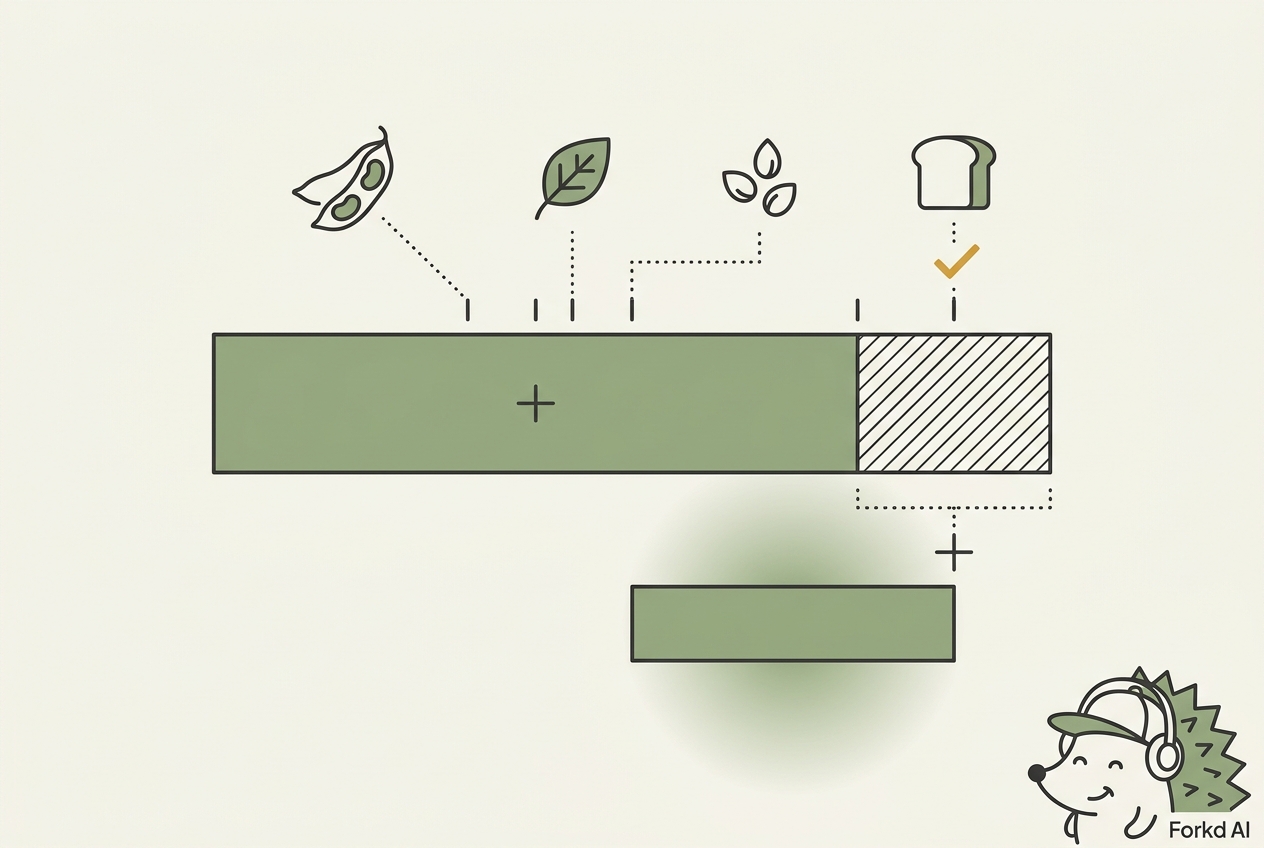
This distinction actually matters, and it's the one most headlines skip. The rice itself doesn't lose calories sitting in your fridge. What changes is how much of that starch your body can extract energy from. Resistant starch provides roughly 2.5 calories per gram, compared to about 4 calories per gram for starch your body digests normally, a difference of around 37% for the portion that actually converts.
Since only some of the starch converts, not all of it, the overall calorie reduction for the dish lands well below that 37% figure. That's where the realistic 10-15% range comes from. The rest of that resistant starch doesn't just vanish either. It travels to your colon, where gut bacteria ferment it into short-chain fatty acids, which is its own separate benefit, mostly around gut health and blood sugar control rather than weight loss.
Does This Work on Pasta, Bread, and Potatoes Too?
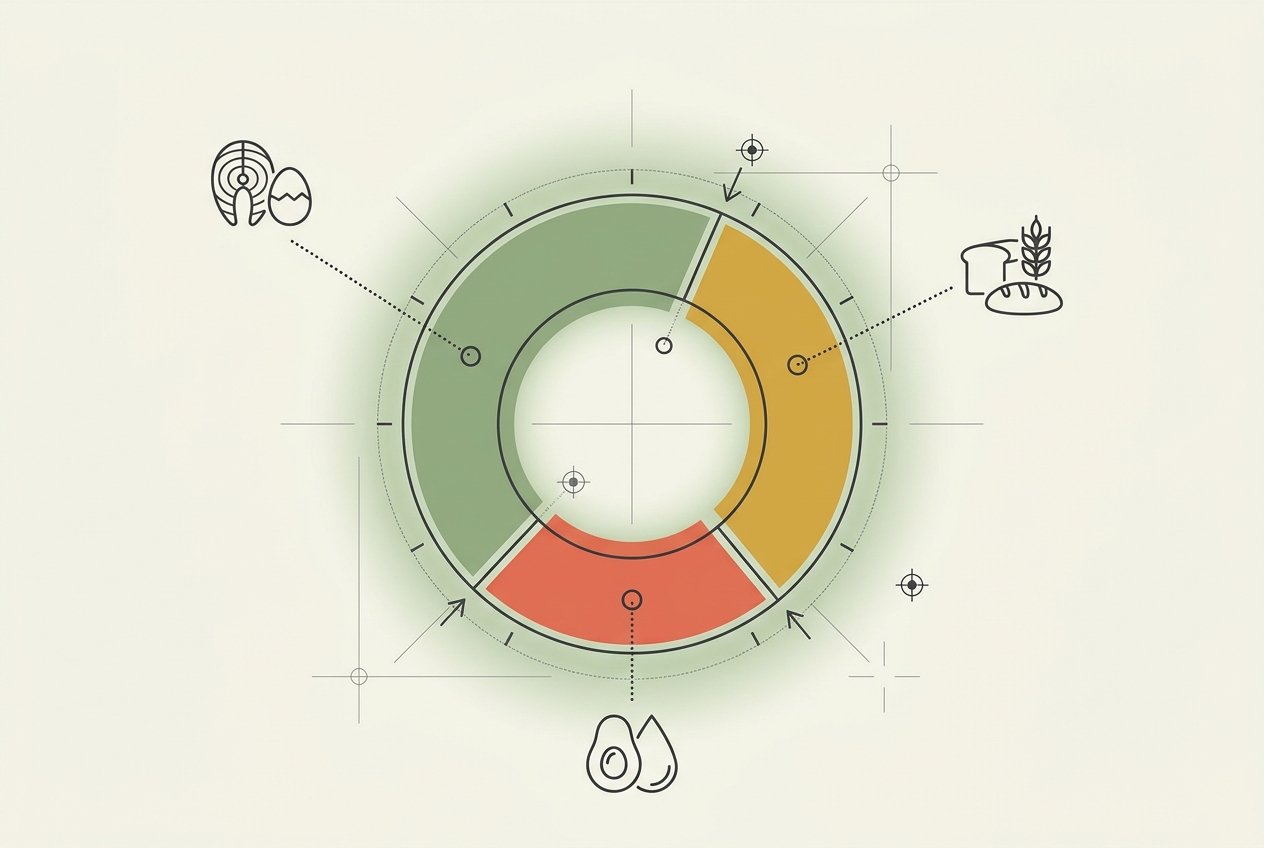
Yes, and it's not a rice-specific quirk. Retrogradation is a property of cooked starch generally, and it's been demonstrated in pasta, potatoes, bread, and rice alike. Interestingly, cooked pasta has shown significantly higher resistant starch formation than bread does, likely related to differences in how tightly the starch is packed and how much water is involved during cooking.
Potatoes respond well too, which is convenient since cold potato salad has basically been doing this by accident for a century.
Does the Food Need to Be Cooked First?
Yes, and this is the part people get wrong most often. Retrogradation only happens to starch that's already been gelatinized by cooking. If you toss a bag of raw rice, raw pasta, or raw potatoes straight in the fridge, nothing useful happens to the starch structure. You need the heat-and-water step first: cook it normally, then cool it. Raw starch granules aren't in the right state for the hydrogen bonds to reform the way they do after gelatinization.
Does It Need to Be Frozen, or Is Refrigeration Enough?
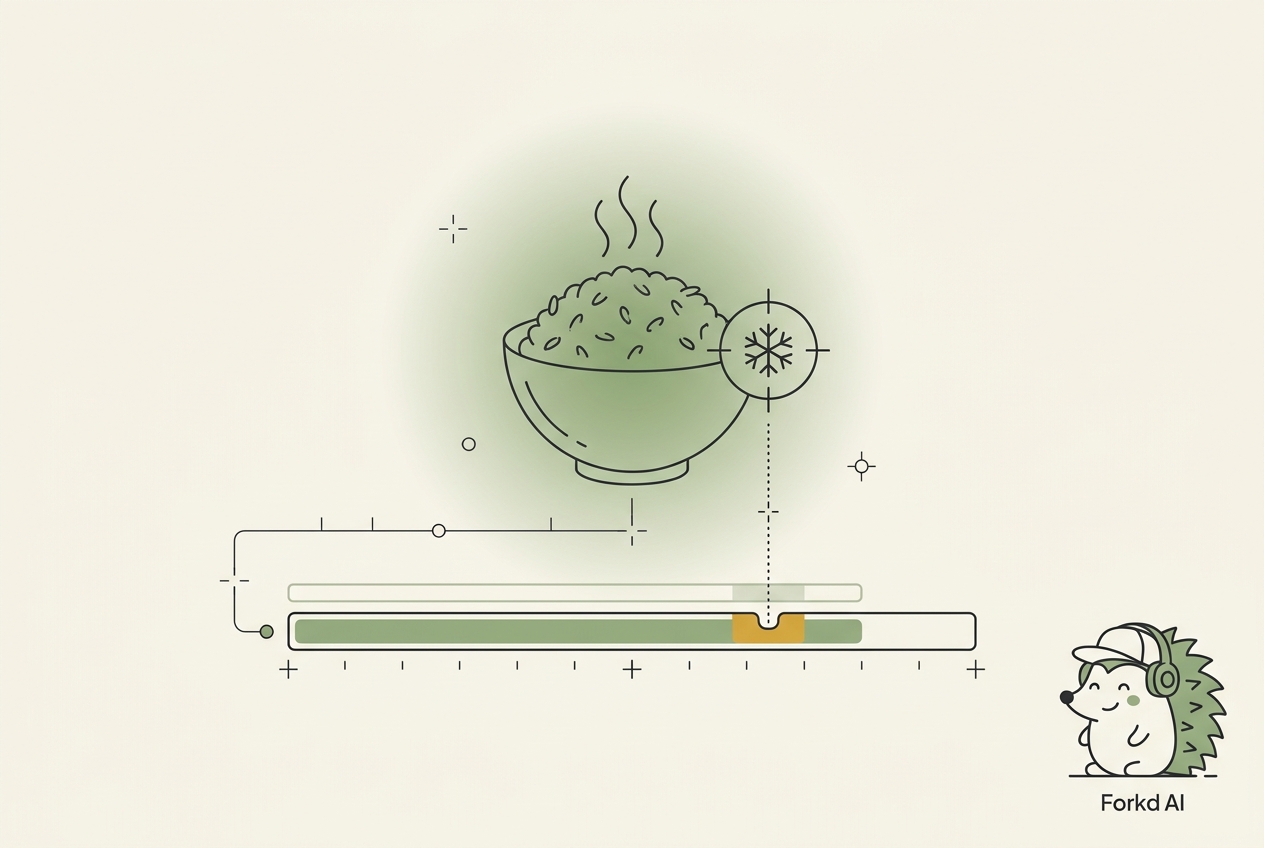
Plain refrigeration works. You don't need a freezer. What actually matters is time at a cold enough temperature, roughly 40°F (4°C) or below, for the retrogradation process to run its course.
How Long Does It Need to Chill?
At least 24 hours in the refrigerator is the consistent number across the research. Some effect likely starts earlier, but 24 hours is where the studies see a reliable, meaningful shift in resistant starch content. Interestingly, repeated cooling-and-reheating cycles seem to build on each other. Studies using repeated heat-and-cool cycles found resistant starch climbing from around 20% up toward 40%+ of the starch content over multiple rounds, though the very first cooling cycle produces by far the biggest jump. You don't need to do this more than once or twice to get most of the benefit.
Does Reheating Undo the Effect?
No, and this is the good news for anyone who doesn't want to eat cold rice out of a container. Once that retrograded structure forms, reheating the food doesn't reverse it. Your leftover fried rice, reheated pasta, or warmed-up baked potato still carries the resistant starch benefit from its time in the fridge, even served hot.
Is This Actually Worth Doing, or Is It Overhyped?
It's real, but it's not a weight-loss hack in the way it sometimes gets sold online. A 10-15% calorie reduction on a cup of rice is somewhere around 20-30 calories, not nothing, but not the kind of number that replaces watching your portions or your overall intake. Where it's genuinely more interesting is the blood sugar side: resistant starch blunts the glucose spike from starchy food, which matters more for people managing insulin sensitivity or type 2 diabetes than it does for the calorie count on its own.
If you're already meal-prepping rice, pasta, or potatoes for the week, cooling and reheating them is close to a free upgrade. It's just not a reason to start meal-prepping in the first place.
How to Actually Do It
- Cook your rice, pasta, or potatoes as you normally would.
- Let them cool to room temperature, then refrigerate for at least 24 hours.
- Eat cold, or reheat normally. Either way, the resistant starch stays.
- Repeat the cook-cool cycle once or twice more if you want to push the resistant starch content further, though the returns shrink after the first round.
Forkd's macro tracker logs carbs from a photo or a voice note either way, but if you're tracking closely around a specific carb budget, it's worth knowing that USDA nutrient databases (and most tracking apps) still count the food at its standard digestible-starch value, since resistant starch content varies too much by prep method to standardize. Search the App Store for "Forkd: Nutrition Intelligence."
Frequently Asked Questions
Do I need to add oil to my rice for the calorie-reducing effect to work?
No. The original Sri Lankan study used coconut oil as one of three combined treatments (oil, then cooking, then cooling) to get its best 15-fold resistant starch increase, but cooling alone, without the oil step, still produces a meaningful effect. The oil isn't required for the core mechanism.
Does refrigerating rice lower its glycemic index?
Yes. Resistant starch isn't broken down into glucose in the small intestine the way regular starch is, so it produces a smaller, slower blood sugar rise. This is one of the more consistently reproduced findings in the research.
Can I freeze rice instead of refrigerating it to save time?
Freezing works too and may accelerate retrogradation slightly, but it isn't required. Standard refrigeration at 40°F or below for 24+ hours is the well-documented baseline.
Does this trick work on white rice, or only brown rice?
It works on both, though the exact resistant starch increase varies by rice variety and starch composition. The original study tested white rice varieties specifically and still found meaningful effects.
How many times can I reheat and recool the same rice before it's not worth it?
Most of the resistant starch gain happens in the first cooling cycle. A second cycle adds a bit more, but returns diminish quickly after that, and food safety (how long cooked rice has actually been stored) becomes the bigger concern before the resistant starch math does.
Key Takeaways
- Cooling cooked rice, pasta, bread, or potatoes for 24+ hours converts some digestible starch into resistant starch through a process called retrogradation.
- Resistant starch provides about 2.5 calories per gram versus 4 for regular starch, translating to a realistic 10-15% calorie reduction for the dish overall, not the 50-60% figure sometimes quoted.
- It only works on cooked-then-cooled starch. Raw rice, pasta, or potatoes in the fridge see no benefit.
- Refrigeration is enough; freezing isn't required. Reheating afterward doesn't undo the effect.
- The bigger benefit for most people is the blunted blood sugar response, not the modest calorie savings.
References
- James, S.A. Presented at the 249th National Meeting and Exposition of the American Chemical Society, 2015, on resistant starch formation via oil-cook-cool rice preparation. chemistryworld.com
- Ohio State University Health & Wellness. Does cooling starchy food after cooking really lower its calories? health.osu.edu
- Influence of resistant starch resulting from the cooling of rice on postprandial glycemia in type 1 diabetes. pmc.ncbi.nlm.nih.gov
- Analysing the Impact of Resistant Starch Formation in Basmati Rice Products: cooking and storage conditions and associations with blood glucose and lipid profiles. pmc.ncbi.nlm.nih.gov
- Clemson Cooperative Extension, Home & Garden Information Center. Starch Retrogradation: A Method for Post-Mealtime Blood Sugar Management. hgic.clemson.edu
Written by
Vineet Karhail builds Forkd, the AI-powered calorie and nutrition tracking app, and writes its research-backed guides on calories, macros, and micronutrients.