Forkd vs Lose It!: Which Calorie Tracker Is Better in 2026?

The Short Answer
Lose It! and Forkd are both strong daily calorie trackers, but they're built differently. Lose It! has the largest food database of any app in the category (27 million items), strong wearable integration, and a 4.7-star rating across millions of reviews. Forkd logs faster via AI photo recognition, integrates fasting tracking, and provides behavioural coaching through Forkie's weekly insights. As of 2026, Lose It! moved barcode scanning to Premium for new users; Forkd keeps barcode and photo logging free.
Disclaimer
This article is for information only and does not replace medical advice. Needs vary with age, sex, and situation (pregnancy, conditions, medication): if in doubt or symptomatic, talk to a health professional.
How Do Forkd and Lose It! Approach Daily Logging?
Lose It! is a database-first calorie tracker. You search the 27-million item food library, find the match, confirm the serving size, and save. The database is large enough that most standard packaged foods, restaurant items, and common whole foods are there. The search experience is fast for people who eat similar meals regularly, once you've logged something, it reappears in your history and recent foods.
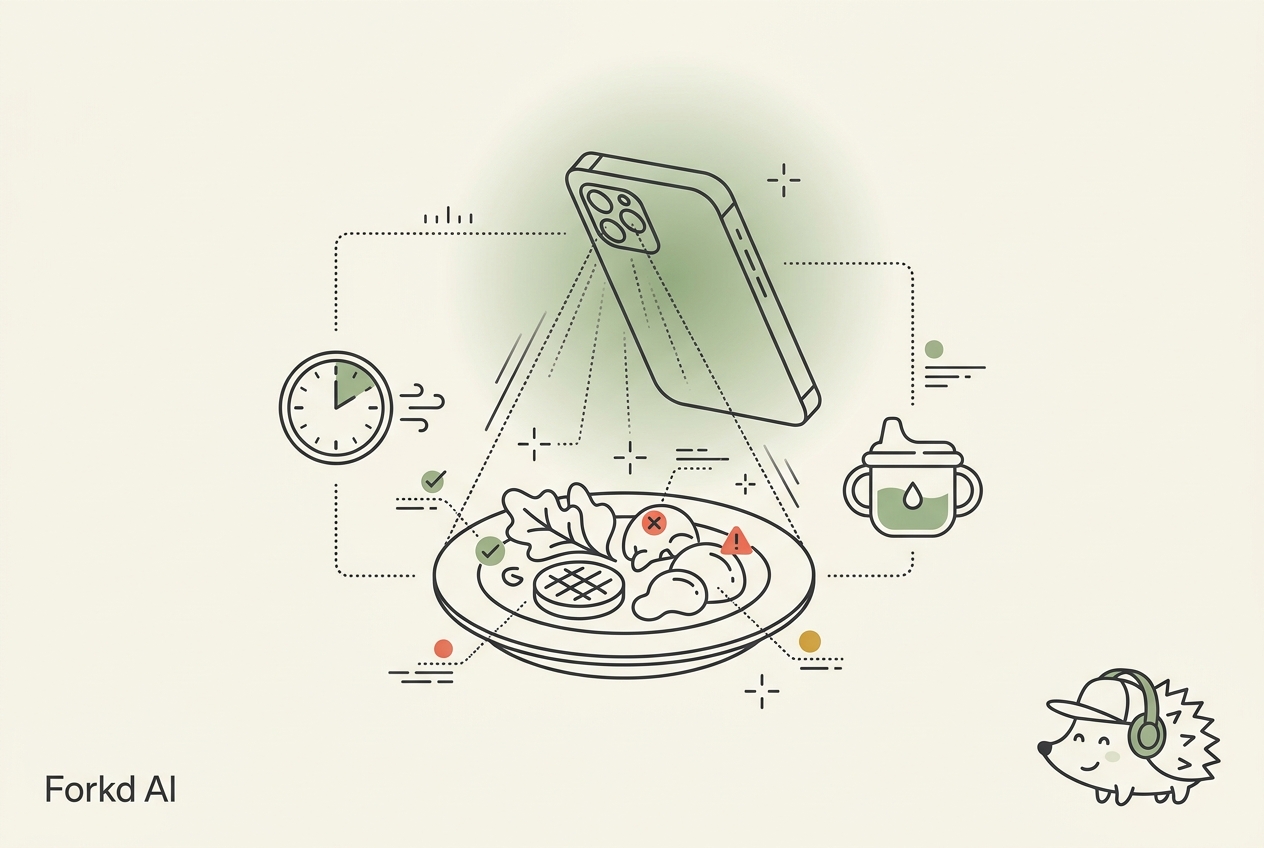
Forkd leads with AI photo logging. Photograph your meal, get a nutritional breakdown in under 10 seconds, edit anything that looks wrong, done. For packaged foods, barcode and nutrition label scanning are available in the same app. For restaurant meals, chain restaurant database entries are searchable. The key difference is that Forkd's default entry point doesn't require knowing what's in your meal, the camera does the identification.
How Do the Databases Compare?
Lose It! holds the largest food database in the consumer calorie tracking category at 27 million items, with particularly strong coverage of North American packaged products, chain restaurant menus, and branded foods. The database grew significantly through 2025 with expanded international product coverage.
Forkd's food database is smaller, the app is designed to supplement database lookup with AI photo recognition for situations where database search would be slow or difficult. For meals where you know exactly what you ate, both apps work; for unfamiliar restaurant dishes or home-cooked mixed meals, Forkd's photo approach reduces the database dependency.
What's Different About Their Free Tiers?
Forkd free tier:
- AI photo logging
- Barcode and nutrition label scanning
- Fasting timer with fat-burning mode indicator and safety warnings
- Key micronutrient tracking (iron, calcium, vitamin D)
- Weekly coaching insights (Forkie)
- Challenges and streaks
Lose It! free tier:
- Unlimited food logging via database search
- Calorie and macro tracking
- Basic food history
- Note: as of 2026, barcode scanning moved to Premium for new users
The barcode change is the most important update. For users who eat a significant amount of packaged food, barcode scanning is the feature that makes daily logging fast enough to sustain. Moving it to Premium at $39.99/year shifts Lose It!'s free tier toward users who primarily eat simple whole foods with easy database matches.
Feature-by-Feature Comparison
| Feature | Forkd | Lose It! |
|---|---|---|
| AI photo logging | Yes (free) | No |
| Barcode scanning | Yes (free) | Premium only for new users |
| Nutrition label OCR | Yes | No |
| Database size | Smaller; AI supplements | 27 million items |
| Fasting timer | Yes (free, with coaching) | No |
| Micronutrient tracking | Key nutrients, free | Premium |
| Weekly coaching insights | Yes (Forkie) | No |
| Wearable integration | Limited | Fitbit, Garmin, Apple Watch, more |
| Weight logging and trends | Yes | Yes |
| Free tier scope | Photo + fasting + coaching | Database search; barcode now paid |
| Premium price | See app listing | $39.99/year |
| App store rating | N/A | 4.7 stars |
Where Does Lose It! Win?
Database size and history. At 27 million items, Lose It! covers more foods, more brands, and more restaurant chains than any other calorie tracker. Users who want to find the exact branded product they eat by name or restaurant and dish combination will find Lose It!'s database the most reliable for that search.
Wearable integration. Lose It! integrates with Fitbit, Garmin, Apple Watch, and several other fitness platforms to sync activity data and adjust calorie goals accordingly. If your step count and activity data from a wearable should factor into your daily calorie target, Lose It! handles this more comprehensively than Forkd.
Track record. Lose It! has been in the market since 2008 and has millions of long-term users. A 4.7-star rating across a large review base reflects sustained usability over time, not just a good launch.
Where Does Forkd Win?
Logging speed for non-packaged meals. For restaurant dishes, home-cooked meals, and anything that isn't a simple packaged product with a barcode, Forkd's AI photo logging is significantly faster than Lose It!'s database search. The gap matters most for people who cook regularly or eat at restaurants frequently.
Fasting integration. Forkd combines food logging and fasting tracking in one dashboard. Lose It! has no fasting timer. For intermittent fasting users, this is a decisive difference.
Free tier value. Barcode scanning moving to Premium in Lose It! narrows the free tier's usefulness for packaged food loggers. Forkd's free tier keeps barcode, photo, and nutrition label scanning free alongside fasting tracking and coaching.
Hidden calorie prompts. Forkd flags likely hidden extras in photos, cooking oils, dressings, sauces, and prompts you to confirm or remove them. Lose It! logs what you enter; it doesn't prompt for likely additions.
Coaching. Forkie's weekly insights surface patterns from your logs in plain-English summaries. Lose It! tracks data and shows trends, but doesn't provide behavioural coaching around patterns.
Which Should You Choose?
Choose Lose It! Premium if:
- Database coverage for branded and restaurant foods is important and you want the largest possible option
- You sync activity data from a Fitbit, Garmin, or other wearable and want it to adjust your calorie goals
- You prefer database-search logging and your diet skews toward familiar, logged foods
Choose Forkd if:
- You eat a mix of home-cooked, restaurant, and packaged meals and want photo logging to handle the variety
- You practice intermittent fasting and want a single app for both food and fasting tracking
- You want weekly coaching around your eating patterns, not just raw data
- You want barcode scanning and photo logging free before committing to a paid plan
Frequently Asked Questions
Did Lose It! Remove Free Barcode Scanning?
As of 2026, barcode scanning moved to Premium for new Lose It! users. Existing users who've had the feature may retain access, check your account. New users who want free barcode scanning should consider Cronometer (verified database, fully free) or Forkd (barcode plus photo logging, free).
Which App Is Better for Restaurant Meals?
For chain restaurants with standardised menus, both apps have database entries. For independent or non-chain restaurants, Forkd's AI photo logging handles unknown dishes without requiring a database match. Lose It!'s 27-million item database covers more chain restaurant menus, but photo logging beats both for dishes that aren't in any database.
Can I Switch From Lose It! to Forkd?
Yes, though food history doesn't transfer between apps. Your Lose It! data can be exported in some formats from Settings, but meal logs don't import into Forkd. For most users, starting fresh with a new logging approach is straightforward, the habit is what you're building, not the historical log.
Does Lose It! Have Any Coaching Features?
Lose It! shows calorie trends, macros, and goal progress with basic daily summaries. It doesn't provide behavioural coaching around patterns in the way Forkie does. The app is primarily a tracking tool with visualisations rather than an interpretive coaching layer over your data.
Key Takeaways
- Lose It!'s 27-million item database is the largest in the category; Forkd supplements a smaller database with AI photo logging for non-packaged meals
- As of 2026, Lose It! moved barcode scanning to Premium for new users; Forkd keeps barcode, photo, and nutrition label scanning free
- Forkd includes a built-in fasting timer and Forkie coaching, features Lose It! doesn't have
- Lose It! has stronger wearable integration (Fitbit, Garmin, Apple Watch); Forkd is more complete for fasting-focused users
- At $39.99/year, Lose It! Premium is reasonably priced for what it includes, the decision comes down to whether database depth and wearable sync, or logging speed and fasting coaching, matter more to your daily routine
Written by
Vineet Karhail builds Forkd, the AI-powered calorie and nutrition tracking app, and writes its research-backed guides on calories, macros, and micronutrients.