How to Use Forkd: The Food Tracker You'll Actually Stick With
The Short Answer
Open Forkd, snap a photo of your meal, and you're logged in under ten seconds. The app uses AI to estimate calories, macros, and micronutrients, including hidden extras like cooking oil and dressing, then gives you weekly insights in plain English. This guide walks through every feature so you can start getting value on day one.
Disclaimer
This article is for information only and does not replace medical advice. Needs vary with age, sex, and situation (pregnancy, conditions, medication): if in doubt or symptomatic, talk to a health professional.
Is Forkd the Right App If You've Abandoned Food Trackers Before?
You downloaded a calorie app in January. By February it was a graveyard of half-logged lunches.
If that sounds familiar, you're not alone, and it's not a willpower problem. Most food trackers are built like accounting software: precise, exhausting, and designed for someone who has unlimited patience for searching a database for "chicken, grilled, boneless, skinless, 4 oz." Forkd was built for everyone else.
It's for people who want to understand their eating, not be punished by it. Whether you're working toward a weight goal, trying to figure out why your energy crashes at 3pm, or just curious what you're actually putting in your body, the app is built around one idea: logging should fit into real life, not interrupt it.
Why Does Tracking What You Eat Actually Matter?
You can't change what you can't see. Research consistently shows that people underestimate their daily calorie intake by hundreds of calories, not because they're dishonest, but because the human brain is genuinely bad at estimating portion sizes, calorie density, and the cumulative effect of small extras.
Tracking isn't about guilt. Think of it as a mirror rather than a judgement: it shows you what's there so you can decide what to do about it. Even a week of honest logging tends to surface patterns you'd never have guessed, the lunch that's twice as calorie-dense as you thought, the morning routine that's low on protein, the weekend drift that undoes Monday-through-Thursday.
Awareness changes behaviour on its own. Knowing what you ate yesterday makes you more deliberate about today. That effect doesn't require perfect logging or hitting every target, it just requires showing up.
What Makes Forkd's AI Feel Different From Other Food Apps?
The standard food tracking experience: you eat a meal, open the app, type "pasta," scroll through 847 variations, give up, log something approximate, and close it feeling vaguely cheated.
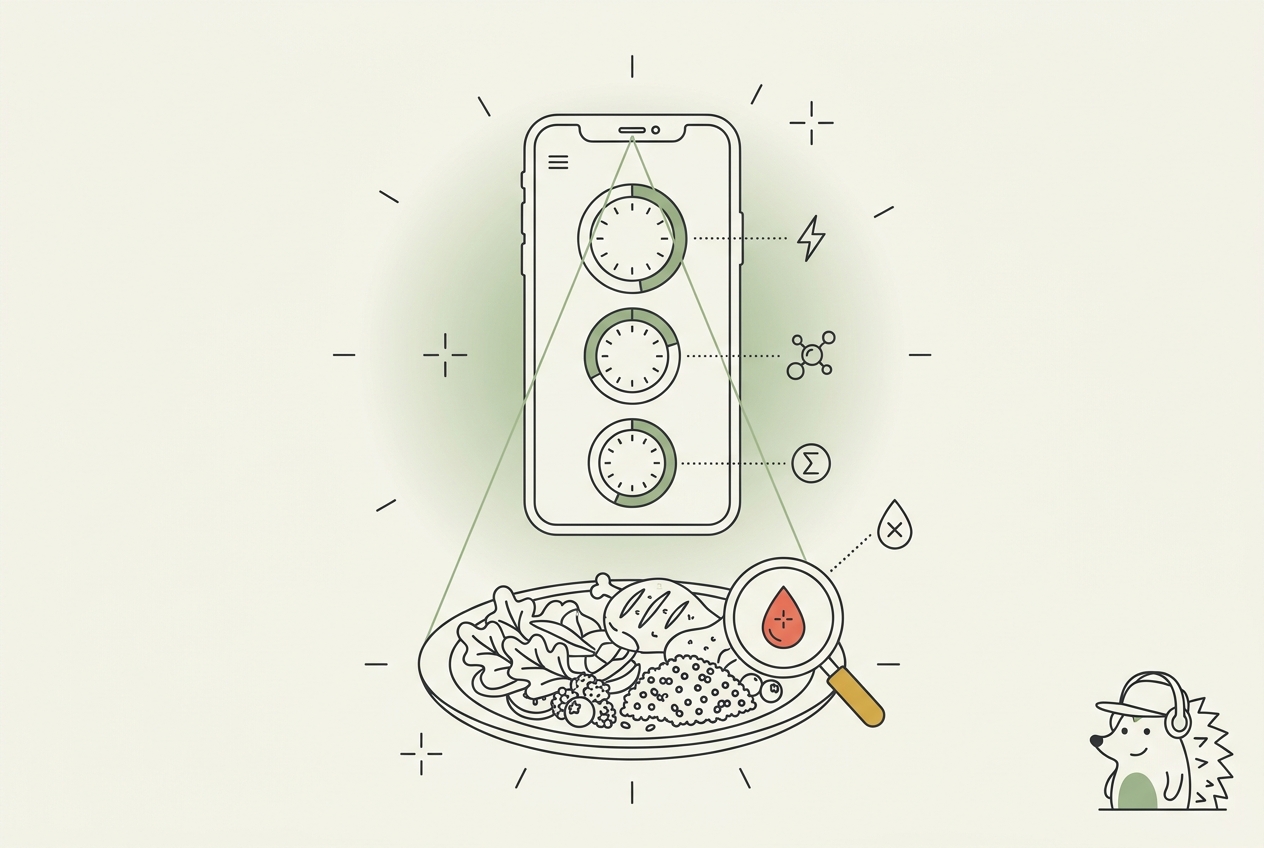
Forkd's AI skips all of that. Snap a photo of your plate and you get a full nutritional breakdown in seconds, calories, protein, carbs, fat, and key micronutrients. No database searching. No guessing at portion sizes from a dropdown.
More importantly, it catches what other apps miss. A photo of a salad shows lettuce and tomatoes. It doesn't show the olive oil, the dressing, the croutons. Forkd surfaces those hidden extras and adds them to your log, then lets you edit, remove, or adjust anything with a tap. You stay in control of every estimate.
That last part matters: the AI does the heavy lifting, but you have the final say. Every entry is editable, which is important because Forkd's estimates are exactly that, estimates, not lab reports. They're accurate enough to be genuinely useful, and they get sharper the more context you give them. It's honest about what it is, which is exactly what makes it trustworthy.
What Does Your Forkd Dashboard Show You?
Open the app and your day is right there: a set of rings showing calories, protein, and the macros that shape how you eat. The rings fill as you log, so you can see where you stand before the next meal rather than discovering you've overshot after dinner.
Protein gets its own spotlight, not because it's the only nutrient that matters, but because it's the one most people under-eat. Getting enough protein keeps you full for longer, supports muscle mass during weight loss, and has a measurable effect on energy throughout the day. Seeing it tracked separately makes it much harder to ignore.
The point isn't to hit every number perfectly. It's to end each day informed instead of guessing. Most people who stick with Forkd describe the dashboard not as a scoreboard but as a compass, it tells you roughly where you are so you can make a small course correction, not a dramatic overhaul.
How Do You Log a Meal in Forkd?
There are three ways, and all of them are fast.
Photo. Snap a picture of your meal and Forkd reads the plate. This is the fastest option for home-cooked food, restaurant meals, or anything you can put in frame.
Text. Type what you ate in plain language, "two eggs, toast, coffee with milk", and the AI interprets it. Useful for simple meals or when you're logging something you ate earlier.
Barcode or label scan. Point the camera at a packaged product's barcode or nutrition label. Useful for anything from a protein bar to a bottle of sauce.
Each path lands in the same place: a confirmation screen showing the estimated breakdown, where you can adjust quantities, add missed ingredients, or remove anything that doesn't look right. The whole process takes under ten seconds. The friction that killed your last tracking app isn't there.
Does Forkd Track More Than Just Calories?
Yes, and this is one of the features that separates it from basic calorie counters.
Calories tell you about weight. Micronutrients tell you about how you actually feel. Forkd tracks iron, calcium, and other key nutrients alongside your macros, so "eating healthy" means something more specific than a daily total. Low on iron for a few days? You'll know before it becomes an afternoon slump you can't explain.
For people who want to go deeper, Forkd also lets you explore recipes and build a simple weekly plan. When meals are decided in advance, healthy choices stop depending on willpower at 6pm, they're already made. It's a quiet feature that makes every other one easier to use.
How Do Trends and Statistics Help You Spot What's Really Going On?
One meal tells you very little. Weeks of meals tell you almost everything.
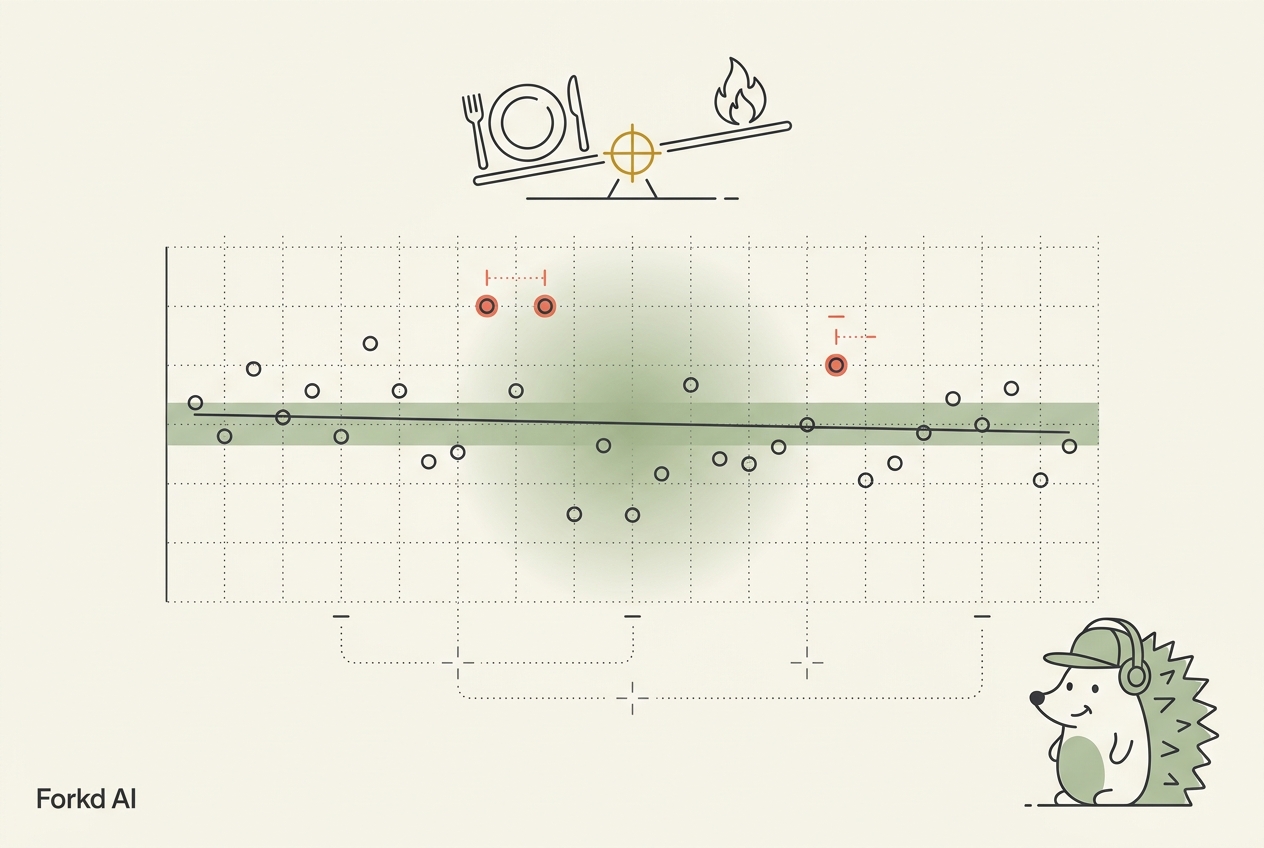
Forkd charts your intake over time so you can see the patterns behind the results. The weekday lunches that are reliably good. The weekend drift that happens without you noticing. The dinners that are consistently light on protein. These aren't things you can see day to day, they only become visible across time, and that's exactly what the trends view surfaces.
The shift from daily data to weekly patterns is where most behaviour change actually happens. It's the difference between knowing what you had for lunch today and understanding how you actually eat.
What Are Challenges and Streaks, and Do They Actually Help?
Consistency is the whole game with food tracking. The app that produces the best results isn't the one with the most features, it's the one you open tomorrow.
Forkd's challenges and streaks are designed around that idea. Small, achievable goals turn logging into a habit rather than a project. A three-day logging streak is winnable. A seven-day streak feels good to protect. Over time, those small wins compound into something that looks a lot like a changed habit.
If you're new to Forkd, this is a good place to start: pick one challenge, log consistently for a few days, and let the streak do its quiet motivational work.
Who Is Forkie and What Are Weekly Insights?
Every week, Forkd gives you plain-English takeaways through Forkie, your in-app coach. What went well. One thing worth trying next. Written the way a good coach would say it, specific, encouraging, never preachy.
Wins get acknowledged. Slips get a gentle nudge, not a lecture. A typical insight might sound like: "Your last few dinners were light on protein, an easy fix for steadier energy." It's actionable and grounded in your actual data, not generic advice.
The weekly rhythm matters as much as the content. Checking in once a week to see what Forkie noticed turns food tracking from a daily data-entry job into something closer to an ongoing conversation about how you're doing.
How Do You Get Your First Win With Forkd?
Log one meal today. That's it.
Not a full day. Not a perfect log. One meal, photographed or typed, confirmed in the app. That's the entire ask for day one.
If you want a slightly longer ramp: try logging breakfast for three mornings in a row. By day three, a pattern will have appeared, something about your morning routine, your protein intake, or your calorie timing that you didn't know before. That's the thing Forkd is for.
The goal isn't to eat less. It's to become someone who knows what they eat, and then makes decisions from that knowledge rather than guesses. You don't have to overhaul anything to start. You just have to look.
Frequently Asked Questions
Is Forkd's AI photo logging accurate enough to rely on?
The photo AI gives you a fast, reasonable estimate, accurate enough to be genuinely useful for spotting patterns and staying broadly on track. It's not a lab analysis, and Forkd doesn't claim otherwise. For anything where precision really matters, you can always edit the entry, add missed ingredients, or adjust portion sizes manually. The combination of a good AI estimate and your own edits is usually more accurate than manually searching a food database.
What if I forget to log a meal?
Log it when you remember, even if it's hours later. An approximate log is more useful than a blank. If you forget an entire day, move on, one missed day doesn't undermine the pattern you're building. The goal is enough data to see what's really happening, not a perfect record.
Can I use Forkd without a specific weight goal?
Yes. Plenty of people use Forkd without a number on the scale as a target, they're tracking for energy, to understand what they're eating, or just out of curiosity. The app works for any of those purposes. You can set goals if you want them, but the core features are useful whether or not you have a specific target in mind.
How long before I start seeing useful patterns in my data?
Most people notice something meaningful after three to five days of consistent logging, a recurring habit, a nutrient they're consistently under on, a meal that's more calorie-dense than it looks. Trends become clearer over two to three weeks. The longer you log, the more specific and useful the patterns get.
Key Takeaways
- Forkd is built for people who've found other trackers too slow or tedious, photo logging gets a full meal estimate in under ten seconds
- The AI surfaces hidden calories (oils, dressings, cooking extras) most apps miss, and lets you edit every estimate
- The dashboard tracks calories, protein, macros, and micronutrients, giving you a picture of energy and health, not just weight
- Weekly insights from Forkie turn your data into plain-English takeaways, without guilt or lectures
- The fastest way to start: log one meal today, then three breakfasts in a row, the pattern will appear on its own
Written by
Vineet Karhail builds Forkd, the AI-powered calorie and nutrition tracking app, and writes its research-backed guides on calories, macros, and micronutrients.