How Accurate Is AI Calorie Counting? What the Confidence Scores Really Mean
The Short Answer
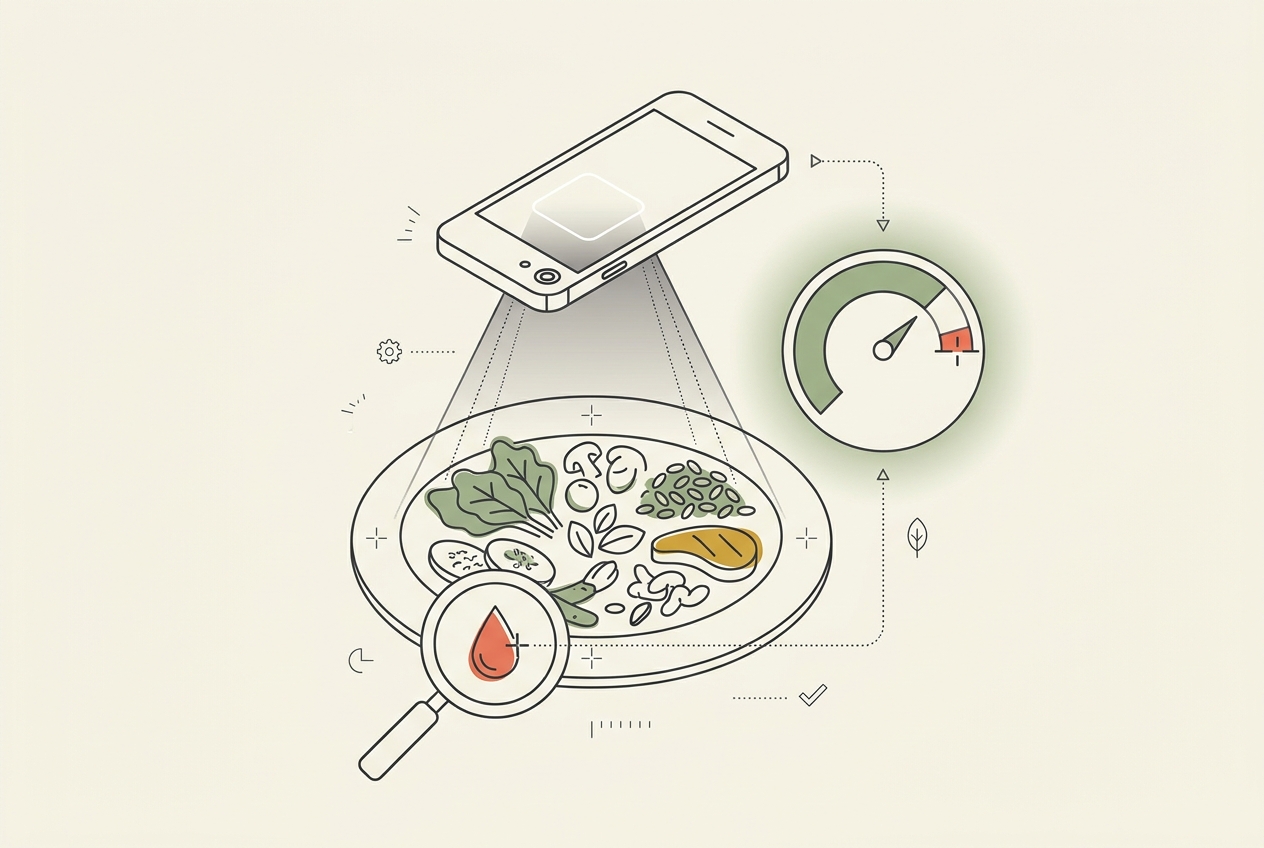
AI calorie counting is significantly more accurate than self-reported food tracking, which research shows underestimates intake by 20–40%. AI image recognition closes much of that gap but cannot guarantee precision, portion estimation remains the largest source of error. Forkd addresses this with confidence scoring (high/medium/low) so you always know how reliable each estimate is.
Disclaimer
This article is for information only and does not replace medical advice. Needs vary with age, sex, and situation (pregnancy, conditions, medication): if in doubt or symptomatic, talk to a health professional.
Why Is Human Calorie Estimation So Unreliable?
Before evaluating AI accuracy, it helps to understand the baseline it is improving on: human self-reported calorie tracking.
Research consistently shows that people underestimate their calorie intake, often significantly. A landmark study in the context of obesity research found that self-reported dietary recall underestimates actual consumption by 20–40% on average, with larger underestimates among people with higher BMIs and those eating more complex or mixed dishes.
The sources of error in manual calorie tracking are multiple: portion size estimation is notoriously inaccurate (people typically underestimate portions of energy-dense foods and overestimate portions of vegetables); memory is imperfect; cooking additions like oils and sauces are frequently forgotten; and the psychological pressure of tracking incentivises subconscious underreporting.
Hall & Guo (2017) in Gastroenterology observed that the metabolic adaptations to calorie restriction are often larger than expected, a finding that is consistent with the hypothesis that many people tracking calories are consuming more than they believe.
AI calorie counting does not solve all of these problems, but it removes the most consequential one: it sees what is actually on the plate rather than relying on recall.
How Does AI Food Recognition Actually Work?
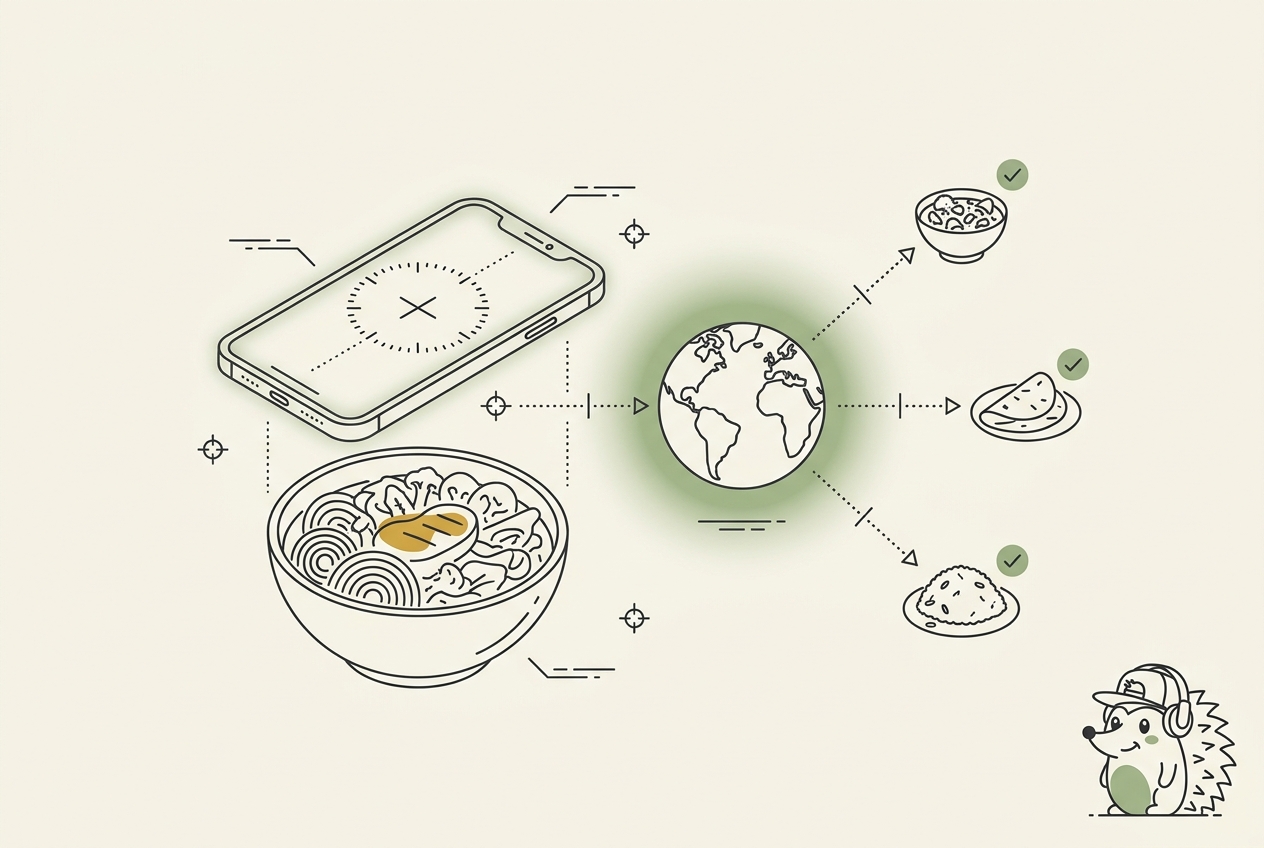
AI food recognition systems use computer vision, specifically, deep learning models trained on large datasets of labelled food images, to identify foods and estimate their components from a photograph.
The process involves several steps:
- Food identification: The model classifies what is in the image, "rice," "chicken breast," "broccoli," "olive oil"
- Portion estimation: Based on visual cues including plate size, density, and proportions, the model estimates serving sizes
- Database lookup: Identified foods are matched against comprehensive nutritional databases to retrieve calorie and macronutrient values
- Result assembly: The individual components are summed to produce the total meal estimate
The accuracy of step 1 (identification) is high for common foods and lower for regional, homemade, or visually ambiguous dishes. The accuracy of step 2 (portion estimation) is the limiting factor across all AI food recognition systems, estimating three-dimensional volume from a two-dimensional image is a genuinely hard problem.
What Do the Three Confidence Levels Mean in Practice?
Forkd uses a three-tier confidence system, high, medium, and low, to communicate how reliable each calorie estimate is. This transparency is fundamental to using AI tracking effectively.
What Does a High-Confidence Estimate Mean?
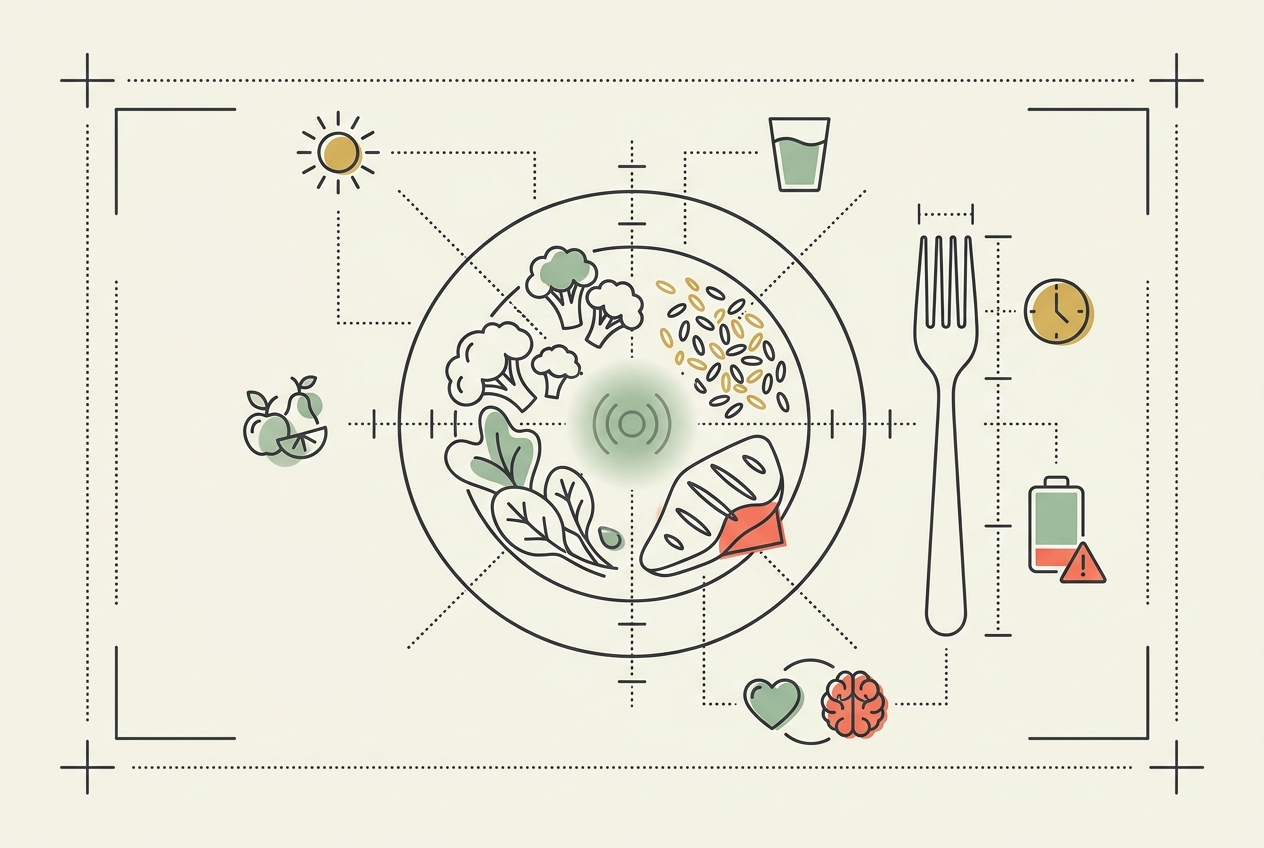
A high-confidence estimate means the AI clearly identified the food, matched it to a specific database entry, and had sufficient visual information to estimate portions reliably.
High confidence typically occurs when:
- The food is common and visually distinctive (e.g., a banana, a boiled egg, a plain piece of salmon)
- The image is clear, well-lit, and shot from above
- Portions are visible and not stacked or obscured
- A scale reference (utensil, hand) is present in frame
A high-confidence estimate is likely accurate within ±15% for most foods, approximately the same margin as weighing food and looking up the value manually, given variability in food composition by variety and preparation.
What Does a Medium-Confidence Estimate Mean?
Medium confidence indicates that the food was identified but with less certainty about the variety, preparation method, or portion size.
Medium confidence typically occurs when:
- The dish is a mixed meal (e.g., pasta with sauce, a stir-fry) where individual component proportions are unclear
- The image angle makes portion depth difficult to assess
- The food could be one of several similar items (e.g., white rice vs. jasmine rice vs. basmati)
- Preparation method (grilled vs. fried, butter vs. no butter) is ambiguous
For medium-confidence results, the estimate remains useful as a directional calorie figure but may warrant a manual review or adjustment if precision matters for your goals.
What Does a Low-Confidence Estimate Mean?
Low confidence means the AI made assumptions that significantly affected the estimate, about what the food is, how it was prepared, or how much is present.
Low confidence typically occurs when:
- The image is dark, blurry, or shows the food from an unhelpful angle
- The food is regionally specific or highly customised and not well-represented in the training data
- The dish is opaque (e.g., a soup, curry, or stew) where internal components cannot be assessed
- Multiple foods overlap making portioning impossible
Low-confidence estimates should be treated as approximate, useful for rough calorie awareness but not for precise tracking. Forkd surfaces the specific assumptions made, so you can adjust if you know them to be wrong.
How Does AI Accuracy Compare to Calorie Scales and Manual Logging?
No calorie tracking method is perfectly accurate. Even weighing food on a scale and looking up the value in a database has meaningful error: nutritional database values represent averages across samples, and actual food composition varies by variety, growing conditions, cooking method, and ripeness.
A realistic error comparison:
| Method | Typical Error Range |
|---|---|
| Unassisted recall (no tracking) | 20–40% underestimate |
| Manual tracking (no weighing) | 10–25% error |
| Manual tracking with food scale | 5–15% error |
| AI photo tracking (high confidence) | 10–20% error |
| AI photo tracking (low confidence) | 20–40% error |
The practical implication: for most weight loss goals, where the target is a sustained 500–700 kcal/day deficit, AI tracking at high and medium confidence is accurate enough to be meaningfully informative. Small errors in individual meals are unlikely to derail overall calorie balance over time, particularly if tracking is consistent.
Where precision matters most, for example, for athletes with tight body composition goals, high-confidence AI tracking combined with occasional weighed reference meals gives a reliable calibration point.
How Does Forkd Make Accuracy Transparent?
Forkd surfaces confidence levels on every logged meal rather than presenting AI estimates as definitive facts. The key difference in approach:
- Assumptions are visible: When the AI assumes a cooking method, serving size convention, or ingredient, Forkd shows these assumptions explicitly so you can override them
- Confidence is per-item: Individual components within a meal can have different confidence levels, the chicken portion might be high confidence, the sauce low confidence
- Override is easy: Any AI-generated value can be manually adjusted. The estimate is a starting point, not a fixed output.
This approach reflects what the research on dietary assessment recommends: tracking that acknowledges its limitations and supports correction is more useful than tracking that projects false precision.
Frequently Asked Questions
Is AI calorie counting accurate enough for weight loss?
Yes, for most people pursuing weight loss. Research shows that the most consequential error in calorie tracking is systematic underestimation, eating significantly more than you think you are. AI tracking removes this error by seeing what is on the plate. Even with ±15–20% per-meal error, consistent AI tracking provides a far more accurate picture of calorie intake than untracked eating or manual recall.
Which foods does AI calorie counting struggle most with?
Mixed dishes (curries, stews, casseroles), opaque liquids (soups, sauces), homemade recipes where ingredient proportions are unknown, and heavily processed convenience foods with non-standard ingredients all present challenges. For these, the confidence score will reflect the uncertainty, and manual input of key ingredients where known improves accuracy.
Does the angle of the photo affect calorie accuracy?
Yes, significantly. Overhead (top-down) shots provide the best view of what is on the plate, and are the most reliable for portion estimation. Side-angle shots make it difficult to assess food depth and volume. An overhead shot in natural light with food spread on the plate (not stacked) consistently produces the most accurate AI estimates.
How does Forkd handle foods I cook at home?
Forkd allows you to log recipes by entering ingredients and serving sizes, which then become saved as custom entries for future use. For one-off home-cooked meals logged by photo, the AI estimates based on visible ingredients, with confidence reflecting how clearly each component can be identified. Adding a brief description when logging ("chicken stir-fry, no oil, extra vegetables") improves the AI's contextual parsing.
Key Takeaways
- Human self-reported calorie tracking underestimates intake by 20–40%, AI tracking addresses the most significant error by seeing the actual food
- Portion estimation (3D volume from 2D image) is the primary source of AI error, not food identification
- Forkd's three confidence tiers (high/medium/low) tell you how reliable each estimate is, making uncertainty visible rather than hiding it
- High-confidence AI estimates are typically accurate within ±10–20%, sufficient precision for most weight loss goals
- Every AI estimate can be manually adjusted; confidence scores show you when and why to consider doing so
References
- Hall, K. D., & Guo, J. (2017). Obesity energetics: body weight regulation and the effects of diet composition. Gastroenterology. sciencedirect.com
- Hall, K. D. (2008). What is the required energy deficit per unit weight loss? International Journal of Obesity. ncbi.nlm.nih.gov
Written by
Vineet Karhail builds Forkd, the AI-powered calorie and nutrition tracking app, and writes its research-backed guides on calories, macros, and micronutrients.