The 30-Second Food Photo Fix That Makes AI Calorie Counting Dramatically More Accurate
The Short Answer
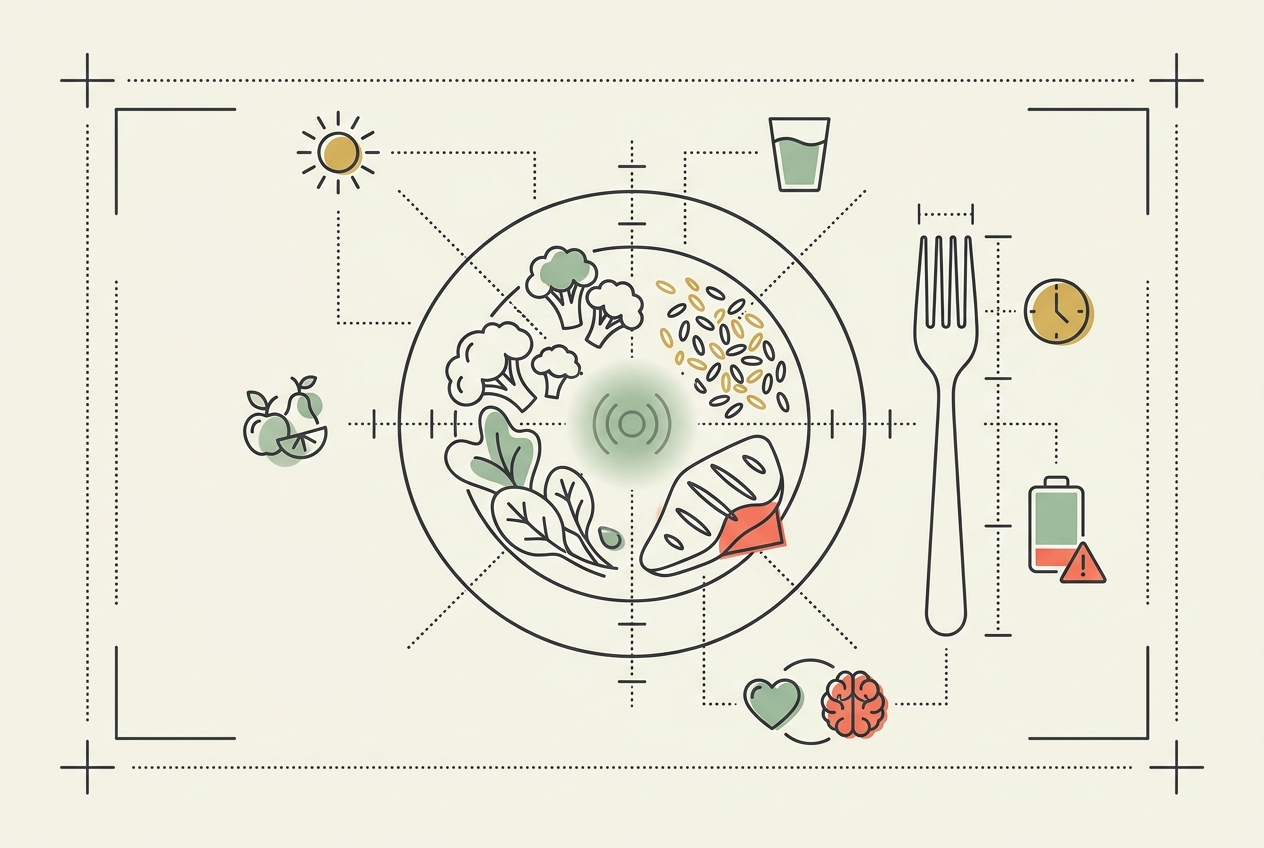
Including a fork or utensil in frame is the single most impactful improvement to AI food photo accuracy, it gives the recognition model a scale reference for portion size. Shoot from directly above in natural light with food spread flat rather than stacked. These three changes consistently produce higher-confidence estimates in Forkd's AI system.
Disclaimer
This article is for information only and does not replace medical advice. Needs vary with age, sex, and situation (pregnancy, conditions, medication): if in doubt or symptomatic, talk to a health professional.
Why Does Photo Quality Affect Calorie Accuracy So Much?
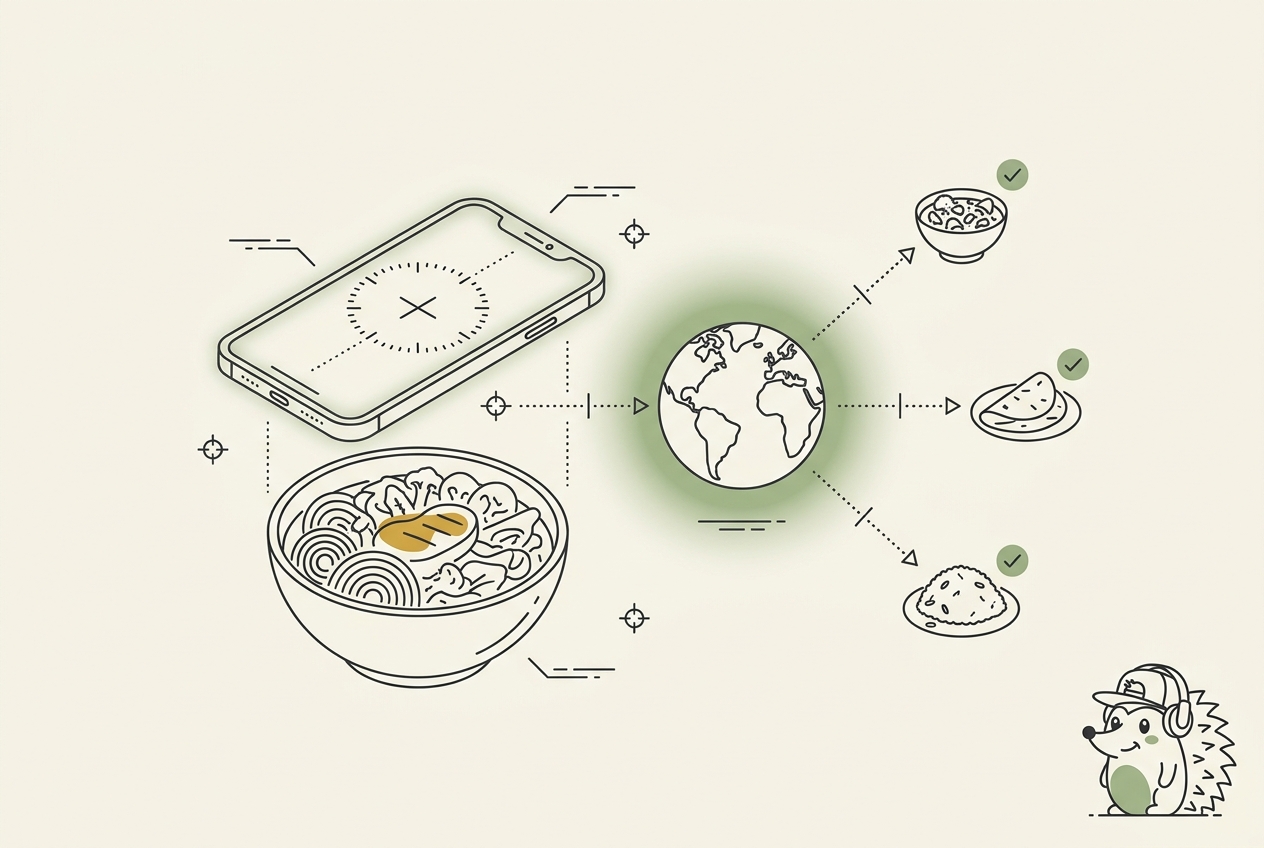
AI calorie counting has two separate tasks: identifying what the food is, and estimating how much of it there is. The first task, identification, AI handles very well for common foods. The second task, portion estimation, is where photo quality makes or breaks accuracy.
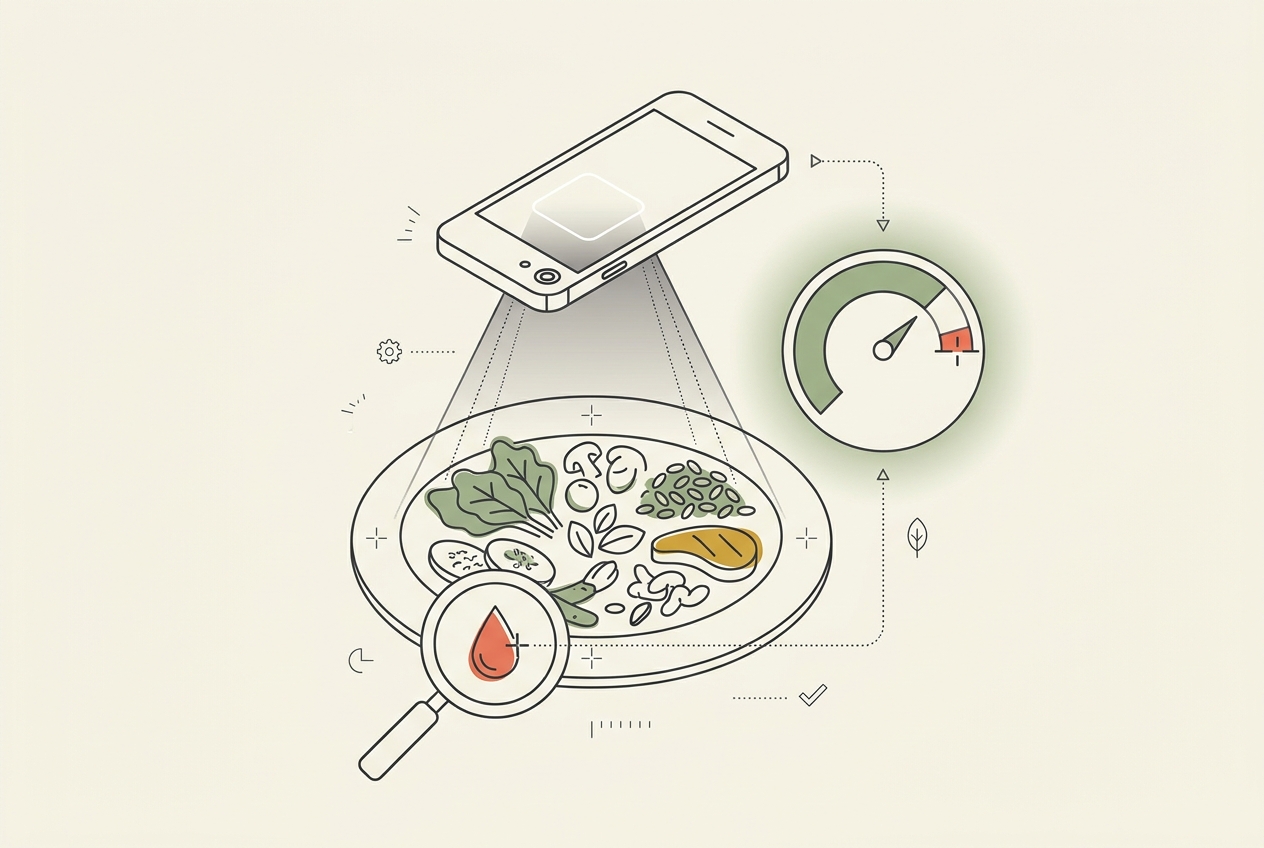
Estimating a three-dimensional volume (the amount of food) from a two-dimensional image (a photograph) is a genuinely difficult computer vision problem. The AI uses visual cues within the frame, the relative size of objects, the apparent depth of the dish, the density and spread of the food, to estimate portions. Every element of photo composition either helps or hinders this estimation.
The three changes below address the three most common sources of estimation error: missing scale reference, unhelpful angle, and insufficient detail from poor lighting. Implementing all three takes under 30 seconds and consistently shifts estimates from low or medium confidence to high confidence.
Why Does Including a Utensil or Your Hand in the Frame Matter?
The single most impactful change you can make to AI food photo accuracy is including a scale reference in the frame, most commonly a fork, spoon, or your hand.
Without a scale reference, the AI has no anchor for estimating absolute portion size. A bowl of rice that fills the frame could contain 150g or 400g, without knowing the bowl's diameter, the model cannot calculate the volume. This is why photographs of food filling the entire frame without any context objects produce the most uncertain portion estimates.
A standard fork is approximately 19 cm long, a measurement the AI model knows. When a fork appears in frame alongside food, the model can calculate the approximate dimensions of the dish relative to the fork, dramatically improving the accuracy of the portion estimate. The same applies to a hand, which provides a similar consistent scale reference.
Practical tip: Rest the fork flat alongside the dish (not on top of food) so it is clearly visible without obscuring any food components.
Why Is Shooting From Directly Above the Best Angle?
An overhead (top-down, also called "flat lay") shot provides the maximum surface area view of what is on the plate. This matters because:
- All food components are visible, not obscured by others in the foreground
- The AI can identify each component separately and accurately
- Plate edges are visible, providing an additional reference for overall scale
- No food is hidden "behind" other food from the camera's perspective
Side-angle shots, the instinctive perspective most people use when photographing food at a table, create several estimation problems. Foods in the foreground appear larger than foods behind them. Depth is difficult to assess. Stacked or layered foods are partially hidden. Mixed dishes appear as a single undifferentiated mass from a low angle that would be separable components from above.
The ideal angle is 90 degrees directly overhead, with the plate filling the frame but the plate edge remaining visible as a scale reference.
Practical tip: Hold your phone directly over the plate rather than at a slight angle. If your shadow falls on the food, step to the side until the plate is in clear light before taking the shot.
How Does Lighting Change What the AI Can See?
Lighting affects AI food recognition accuracy in two important ways: it determines how many visual details the model can extract from the image, and it affects colour accuracy, which the AI uses to distinguish between foods that look similar in shape but differ in colour.
Natural light, near a window or outdoors, is the best light for food photography. It is bright, directional, and colour-accurate. Natural light renders the difference between a salmon fillet and a chicken breast, between white rice and jasmine rice, between steamed and fried surfaces.
Artificial lighting common in restaurants and homes, warm incandescent light, yellow overhead lighting, blue-tinted phone flashlights, introduces colour casts that degrade the AI's ability to distinguish food types. The flash from a camera is particularly problematic: it creates harsh shadows and washes out surface texture, which the AI uses to assess cooking method (e.g., grilled vs. boiled).
Practical tip: Turn off the phone flash entirely and move the plate near a window if possible. Eating at a table away from natural light? Point the phone toward a brighter area of the room, even indirect ambient light is preferable to flash.
What Else Can You Do to Improve Recognition Accuracy?
How Should You Present the Food in the Frame?
Spread food flat, not stacked. A bowl of mixed vegetables piled into a pyramid is much harder to portion-estimate than the same vegetables spread across the plate. Where practical, spread food to a single layer before photographing.
Keep components separate. A deconstructed plate, rice next to salmon next to broccoli, is dramatically easier for AI to parse than the same food mixed together into a single mass. If you're building a plate from multiple foods, plate them with defined zones before logging.
Remove packaging and wrappers. If you're logging a packaged food, take a photo of the food itself (placed on a plate or surface) rather than the packaging. AI models recognise food items, not brand packaging.
When Should You Add a Text Description?
When logging a meal that has significant hidden components, sauces, oils, dressings, cooking methods that aren't visible in the photo, adding a brief text note alongside the photo significantly improves accuracy.
"Chicken stir-fry, 2 tsp sesame oil, served over rice" gives the AI context it cannot see. "Pasta in cream sauce" specifies what a visually ambiguous white sauce contains.
Forkd allows you to add descriptive notes with each photo log. For mixed dishes, homemade meals, or anything with non-visible ingredients, using this field moves the confidence level from low or medium toward high.
Frequently Asked Questions
Does the phone camera quality matter for AI food recognition?
Modern smartphone cameras, even mid-range phones from the past 3–4 years, produce images with more than sufficient resolution for AI food recognition. Camera quality has a negligible effect on accuracy compared to composition factors (angle, scale reference, lighting). An older phone in good light with a utensil in frame will produce better estimates than a flagship phone with no scale reference under poor lighting.
Should I photograph packaged food or scan the barcode?
For packaged foods with a barcode, scanning the barcode is generally more accurate than photographing the food, because barcode lookup retrieves the exact nutritional data submitted by the manufacturer. Photography is more appropriate for whole foods, restaurant meals, and anything without a barcode.
Does photographing the food before or after eating matter?
Before eating is strongly preferable. Once food has been partially consumed, portion estimation becomes far less accurate because the AI cannot determine the original amount. If you forget to photograph before eating, logging manually (entering the food name and approximate quantity) is more reliable than photographing a partially eaten dish.
What if the AI misidentifies my food?
If Forkd's AI misidentifies a component, for example, identifying salmon as tuna, or white bread as a tortilla, you can correct it manually using the edit function after logging. Corrections take priority over AI estimates. Providing this feedback also improves the model's accuracy for similar foods over time.
Key Takeaways
- Include a fork or utensil in frame, it is the most impactful single change for portion estimation accuracy
- Shoot from directly overhead, all food components are visible, plate edges provide scale, nothing is hidden
- Use natural light, no flash, colour accuracy helps the AI distinguish similar foods; flash degrades surface texture analysis
- Spread food flat and keep components separate, layered or mixed food is harder to portion than spread or zoned food
- Add a text description for hidden ingredients, sauces, oils, and cooking methods the camera cannot see
References
- Hall, K. D., & Guo, J. (2017). Obesity energetics: body weight regulation and the effects of diet composition. Gastroenterology. sciencedirect.com
- Hall, K. D. (2008). What is the required energy deficit per unit weight loss? International Journal of Obesity. ncbi.nlm.nih.gov
Written by
Vineet Karhail builds Forkd, the AI-powered calorie and nutrition tracking app, and writes its research-backed guides on calories, macros, and micronutrients.