Hour by Hour: What's Actually Happening Inside Your Body During a Fast

The Short Answer
During a fast, your body moves through predictable metabolic stages: first burning through circulating glucose, then depleting liver glycogen stores, and finally switching to fat oxidation as its primary fuel, typically beginning around 10–14 hours in. Understanding these stages turns fasting from a vague concept into a biological process you can follow in real time.
Disclaimer
This article is for information only and does not replace medical advice. Needs vary with age, sex, and situation (pregnancy, conditions, medication): if in doubt or symptomatic, talk to a health professional.
Why Is Fasting Not Just "Skipping Meals", What Sequence Does It Trigger?
When people think about fasting, they often imagine the body simply "running out of food." The reality is more sophisticated. Fasting triggers a cascade of hormonal and metabolic shifts that happen in a predictable sequence, each phase building on the last.
These stages are not abstract theory, they are the mechanisms behind every benefit that the research on intermittent fasting has documented: the weight loss, the improved insulin sensitivity, the cardiometabolic improvements observed in the umbrella review by Sun et al. (2024) in eClinicalMedicine. Knowing what is happening inside your body at each stage makes the experience of fasting more intelligible, and more motivating.
What Happens in Hours 0–4 After Your Last Meal?
What's Happening
Immediately after eating, your body enters the fed state. Carbohydrates are broken down into glucose and absorbed into the bloodstream, triggering an insulin response. Insulin's job is to shuttle glucose into cells for immediate energy use and to signal the liver and muscle cells to store excess glucose as glycogen.
Fat storage is also active in this phase, dietary fat is absorbed, and any excess energy beyond current needs is directed to adipose tissue. During this window, fat burning is at its lowest. With circulating glucose available and insulin elevated, fat cells are in "storage mode."
What You Feel
Satiety peaks in the first 1–2 hours after eating. Energy levels are stable. Cognitive function benefits from the ready supply of glucose. By 3–4 hours, satiety typically begins to wane as blood glucose normalises and insulin levels start falling.
What Happens in Hours 4–8 After Your Last Meal?
What's Happening
By 4–8 hours after eating, glucose from the last meal has largely been absorbed and used. Blood glucose begins to fall toward fasting levels, and insulin declines with it. As insulin falls, glucagon, the counter-regulatory hormone, rises. Glucagon signals the liver to release stored glycogen back into the bloodstream as glucose, maintaining blood glucose stability.
The liver's glycogen store holds approximately 80–100g of glucose, enough to sustain the brain and critical organs for several hours without food. Fat oxidation begins increasing gradually as insulin falls. The body is not yet in full fat-burning mode, but the metabolic shift has begun.
What You Feel
Mild hunger typically emerges in this phase. For most people, this corresponds to the period before the next meal in a standard eating pattern. People new to time-restricted eating often experience more pronounced hunger here, which typically reduces over 1–2 weeks of adaptation.
What Happens in Hours 8–14, When Does Fat Burning Begin?
What's Happening
This is the metabolically most important phase of a typical 10–14 hour overnight fast.
Between hours 8 and 14, hepatic (liver) glycogen approaches depletion. As glucose availability declines, the body accelerates its reliance on fat oxidation, breaking down stored triglycerides into free fatty acids and using them as fuel. This is the mechanism behind the popular concept of "fat-burning mode."
Simultaneously, the liver begins converting fatty acids into ketone bodies, alternative fuel molecules that can cross the blood-brain barrier and supply the brain with energy. This metabolic flexibility, the ability to run on both glucose and ketones, is one of the key adaptations that intermittent fasting improves over time (Mishra et al., 2023, Journal of Clinical Medicine).
The hormonal environment at this stage actively promotes fat release:
- Insulin is at its daily low
- Glucagon is elevated, signalling fat mobilisation
- Growth hormone rises, protecting lean muscle while supporting fat metabolism
- Norepinephrine increases, boosting metabolic rate and fat cell lipolysis
What You Feel
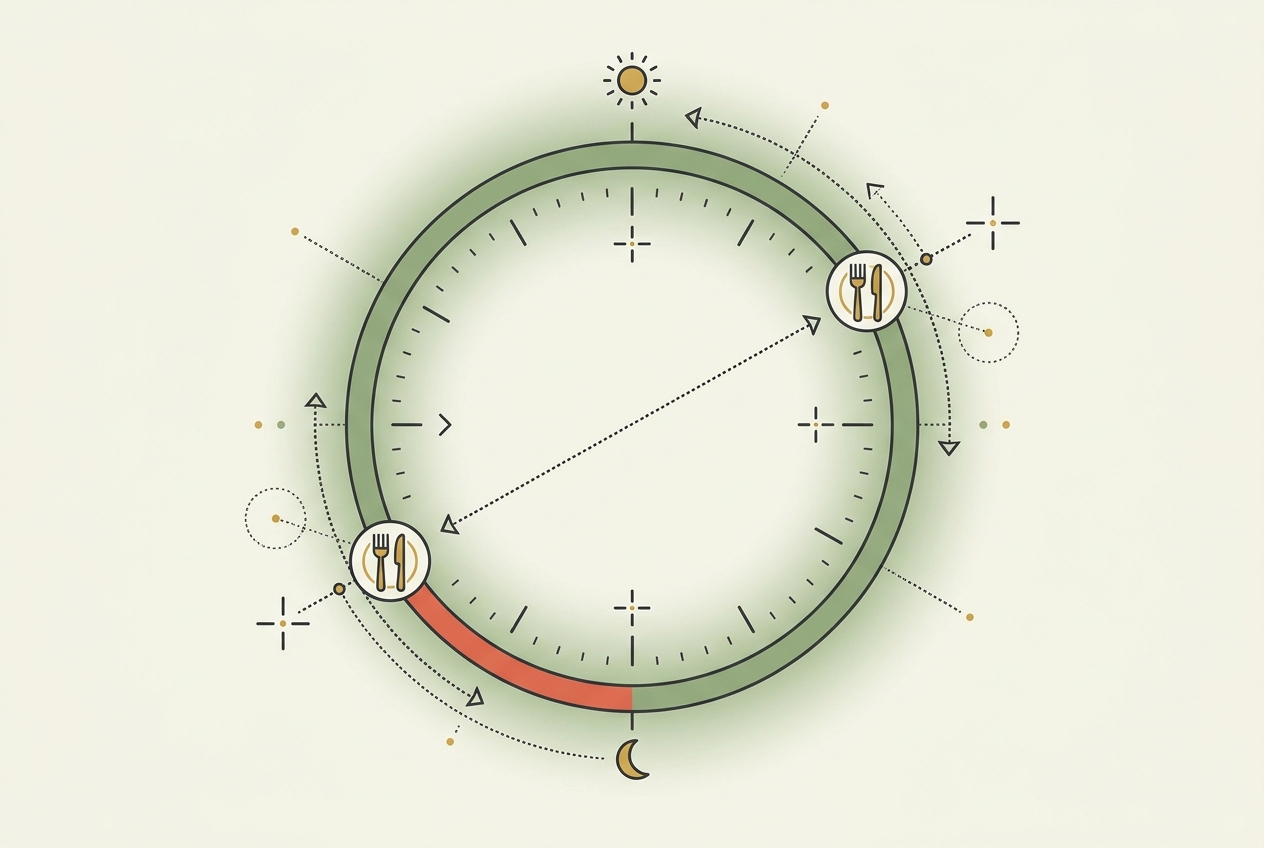
At around the 50% completion point of your fasting window, if you are using a fasting tracker like Forkd, this is the moment the app flags as "your body is switching to fat-burning mode." This message corresponds to a real metabolic transition, not a marketing phrase.
Some people notice increased mental clarity and energy in this phase, a frequently reported experience that may reflect the brain adapting to a mixed glucose-ketone fuel supply.
What Happens in Hours 14–17 of a Fast?
What's Happening
With glycogen largely depleted, fat oxidation is now the dominant fuel pathway. The metabolic improvements documented in the research, improved insulin sensitivity, reduced blood triglycerides, lower fasting glucose, accrue most meaningfully in this phase of the fast.
Most & Redman (2020), reviewing calorie restriction and energy metabolism in Experimental Gerontology, found that the body's energy expenditure undergoes adaptive changes during sustained restriction, including fasting, with implications for both fat loss and long-term metabolic rate. The sustained low-insulin environment of this phase is the primary driver of the cardiometabolic improvements observed in IF trials.
Autophagy, a cellular housekeeping process in which damaged cellular components are broken down and recycled, is also increasingly active in this phase. While autophagy research is earlier-stage than the metabolic evidence, it represents an additional biological benefit of extended, consistent fasting periods.
What You Feel
Hunger typically plateaus or diminishes in this phase, a counterintuitive experience for those expecting hunger to grow linearly with fasting duration. Ghrelin (the hunger hormone) follows a circadian rhythm and tends to fall in the late-night/early-morning hours regardless of food intake, which is why most people sleep through the end of their overnight fast without difficulty.
What Happens If You Fast Beyond 17 Hours?
What's Happening
Beyond 17 hours, the physiological picture becomes more complex. With liver glycogen fully depleted, the body's need for gluconeogenesis, generating glucose from non-carbohydrate sources, increases. A portion of this comes from glycerol (released during fat breakdown), but amino acids from muscle protein also become a growing substrate.
Hall & Guo (2017) in Gastroenterology described the metabolic adaptations that occur during sustained caloric restriction, adaptations that include not just fat mobilisation but progressive reduction in resting energy expenditure. Extended fasting past 17 hours begins to engage these adaptation mechanisms more forcefully.
The cardiovascular stress signal observed in the AHA (2024) observational data associated with short eating windows may relate in part to the metabolic strain of regularly extending fasting into this territory.
What You Feel
Fatigue, brain fog, irritability, and difficulty concentrating become more common beyond 17 hours, particularly in people who are not adapted to extended fasting. These are physiological signals, not signs of weakness: they reflect the brain's sensitivity to glucose availability and the metabolic demands of extended fat-predominant fuel use.
What Is the Compound Effect of Regular Fasting Over Time?
The single-session metabolic timeline above is the mechanism. The benefit of intermittent fasting is the cumulative effect of repeating this cycle consistently.
Regular fasting, particularly 10–14 hour windows maintained most days, trains the body to:
- Deplete glycogen stores more efficiently (improving metabolic flexibility)
- Upregulate fat oxidation pathways (making fat burning faster and more efficient)
- Improve insulin sensitivity (reducing the insulin response to the same amount of food)
- Lower baseline triglycerides and fasting glucose
Sun et al. (2024) confirmed these cumulative effects across hundreds of randomised controlled trials: the metabolic improvements from IF are real, consistent, and clinically meaningful, not a single-session effect but the compounded result of regular fasting cycles.
Frequently Asked Questions
Does the Fat-Burning Stage Start Sooner If I Exercise While Fasting?
Yes. Physical activity during the fasting window, particularly endurance-type exercise (walking, cycling, swimming), accelerates glycogen depletion and moves the transition to fat oxidation earlier. This is one reason fasted morning cardio has a basis in metabolic science, though the magnitude of the additional fat loss benefit compared to fed-state exercise is modest.
Will My Body Break Down Muscle During a Fast?
In typical 12–16 hour fasts for people consuming adequate protein within their eating window (1.0–1.2 g/kg/day), muscle catabolism is minimal. Growth hormone elevation during fasting actively protects lean mass. The risk of meaningful muscle loss grows significantly beyond 17 hours and with chronically low protein intake.
Does the Body Really "Switch to Fat-Burning Mode" at a Specific Moment?
The transition is gradual rather than a sudden switch, fat oxidation begins increasing as soon as insulin falls after a meal and accelerates progressively as glycogen depletes. The ~50% fasting window point (for a typical 10-hour window, around 7 hours in) is a reasonable approximation of when fat oxidation becomes the dominant fuel pathway for most people, though this varies with individual glycogen stores and activity level.
Does Coffee Break the Fast?
Black coffee contains negligible calories and does not stimulate a meaningful insulin response. Most fasting researchers and practitioners consider it compatible with fasting. It may also accelerate fat oxidation modestly by increasing circulating free fatty acids.
Key Takeaways
- Fasting follows a predictable metabolic sequence: fed state → post-absorptive → glycogen depletion → sustained fat oxidation
- Fat-burning mode begins around 10–14 hours into a fast, as hepatic glycogen depletes and insulin reaches its daily low
- The hormonal environment of extended fasting, low insulin, elevated glucagon and growth hormone, actively drives fat mobilisation while protecting muscle
- 17+ hours marks the threshold where fat oxidation benefits plateau and risks from muscle catabolism and metabolic adaptation begin to escalate
- The metabolic improvements from IF documented in research are cumulative effects of repeating this cycle consistently, not a single-session phenomenon
References
- Sun, M. L., et al. (2024). Intermittent fasting and health outcomes: an umbrella review of systematic reviews and meta-analyses of randomised controlled trials. eClinicalMedicine (The Lancet). thelancet.com
- Mishra, S., et al. (2023). Time-Restricted Eating and Its Metabolic Benefits. Journal of Clinical Medicine. ncbi.nlm.nih.gov
- Most, J., & Redman, L. M. (2020). Impact of calorie restriction on energy metabolism in humans. Experimental Gerontology. ncbi.nlm.nih.gov
- Hall, K. D., & Guo, J. (2017). Obesity energetics: body weight regulation and the effects of diet composition. Gastroenterology. sciencedirect.com
- American Heart Association. (2024). 8-hour time-restricted eating linked to a 91% higher risk of cardiovascular death. AHA Newsroom. newsroom.heart.org
Written by
Vineet Karhail builds Forkd, the AI-powered calorie and nutrition tracking app, and writes its research-backed guides on calories, macros, and micronutrients.