Water and Weight Loss: The Metabolic Connection Most Nutrition Advice Overlooks
The Short Answer
Water is directly involved in fat metabolism, stored fat cannot be broken down without it. Research shows even mild dehydration suppresses fat oxidation, increases appetite, and reduces liver efficiency. Meeting your daily hydration target of 30–38 ml per kilogram of body weight directly supports the biological processes that drive weight loss.
Disclaimer
This article is for information only and does not replace medical advice. Needs vary with age, sex, and situation (pregnancy, conditions, medication): if in doubt or symptomatic, talk to a health professional.
What Role Does Water Actually Play in Fat Metabolism?
Fat loss is not simply a matter of "burning more than you eat." The process of breaking down stored body fat, lipolysis, is a biochemical reaction that requires water as a substrate. When fat molecules (triglycerides) are broken down into glycerol and fatty acids for use as fuel, water molecules are consumed in the process.
This means that chronic low-grade dehydration does not just make you feel thirsty, it creates a biochemical environment in which fat oxidation is impaired at the cellular level. Meeting daily fluid targets is not optional for fat loss; it is part of the mechanism.
The Institute of Medicine (2002), in its Dietary Reference Intakes for macronutrients and energy, identified adequate water intake as fundamental to all metabolic processes, including the energy metabolism that weight loss depends on.
Does Dehydration Actually Slow Your Metabolism?
Yes, and the effect starts at lower dehydration levels than most people expect.
Research on calorie restriction and energy metabolism (Most & Redman, 2020, Experimental Gerontology) established that metabolic rate is sensitive to multiple factors during weight loss, including hydration status. Even mild dehydration, as little as 1–2% of body weight in fluid loss, has been shown to reduce physical performance, impair cognitive function, and reduce energy expenditure.
During active weight loss, this matters especially because the body's energy expenditure is already under adaptive pressure from the calorie deficit. Dehydration compounds this by adding a second source of metabolic suppression.
Additionally, the kidneys require adequate water to efficiently filter the metabolic byproducts of fat breakdown. When hydration is insufficient, the liver is recruited to assist kidney function, which is the liver's secondary metabolic role. The liver's primary role is fat metabolism. When the liver is diverted to support dehydrated kidneys, fat processing efficiency decreases.
How Does Water Reduce Appetite and Support Calorie Control?
Water has a direct mechanical effect on appetite: it occupies stomach volume without contributing calories. This gastric distension effect sends satiety signals to the brain that reduce meal size and extend the time before hunger returns.
The Institute of Medicine (2002) identified water intake as an integral component of satiety regulation alongside food intake. Consuming 400–500 ml of water 20–30 minutes before a meal consistently reduces calorie intake at that meal without any other dietary change, a finding replicated across multiple study designs.
For people managing a calorie deficit, pre-meal water intake is one of the highest-leverage, lowest-effort tools available. It requires no restriction, no willpower expenditure, and no food substitution, it simply reduces how much is eaten at the next meal through a mechanical satiety signal.
Adequate hydration also supports the satiety effect of dietary fiber. Soluble fiber absorbs water to form the gel that slows digestion and moderates blood glucose. Without adequate fluid, fiber cannot perform this function, and its appetite-suppressing benefit is significantly reduced (Institute of Medicine, 2002).
What Happens to Your Digestion When You Are Under-Hydrated?
Digestion depends on water at every stage. Saliva is 99% water; stomach acid is aqueous; digestive enzymes require water to function; the intestinal lining moves food through the gut via water-dependent peristalsis.
Fiber, one of the most important nutrients for weight management, behaves fundamentally differently depending on hydration status:
- Soluble fiber (oats, lentils, apples) requires water to form the viscous gel that slows glucose absorption and extends satiety
- Insoluble fiber (bran, vegetables) requires water to add bulk and propel waste through the large intestine
Consuming the recommended 25–30g of fiber per day while under-hydrated can paradoxically worsen constipation and gastrointestinal discomfort. Fiber and water are a functional pair, hitting one target without the other reduces the benefit of both.
Research by Zhang et al. (2024) in Frontiers in Nutrition, examining micronutrient requirements during caloric restriction and fasting, noted that water and micronutrient absorption are inter-dependent, many vitamins and minerals require adequate fluid for efficient intestinal absorption. This reinforces that hydration during weight loss is not a secondary concern but a primary nutritional variable.
How Does Staying Hydrated Support Energy and Exercise Performance?
Energy availability during weight loss is already challenged by the calorie deficit. Dehydration adds a second layer of energy impairment:
- At 1% dehydration: reduced concentration and early-onset fatigue
- At 2% dehydration: measurable decline in physical performance, particularly endurance
- At 3%+: significant impairment of both cognitive and physical function
For people exercising as part of a weight loss plan, which research consistently supports as a tool for preserving lean mass and metabolic rate, maintaining hydration is directly protective of the exercise capacity that produces those benefits.
Adequate hydration also regulates body temperature more efficiently during exercise, reducing cardiovascular strain and allowing more sustained effort before fatigue.
How Does Forkd Calculate Your Water Target?
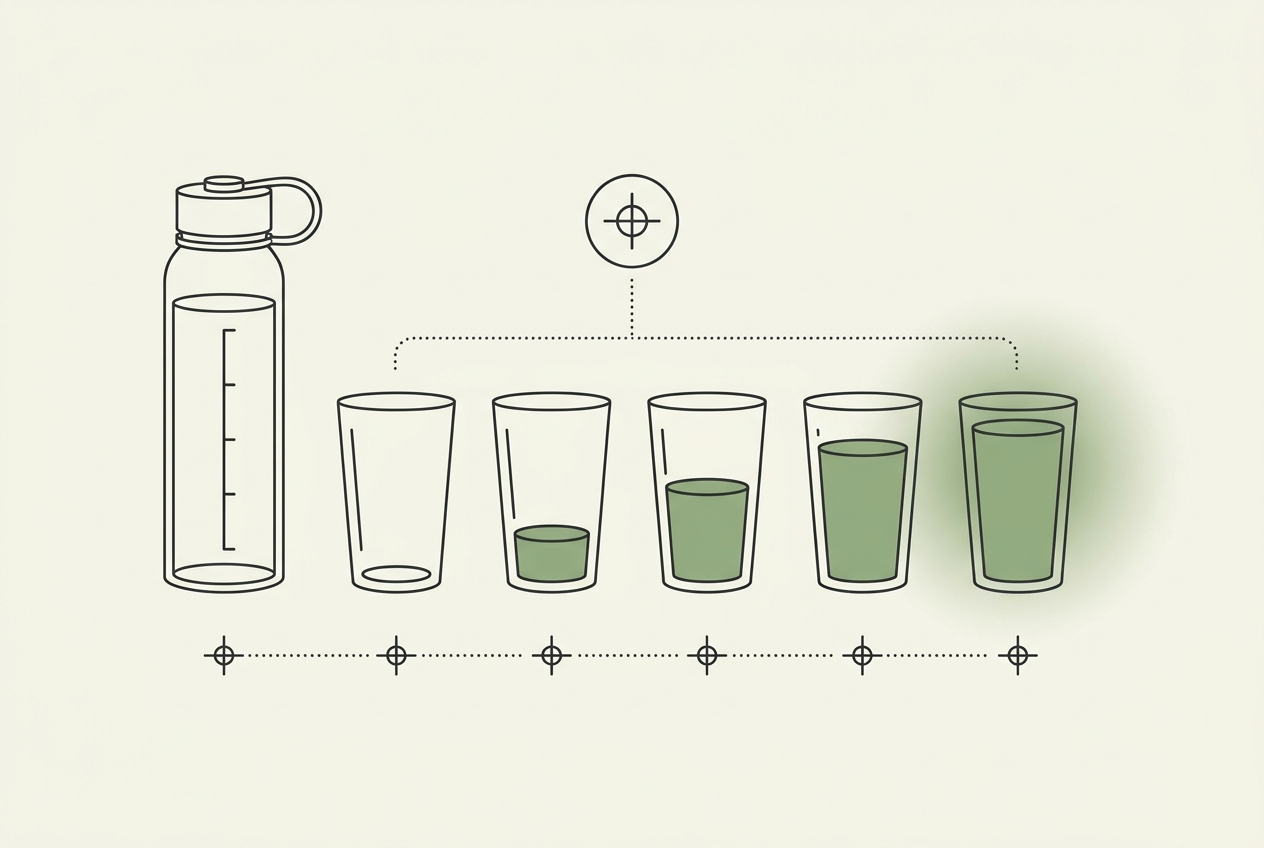
Forkd uses a personalised weight-based formula, 30–38 ml per kilogram of body weight, to calculate your daily water target, with the multiplier adjusted for your activity level. The result is expressed as a specific daily target in millilitres, within a practical range of 1,500–4,000 ml.
Your target updates automatically as your weight changes during your loss journey, ensuring your hydration goal stays calibrated to your current body mass rather than your starting weight.
Frequently Asked Questions
Does drinking more water actually help you lose weight?
Water supports weight loss through several mechanisms: it is required for fat metabolism, reduces appetite via gastric volume, supports the satiety effect of fiber, enables efficient digestion and nutrient absorption, and maintains the physical energy needed for exercise. It does not cause weight loss on its own, but inadequate hydration creates genuine biochemical barriers to the fat metabolism process.
How much water should I drink to lose weight faster?
Aim for the upper end of the 30–38 ml/kg/day range, approximately 35–38 ml/kg, during active weight loss. This accounts for the increased metabolic waste products generated during fat breakdown that the kidneys need to process, and supports optimal fiber absorption and digestion. For a 75 kg person, this is approximately 2.6–2.85 litres per day.
Does water help reduce belly fat specifically?
Water does not target fat loss in any specific area, fat metabolism releases energy from stores throughout the body in a genetically determined pattern, and no food or drink selectively reduces fat in one area. However, adequate hydration supports overall fat oxidation and reduces water retention (paradoxically, drinking more helps the body release water it was storing defensively due to perceived dehydration).
Can drinking cold water boost metabolism?
The effect of cold water on metabolic rate exists but is clinically negligible, thermogenesis from warming cold water to body temperature burns approximately 8–10 calories per litre. This is unlikely to produce meaningful weight loss but does not detract from water's more significant role in fat metabolism and satiety.
Does coffee or tea count toward my daily water intake?
Yes, with caveats. Caffeinated beverages have a mild diuretic effect but still produce a net positive contribution to hydration, the Institute of Medicine (2002) confirmed that caffeinated drinks count toward total daily fluid intake. However, plain water remains preferable as the primary hydration source, especially around exercise.
Key Takeaways
- Water is a direct substrate in fat metabolism, lipolysis requires water to break down stored fat
- Mild dehydration (1–2% body weight) measurably suppresses fat oxidation and reduces metabolic rate
- Pre-meal water (400–500 ml) reduces calorie intake at that meal through mechanical satiety
- Adequate hydration is required for dietary fiber to perform its satiety and digestive functions
- Your Forkd water target is personalised to your weight and activity level, it updates as you lose weight
References
- Institute of Medicine. (2002). Dietary Reference Intakes for Energy, Carbohydrate, Fiber, Fat, Fatty Acids, Cholesterol, Protein, and Amino Acids. The National Academies Press. nap.nationalacademies.org
- Most, J., & Redman, L. M. (2020). Impact of calorie restriction on energy metabolism in humans. Experimental Gerontology. ncbi.nlm.nih.gov
- Zhang, W., et al. (2024). Requirements for essential micronutrients during caloric restriction and fasting. Frontiers in Nutrition. frontiersin.org
Written by
Vineet Karhail builds Forkd, the AI-powered calorie and nutrition tracking app, and writes its research-backed guides on calories, macros, and micronutrients.